Does giving a camera wings dodge the FCC’s drone ban?
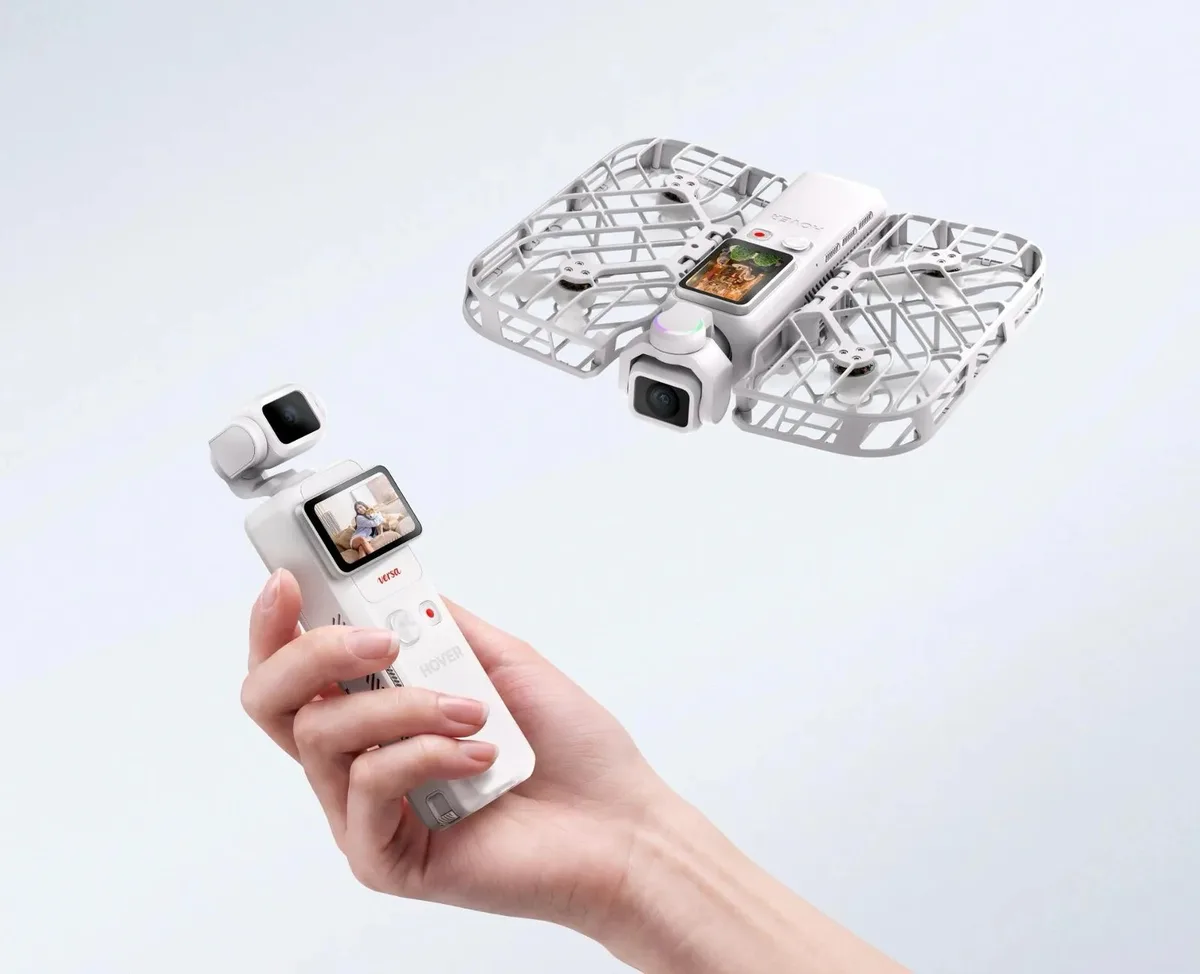
The HoverAir Versa found a loophole in the FCC’s drone ban. But it might not stick.
The HoverAir Versa found a loophole in the FCC’s drone ban. But it might not stick.
HoverAir drones always have intriguing gimmicks. This one folds flat to fit in your pocket. This one can land on water. Another can charge inside its carrying case. But the brand’s latest trick might be its riskiest: it’s attempting to sneak a drone past the FCC.
In December 2025, the US government banned future foreign drones from reaching our shores, and HoverAir’s floating Aqua drone was one of the first casualties . But this time, brand owner Zero Zero Robotics might have found a loophole: its latest $750 Versa drone isn’t a drone, it claims, but rather a DJI Pocket-style mini steadycam with optional snap-on propellers that let it fly.
“The Flight Kit is an accessory that extends VERSA’s capabilities. Therefore, HOVERAir is in full compliance with the applicable regulatory requirements for the full product configuration offered to US customers,” global marketing director Anita Facundo tells The Verge .
As far as HoverAir is publicly concerned, the gambit has already worked. The FCC already approved the new HoverAir Versa on August 9th, public records show, and the company just launched it on Indiegogo this week while telling customers it’s good to go.
But the reality is more complicated. I’ve read through the full text of the FCC’s orders, and there’s reason to believe the loophole is real. But there’s also reason to believe the FCC was fooled and could easily reject this drone.
When the FCC’s foreign drone ban came down in December, it blocked the FCC from automatically approving the radios of any foreign-made drone — each company now has to convince the FCC that its drone is either made in the United States, or doesn’t pose a threat to national security. (Or, lie on the paperwork .)
But while the ban automatically creates friction for every kind of drone, it doesn’t affect every dronemaker’s cameras — only those from DJI and Autel Robotics, because those were the two specifically named in the 2025 National Defense Authorization Act (NDAA).
So when HoverAir submitted its paperwork to the FCC, it only did so for the camera portion of its drone. It told the FCC’s agent, truthfully, that HoverAir has not been banned from getting cameras certified in the US. The FCC’s agent, one of the private companies known as Telecommunications Certification Bodies (TCB), signed off on that basis.
What about the propeller wings that turn it into a drone? Well, the FCC only certifies gadgets that have a wireless radio inside — the propellers almost certainly don’t, since they physically connect to the camera using copper contacts. HoverAir might not have to submit them to the FCC at all.
That’s the loophole, but it might not be so simple. See, the FCC’s foreign drone ban isn’t just on “drones” but also “UAS critical components,” and the camera clearly contains many of the critical components that make HoverAir’s drone fly. The FCC has explicitly said that cameras are one of those critical components.
5News aggregated this summary from the outlet’s public feed. The full article, with all the context, is on www.theverge.com — the content belongs to The Verge.