TIME's Longevity Leaders Are Racing to Add Good Years to Your Life
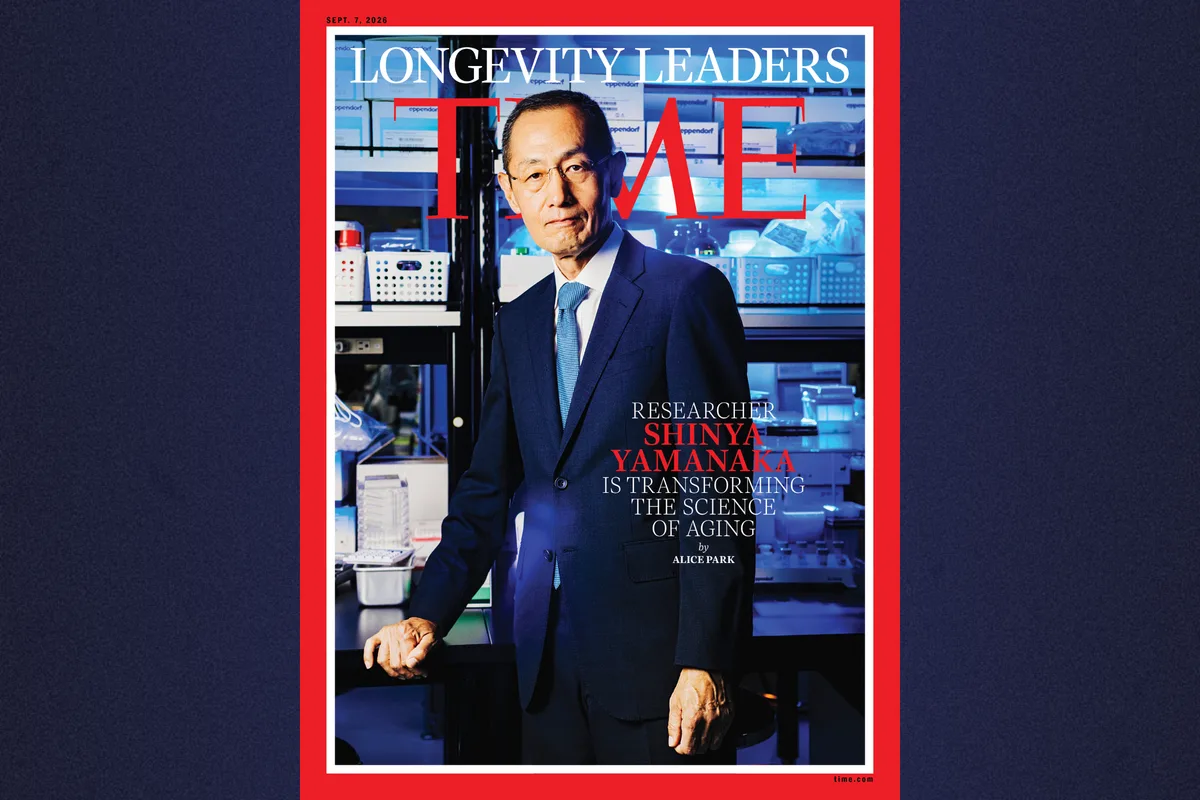
Click here to see TIME's full list of Longevity Leaders Shinya Yamanaka goes for a run almost every morning.
So do a lot of people—but the habit carries extra weight when done by a Nobel-winning scientist whose discovery forms the foundation for one of the most exciting areas of longevity research today: reprogramming human cells to make them act younger.
When someone like that makes a daily habit of anything, you take notice.
Yamanaka had just come back from a run in late July, during one of Kyoto's worst heatwaves, when he sat down with senior health correspondent Alice Park to talk about his career and the influence he’s had on the rapidly expanding longevity field 20 years after his landmark discovery.
He is one of TIME’s 2026 Longevity Leaders highlighted in this week’s issue: 12 trailblazers marking the way to a longer, healthier life.
We set out to find some of the most innovative leaders who are starting to show concrete results in helping us to live longer , better.
A few pioneering scientists—like Harvard geneticist David Sinclair and Altos Labs’ Juan Carlos Izpisua Belmonte —have put their own spin on Yamanaka’s discovery.
They’re on a mission to reverse cellular aging in different parts of the human body.
Others have stepped up to separate snake oil from legitimate science.
Jamie Justice , for instance, runs XPrize Healthspan, a $101 million longevity science fair that is funding the most promising research around the world.
And some are addressing the equally important question of how our society should change to accommodate an older population.
AARP CEO Myechia Minter-Jordan , for example, is leading the group into a new era of aging advocacy.
We are squarely in a longevity boom, and the field is now well established as serious science.
But we are still near the beginning.
5News aggregated this summary from the outlet’s public feed. The full article, with all the context, is on time.com — the content belongs to TIME.