Trump’s Head Start Overhaul Borrows a Playbook That Already Failed
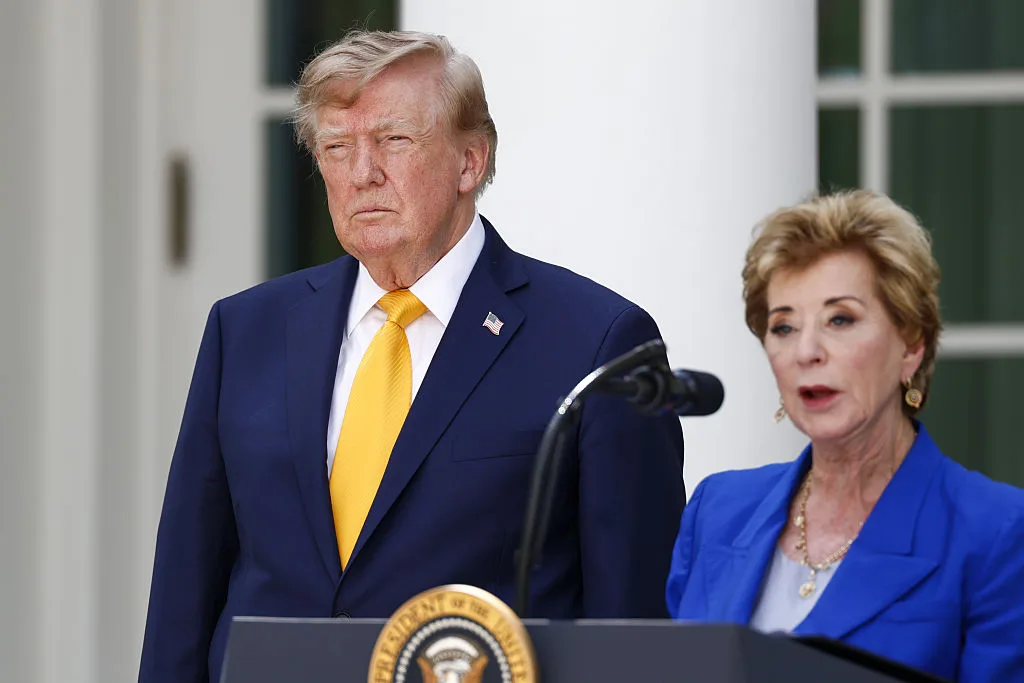
President Donald Trump, and Education Secretary Linda McMahon during an event in the Rose Garden of the White House in Washington, DC, US, on Monday, Aug.
24, 2026. —Will Oliver—EPA/Bloomberg/Getty Images When he launched the War on Poverty in 1964, President Lyndon Johnson spoke of the “millions of Americans…who have not shared in the abundance which has been granted to most of us, and on whom the gates of opportunity have been closed.” The ensuing years would see the creation of Medicaid and Medicare , the launch of Head Start .
This era also ushered in the establishment of a permanent national food assistance program and a dramatic expansion of federal support for education and housing.
These policies and programs were all rooted in the principle that the federal government has a responsibility to help families meet their basic needs and, ultimately, thrive.
As people who have dedicated our careers to advancing policies that can reduce poverty in America, we are dismayed to now see the return of the disastrous 1990s-era “welfare reform” approach that measures success by how many people are kicked off of public assistance programs, rather than whether fewer people actually need it.
Economic research consistently shows that this approach fails to meaningfully address poverty or increase employment .
A true anti-poverty agenda would learn from those mistakes, rather than repeat them, and build on what works.
Earlier this month , the Trump Administration set its sights on Head Start , the federal preschool program for low-income children which has served more than 40 million since its creation.
Head Start has been proven to reduce poverty and improve health, educational attainment, and employment opportunities over participants’ lifetimes.
It does this by providing young children with essential supports: early learning in small classes, qualified teachers, consistent meals, support for parents, and regular health and developmental screenings.
These supports benefit every child who participates, but especially children with developmental delays whose families may struggle to access these services elsewhere.
The White House disregards that record of success by seeking to strip away the standards that make it work.
Under the guise of giving states more “ flexibility ,” it proposes to eliminate class size standards while reducing children’s access to needed medical and dental care.
This follows President Donald Trump’s previous attempts to freeze Head Start funding in 2025 that impacted 20,000 children in 23 states, and consideration of budget proposals that would have eliminated it entirely.
5News aggregated this summary from the outlet’s public feed. The full article, with all the context, is on time.com — the content belongs to TIME.