Insta360 Luna Ultra review: This 8K gimbal camera is a challenge to DJIs dominance
Insta360 launched the Luna Ultra this year, issuing a direct challenge to the DJI Osmo Pocket's dominance amongst handheld gimbal cameras.
Convincing consumers to give the new kid on the block a chance is a significant task, particularly when DJI is releasing the Osmo Pocket 4 and 4P at around the same time.
Fortunately, Insta360 seems well aware of the challenge it's facing, and has come out swinging.
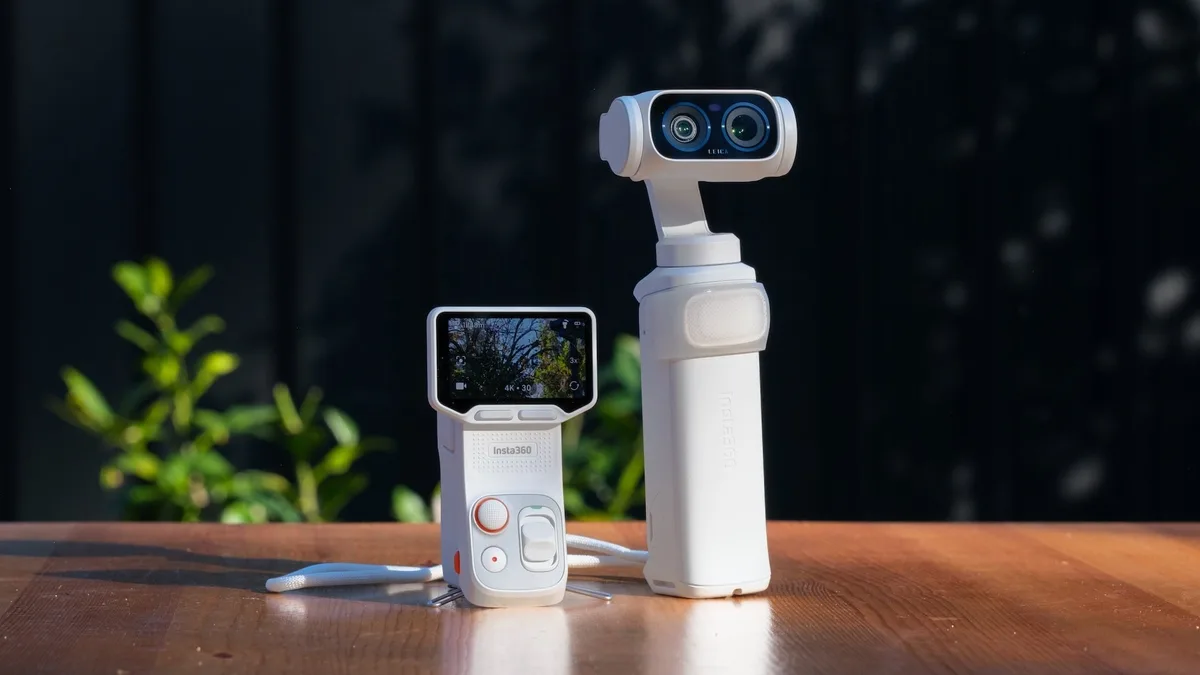
SEE ALSO: Insta360 launches X6, its flagship 360-degree 8K camera Insta360 Luna Ultra: Build The Insta360 Luna Ultra has two lenses, courtesy of a partnership with Leica.
Credit: A.
Yeo The Insta360 Luna Ultra immediately distinguishes itself via its dual lenses, a feature it shares with DJI's professionally-targeted Osmo Pocket 4P.
However, the Luna Ultra's lenses come courtesy of a collaboration with high-end camera company Leica , a brand which holds cult status amongst photography enthusiasts.
Specifically, the Luna Ultra includes both a Leica Summicron lens with a one-inch 8K sensor and a telephoto lens with a 1/1.3-inch sensor, which are positioned side-by-side on the gimbal in a horizontal orientation — a look that's reminiscent of Disney's WALL-E .
Both lenses have wide apertures, sitting at f/1.8 and f/2.0 respectively, which allows them to take in more light and helps produce a shallower depth of field for a more cinematic look.
A look that's reminiscent of Disney's WALL-E.
The other standout feature of the Luna Ultra's build is its detachable two-inch touchscreen and controls.
This allows users to remotely operate and monitor the camera, doing everything from zooming in to moving the gimbal, and switching between recording modes.
This turns the Luna Ultra from a nifty handheld camera into a super flexible vlogging tool that can capture more angles with ease, and is particularly attractive for solo shooting.
The detachable touchscreen remote is a standout feature.
5News aggregated this summary from the outlet’s public feed. The full article, with all the context, is on mashable.com — the content belongs to Mashable.