On this day in space! Aug. 23, 1961: Ranger 1's botched space launch
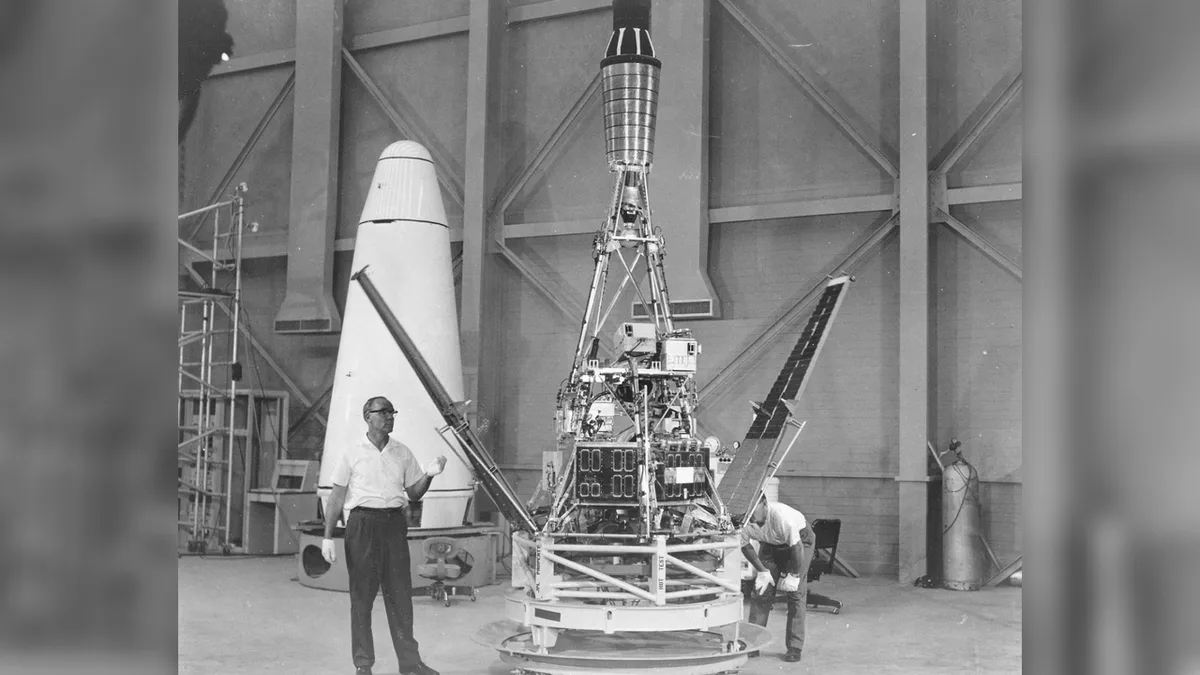
On Aug.
23, 1961, NASA launched the Ranger 1 robotic spacecraft on a precursor mission to test new technologies for later moon missions.
NASA's Ranger program had the ultimate goal of photographing and mapping the lunar surface.
Ranger 1 was launched with the primary mission of testing the performance of the spacecraft's functions and parts.
It also studied particles and fields around the Earth in space.
While it was designed to enter a high orbit 37,000 by 684,000 miles (60,000 by 1,100,000 km), but it never made it beyond low-Earth orbit.
A malfunction with the rocket caused the engine to shut down prematurely, which sent it tumbling around the Earth.
On Aug.
30, it re-entered Earth's atmosphere and was incinerated.
On Aug.
23, 1961, NASA launched the Ranger 1 robotic spacecraft on a precursor mission to test new technologies for later moon missions. (Image credit: NASA Glenn Research Center) Why it mattered This wasn't the first space failure and it certainly wasn't the last.
Ranger 1 never made it beyond low-Earth orbit and all of the hard work, science and engineering that went into imagining, designing, developing, building and launching this mission ended up burning up in the atmosphere.
Now, while this is obviously not the result the team wanted, with every space failure we learn an incredible amount.
It is because of the many failures of decades past that the incredible people behind these space missions have been pushed to solve problems that we didn't even know could happen.
5News aggregated this summary from the outlet’s public feed. The full article, with all the context, is on www.space.com — the content belongs to Space.com.