ICE Has Quietly Changed Its Deadly-Force Rule
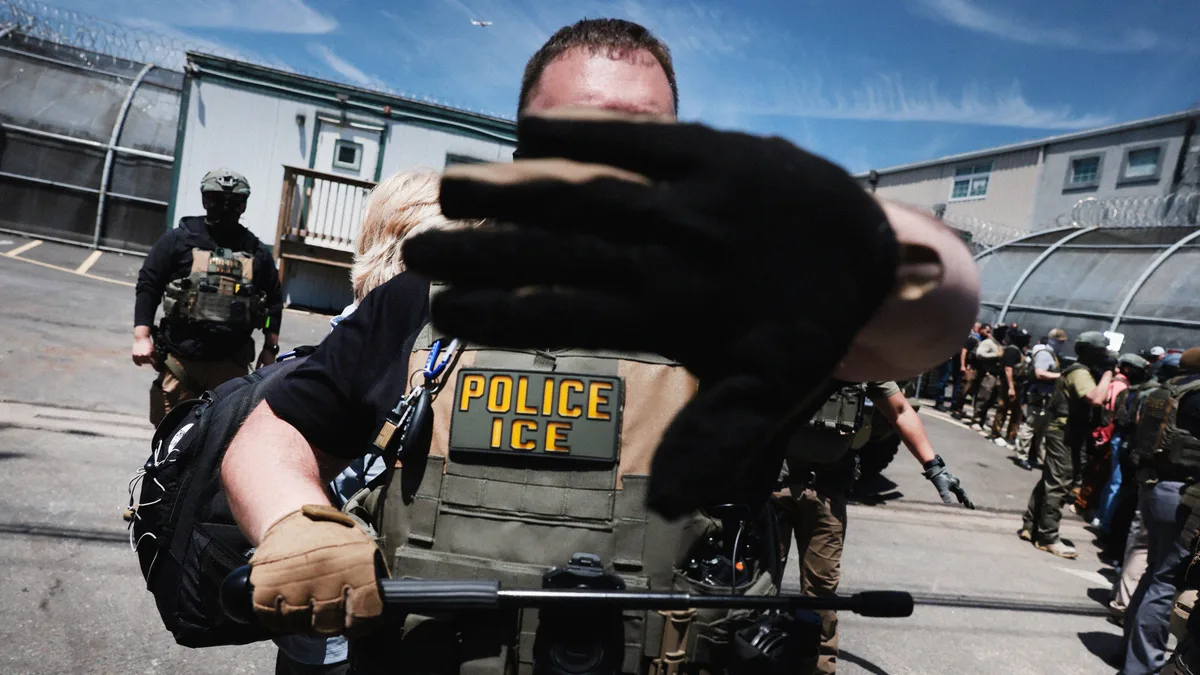
I CE quietly enacted new rules this month that will keep officers involved in deadly-force incidents—such as firing a gun and using a choke hold—off the streets until the completion of an investigation.
Previously, these officers were able to return to their regular job in as few as three days.
Now they must remain on desk duty until they are cleared by investigators, according to two senior ICE officials with knowledge of the change, who spoke with me on the condition of anonymity because they are not authorized to discuss agency matters with reporters.
Under the old rules, ICE supervisors could lengthen an officer’s period of leave, but such an extension was often viewed internally as signaling a lack of confidence in the officer and their version of events.
At ICE and other law-enforcement agencies, officers are typically eager to return to full patrol duties as quickly as possible, and not remain in limbo as an investigation plays out.
The change, which has not been publicly announced, means that officers who fire their guns, choke someone, or use some other form of deadly force—even if no one is killed—will potentially be limited to performing administrative duties for much longer periods.
Acting ICE Director David Venturella and other senior ICE leaders ordered the change late last month, the two senior officials said.
ICE and the Department of Homeland Security did not respond to my questions about why the policy change was made or how many such incidents have occurred since President Trump returned to office.
ICE officers have shot at least 16 people since last January, four of them fatally, according to public records.
Last month, there were two fatal shootings during traffic stops: On July 7, ICE officers in Texas killed Lorenzo Salgado Araujo, a 52-year-old contractor from Mexico, and six days later, an officer in Maine fatally shot Johan Sebastián Durán Guerrero, a 25-year-old Colombian immigrant.
DHS said the officers fired in self-defense, but the incidents are under federal investigation.
Veteran ICE officials have worried for months about the competence of the thousands of new recruits who were added during a hiring binge last fall, many of whom were rushed onto the streets after taking a fast-track training course.
The ICE officer in Maine, David Brouillette, was a new hire, and his relatives told reporters he had a history of mental-health issues and violent behavior that should have disqualified him from getting a badge and gun. [ Read: The secretary of homeland ] Violent confrontations during traffic stops particularly concern ICE leaders; the agency has not typically had so many officers pulling over vehicles and attempting to arrest people who are in cars.
5News aggregated this summary from the outlet’s public feed. The full article, with all the context, is on www.theatlantic.com — the content belongs to The Atlantic.