Google is trying to solve contrails with AI
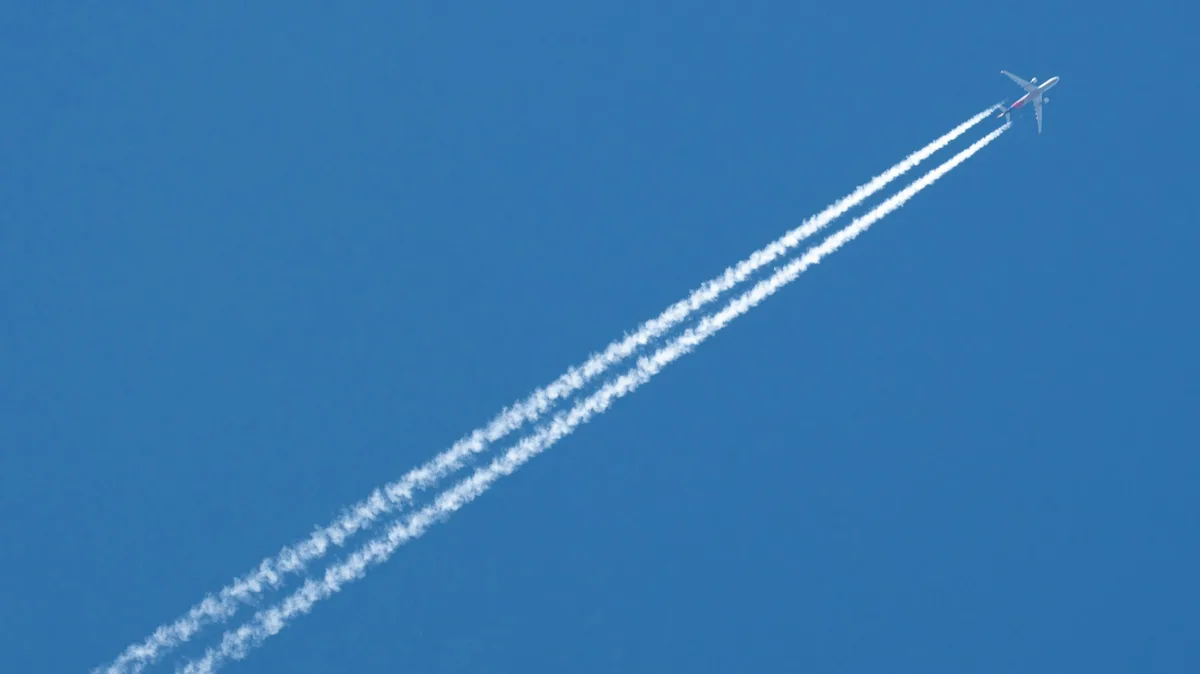
Operation Blue Skies, which also involves the UK government, will subtly reroute flights to test contrail avoidance.
HYEWON HWANG / Unsplash Google and the UK government are collaborating on a project to test whether airplanes can avoid creating contrails. The project, called Operation Blue Skies, will conduct the trial over Shanwick airspace, which sits above the northeastern Atlantic Ocean.
Contrails are the long white streaks in the sky left by jet engines. Most often created in cold, humid air, they form when water vapor condenses and freezes around aircraft exhaust. Unfortunately for the climate, they can trap heat radiating from the Earth, thus warming the atmosphere. Researchers estimate that they contribute to about one-third of aviation's total climate impact. (Contrails, whose effects have been measured by scientists, aren't to be confused with mythical chemtrails, whose "effects" have been spouted by your conspiracy-obsessed uncle on Facebook.)
Operation Blue Skies will last 30 months and make small flight-path adjustments to a limited number of flights while still keeping them within normal operations. The trials will take place over the next two winters. Air traffic controllers will use forecasts to pinpoint atmospheric regions where vertical adjustments of up to 2,000 feet could help reduce contrail formation.
Of the 10,000 flights expected to cross the region during each year's trial period, only about one to five percent will be rerouted. Previous research and smaller trials suggest that AI forecasts can identify atmospheric areas where flights are most likely to create warming contrails.
Google will provide AI-powered forecasting models to identify these regions and use satellite imagery and machine learning to help measure the results. The company says it's participating on a pro bono basis, contributing £1.4 million ($1.9 million). The Associated Press reports that the UK government will provide over half of the project's £5 million ($6.8 million) budget. Meanwhile, NATS, the UK's air navigation provider, will handle the operational side. Contrails.org, the Met Office, Imperial College London and the University of Cambridge are also involved.
5News aggregated this summary from the outlet’s public feed. The full article, with all the context, is on www.engadget.com — the content belongs to Engadget.