The Armored Sarcophagus Saving Ukrainian Soldiers
T he inside of an armored sarcophagus smells of gunpowder, gasoline, and gangrene.
Remotely operated, unmanned ground vehicles, nicknamed MAULs, are revolutionizing casualty evacuations along the most dangerous sections of the Ukrainian front lines.
They bristle with drone-jamming antennae and carry bulletproof black pods for carrying wounded soldiers to safety.
The MAUL goes in when other options have failed.
After every rescue, it is cleaned and disinfected.
Vitaly, call sign “Ash,” is a medical-evacuation coordinator with the 1st Separate Medical Battalion. (He asked to be identified only by his first name and call sign for security reasons.) “You scrub and scrub,” he told me, “but the smell—it never goes away.” I asked Ash what MAUL stands for.
“It’s not initials,” he explained.
“It’s a Star Wars thing—you know, Darth Maul? We’ve got a few nerds here.” The name is in all caps because the battalion’s stencil kit has only capital letters. [ Read: Ukraine’s short-lived comeback ] On the battlefield, these new machines have become priority targets for Russia’s drone pilots.
They know that, for the morale of the Ukrainian crews coordinating rescues, losing a comrade in vivid detail on the monitors tracking the mission can be devastating.
Russian operators wait until the wounded are loaded, then strike.
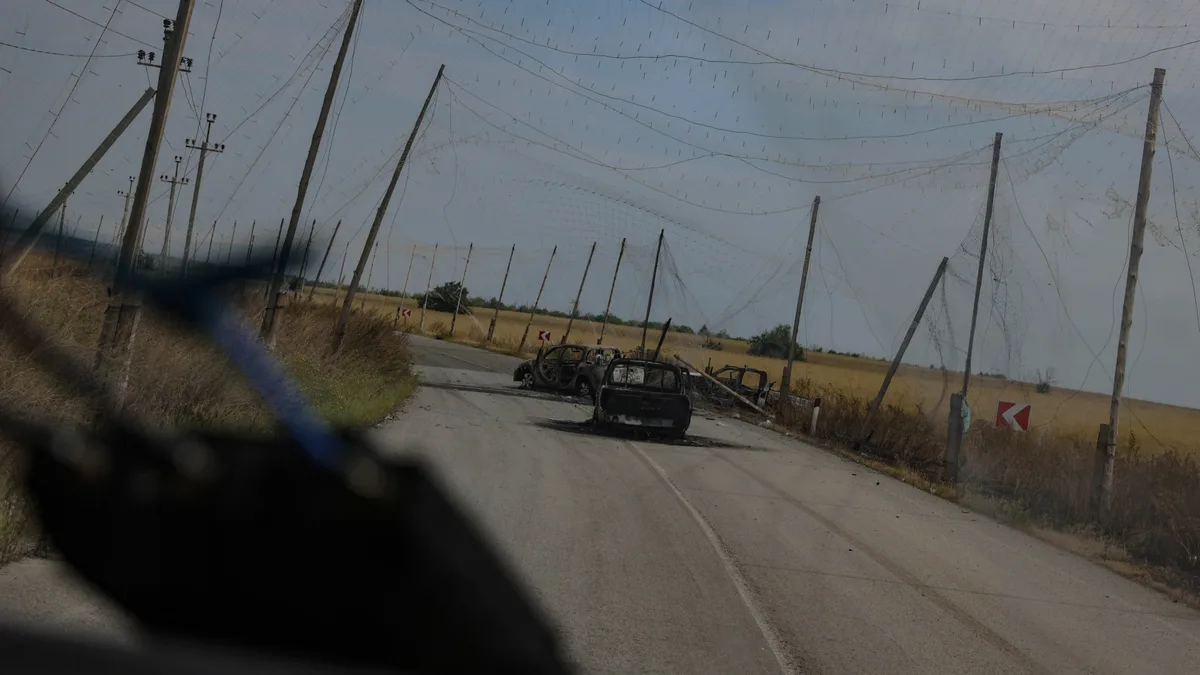
A erial drones have created a death zone on the front lines, up to 20 miles wide, where anything caught in the open is likely to be struck.
Unmanned ground vehicles began arriving in late 2024, mostly running resupply routes parallel to the front.
But a mission in early 2025 proved that they could do more than this—that they were capable of reaching deep into the death zone to remove personnel.
That mission began with a Facebook post.
5News aggregated this summary from the outlet’s public feed. The full article, with all the context, is on www.theatlantic.com — the content belongs to The Atlantic.