California law would force companies to disclose toxic chemicals in disposable diapers
Legislation requiring disclosure of chemicals in diapers passed assembly and will go before state senate soon
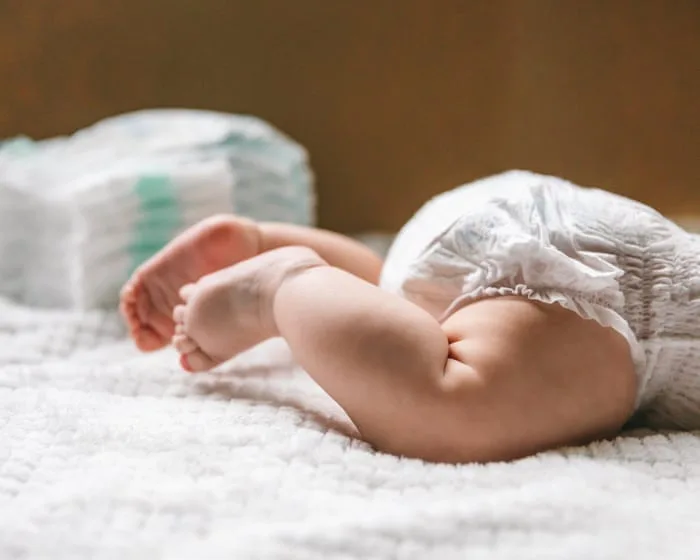
New California legislation would require manufacturers to disclose the “mystery cocktail” of toxic chemicals used in disposable diapers.
Diapers often contain among the most toxic substances – phthalates, lead, Pfas, quats, arsenic, a range of volatile organic compounds (VOCs) and “fragrance”, which can include any number of 1,200 compounds thought to be hazardous to human health.
The risk is especially high because diapers press against an infant’s skin almost continuously for several years and babies’ skin is thinner than adult skin and prone to absorbing dangerous substances. Many of the chemicals, like phthalates, attack the endocrine system, potentially causing hormones that are essential for brain and reproductive development to misfire.
While manufacturers are not required to fully disclose materials and ingredients in any state but New York, the California law goes further. It passed the California assembly 68-1 and is expected to go before the state senate in coming weeks.
Advocates say the passage would be powerful because it would put tremendous market pressure on diaper manufacturers to use less toxic ingredients.
“Parents deserve better than a guessing game, especially when it comes to a product that will be touching their babies’ skin for every minute of every day for the first two or three years of their lives,” said the California assembly member Marc Berman, who authored the bill. It is supported by a coalition of at least 150 public health groups.
The bill would require companies by 2028 to disclose on a publicly accessible webpage a list of all intentionally added ingredients, and each ingredient’s specific function or purpose in the diaper. By 1 January 2029, diaper manufacturers have to include that information on the packaging.
Toxic chemicals are often added to diapers to provide a range of functions. Pfas are used as a moisture barrier, formaldehyde could be added as a preservative and phthalates are added to make plastic flexible. Lead or other heavy metals may be added to inks and dyes.
Testing commissioned by the Mamavation public health advocacy site found Pfas in a range of popular brands. French regulators detected widespread use of chemicals like formaldehyde, pesticides and dioxins, while other peer-reviewed research identified numerous VOCs in disposable hygiene products and diapers.
However, there is a dearth of research on how these steady exposures affect babies. A small 2025 study in China checked diapers and urine samples in 66 babies for several phthalates, finding correlation for some of the compounds.
The study also found markers of DNA damage in the urine, and the researchers estimated that absorption of the phthalates likely accounted for major portions of the phthalate levels. The study, however, does not establish that wearing diapers causes DNA damage or other disease, but points to a risk.
“California parents shouldn’t need a chemistry degree to buy a diaper,” said Susan Little of the Environmental Working Group, which helped develop the legislation.
5News aggregated this summary from the outlet’s public feed. The full article, with all the context, is on www.theguardian.com — the content belongs to The Guardian US.