A British Army commander testing war robots says they aren't always the right tool for the job
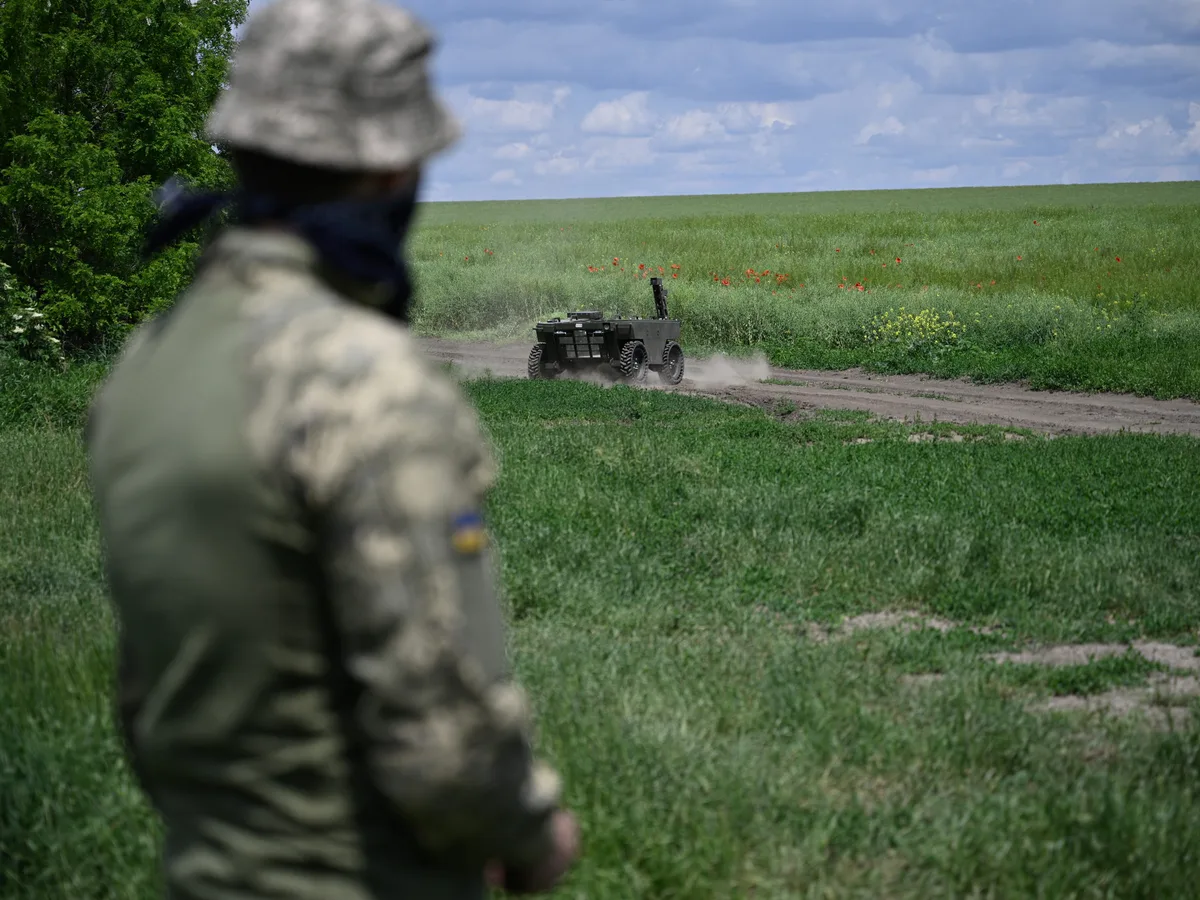
Ukraine's use of ground drones is of the latest examples of evolutions in drone warfare.
Genya SAVILOV / AFP A British Army commander says ground robots can be useful but come with drawbacks.
UGVs can create logistics, power, navigation, and control challenges for troops.
Ukraine shows their value may be mainly in dangerous, specialized missions that protect soldiers.
The commander of a British Army battalion tasked with experimenting with new technologies said that his unit has tested out dozens of ground robots.
He concluded that they can be useful, but only for certain missions.
And they come with a long list of challenges.
As Western militaries rush to absorb lessons from the war in Ukraine and integrate more uncrewed systems into their respective forces, soldiers are finding that some systems might look good on paper but aren't effective in all combat scenarios.
Ground robots , in particular, can face weight, navigation, cost, and power constraints that raise questions about when and how they should be used.
In Ukraine's case, the systems have seen use in logistics operations, replacing soldiers in highly dangerous areas of the battlefield, but soldiers have also said they're not a catch-all solution.
At a recent US Army-led exercise at Fort Irwin in California, a handful of American allies and partners gathered with US forces to experiment with new systems in a simulated conflict against a near-peer adversary.
The British Army's experimentation unit, the 2nd Battalion, The Yorkshire Regiment, was present for the event alongside the unit that will take over their experimentation role, the 1st Battalion Irish Guards.
During the recent exercise, Lt.
Col.
5News aggregated this summary from the outlet’s public feed. The full article, with all the context, is on www.businessinsider.com — the content belongs to Business Insider.