‘Daemons of the Shadow Realm’ Season 1 Ended With Calms and Storms Galore
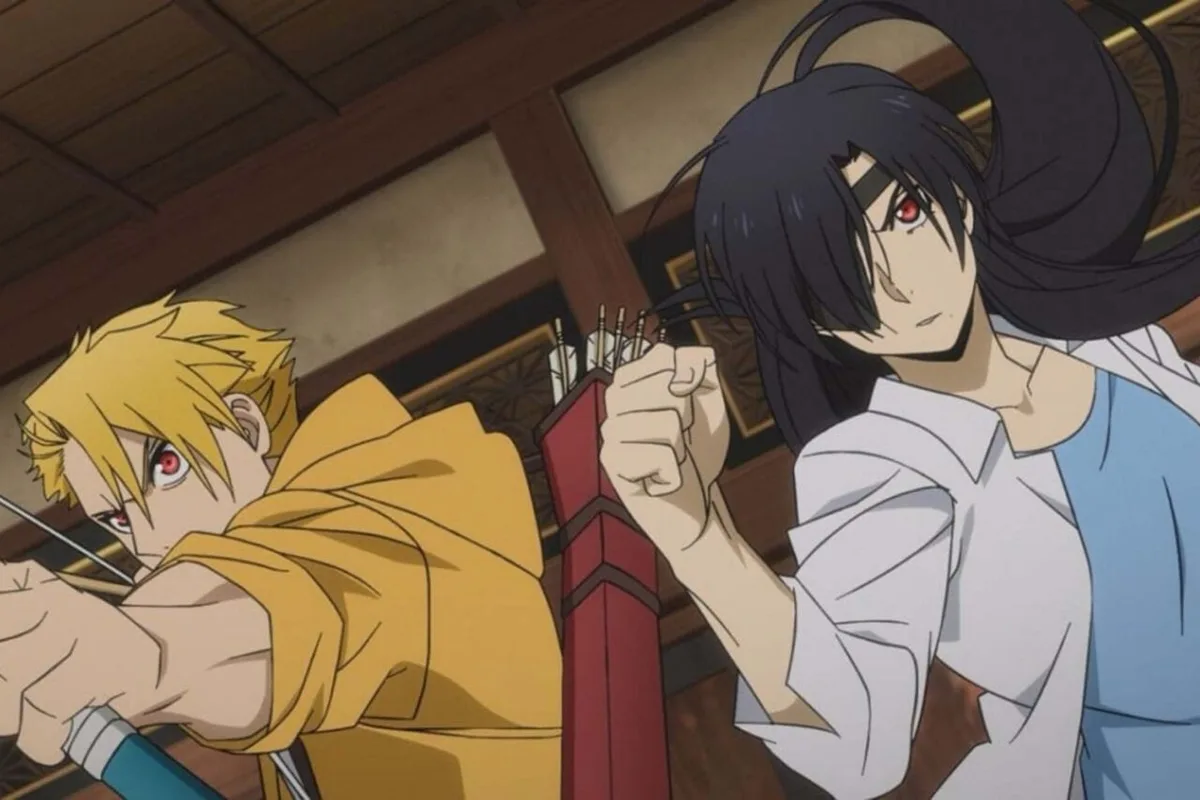
Amid a busy year for anime, whether it be remade classics or brand new tales of magical and fighting people , Daemons of the Shadow Realm has been there as a reliable Saturday fixture from spring to fall. Despite some pacing lulls and a bit of imbalanced character economy, the debut season ended strong and in such a place that its recent season two renewal is both expected and much deserved.
Within the first dozen episodes, Daemons set up several plates for itself to spin, from Yuru and Asa’s predestined powers and the clans warring over them to the various dynamics of everyone caught up in that battle. It’s good, then, that the show developed a nice habit early on of explaining (or reestablishing) its mythology and how characters intertwine with one another. By shonen standards, the show’s cast now likely equals many anime in their first season, but there remains a good number of people to keep track of. A lot of them are clustered in the same location, but frequent check-ins are nonetheless helpful and in some cases, make for some surprising swerves.
Some episodes are better at this than others, but they all reinforce the show’s theme of family that Bones and mangaka Hiromu Arakawa are interested in playing with. The idea of found family runs through Daemons of the Shadow Realm, but the show isn’t interested in propping that up over blood family or vice versa. Instead, it’s more interested in presenting how either can shape a person and what happens when those two types of life unexpectedly collide.
This idea is best embodied in Yuru, who barely has time to adjust to his new status quo before circumstances lead to younger characters being thrown into his orbit. Unlike Yuru, Ryu (the half-brother of Yuru’s handler Dera) and Azami (one of the kids from his village) have no supernatural powers to speak of, they’re just normal kids now involved by association. Ryu and Azami being around puts Yuru into a big brother role he otherwise can’t have with Asa, and while these aren’t major threads at the moment, there’s definitely something to come from this dynamic, even if it’s just more gags about him acclimating to the modern world.
In general, the show’s pretty good about who’s used for comedy and how —it’s just so much fun seeing comparably normal supporting characters like Hana and Haruo react to the weirdos in their respective circles—but makes sure its cast exists to represent the ideas it wants to explore. Through minutes-long flashbacks or conversations that linger on a photograph, these moments help and largely succeed at illustrating where characters are coming from. No one’s had a truly surprising backstory, but their pasts are revealed to be sad enough without being overly grim, and a few end up being moving in their own way.
For as many characters operate in different shades of “good,” it’s a bit surprising Daemons has so few actual antagonists right now. Whereas FullMetal Alchemist (which was also written by Hiromu Arakawa) established many of its chief villains early on, this show really only has the one, but that’s not entirely a bad thing.
5News aggregated this summary from the outlet’s public feed. The full article, with all the context, is on gizmodo.com — the content belongs to Gizmodo.