Historic first: Older adults now outnumber the youngest children for the first time
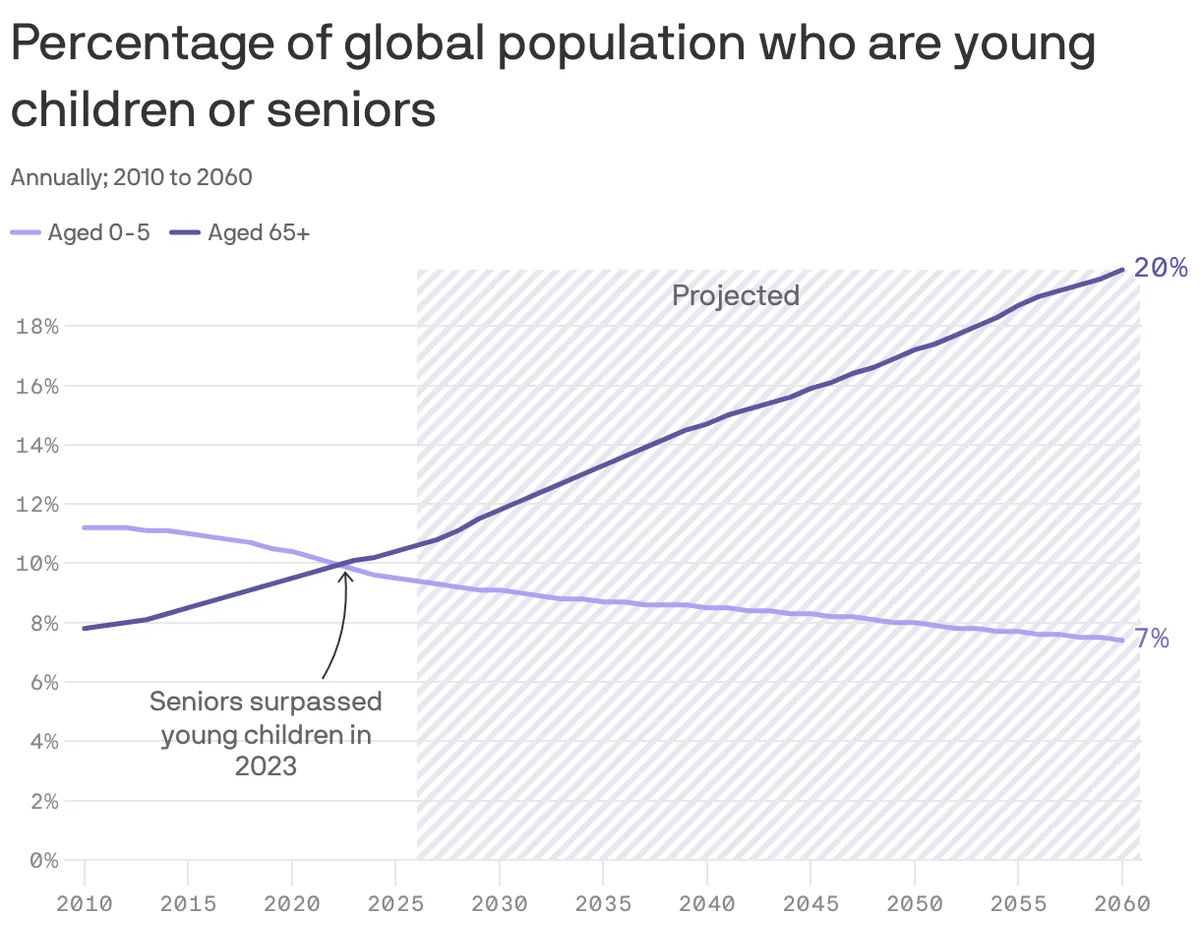
Data: U.S.
Census Bureau, International Database ; Chart: Noah Bressner/Axios People 65 and older now outnumber children ages 5 and younger worldwide for the first time in recorded history, according to a new report by the U.S.
Census.
Why it matters: A global plunge in fertility — demographers' term for the number of children being born — and increased longevity are creating a demographic inversion that's projected to deepen for decades.
It's a trend that's shifting the historic balance between working-age people and older adults .
By the numbers: The scale and speed of the shift as the youngest Baby Boomers move toward their mid-60s are striking.
They reflect the scope of the challenge in caring for the elderly and maintaining programs such as Social Security in the U.S., an Axios analysis of the Census data found.
More than 71% of the world's population lived in countries with fertility rates at or below the roughly 2.1-births-per-woman replacement level in 2023.
That's up from 45% in 2013.
The Census says the world reached that tipping point much earlier than demographers expected just a decade ago.
The population of those 65+ is projected to grow from 852 million in 2025 to 2 billion in 2060.
Stunning stat: That increase would account for about 55% of all net global population growth over that period, according to an Axios calculation using Census projections.
The world's total population is projected to rise from 8.13 billion to 10.23 billion by 2060.
State of play: The low-birth era has spread far beyond wealthy countries.
5News aggregated this summary from the outlet’s public feed. The full article, with all the context, is on www.axios.com — the content belongs to Axios.