‘It’s very rare to have a witness tree’: Arborists try to save tree that dates to 50 years before Revolutionary War
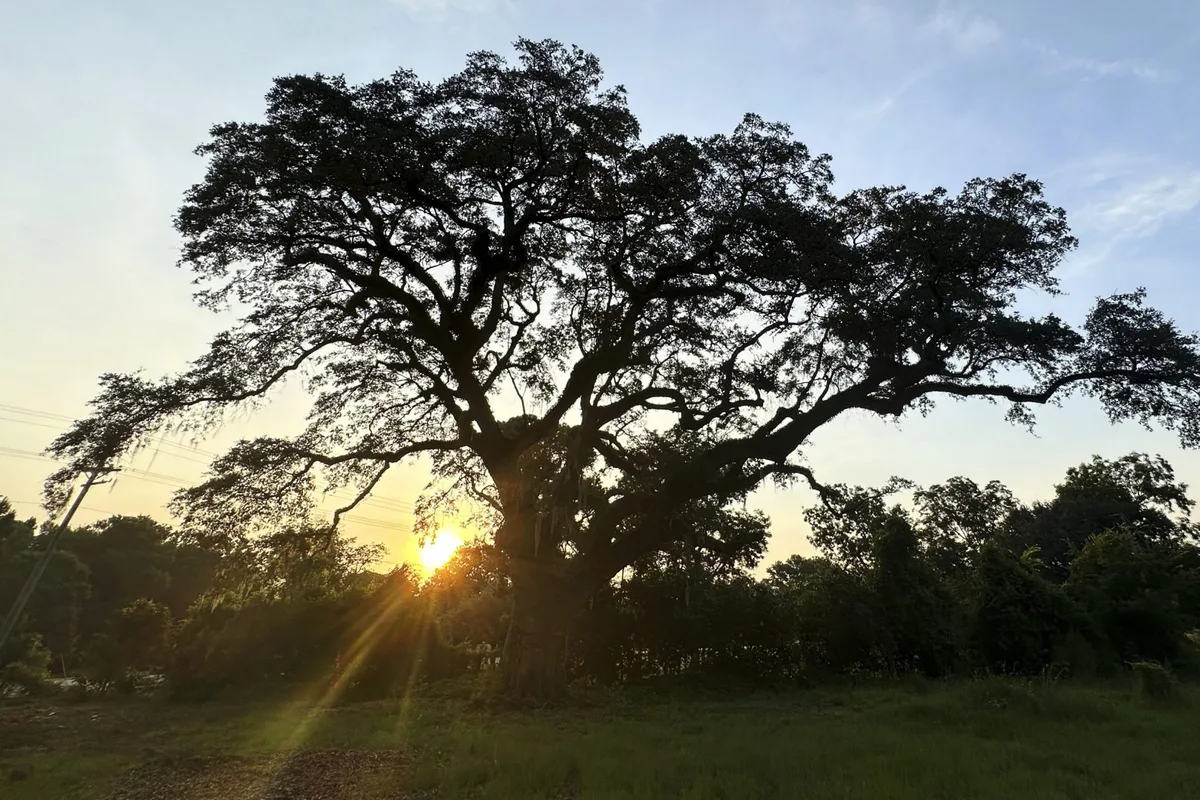
Standing beneath the spreading branches of a massive live oak, historian Garrison Marcoux tries to imagine what this scarred, struggling tree saw 245 years ago.
Did one of the British soldiers encamped at this South Carolina crossroad near the end of the Revolutionary War sit in the oak’s shade to recuperate from the series of attacks in American Maj.
Gen.
Nathanael Greene’s “war of posts?” Did he or his comrades take cover behind its then slender trunk and fire at the onrushing Continental Army? Perhaps a soldier took his last breath beneath its canopy, watering its roots with his blood.
“I’m a spiritual person,” Marcoux, with the South Carolina Battlefield Preservation Trust, said as workers clamber among the limbs above.
“To say that a place that experienced a lot of violence and intense emotion and things like that doesn’t hold some kind of energy is probably not likely.
I think that energy exists where something like this happened.” This is a “witness tree.” And it now faces its own fight for survival.
After multiple attempts to stave off its death over the decades, it is being choked by the chains and cables meant to support it.
Preservationists are working to save this unique, living reminder of an oft-overshadowed chapter in U.S. history.
What the oak witnessed during the Revolutionary War Arborists estimate that the tree was about 50 years old on Sept.
8, 1781, when British and colonial forces clashed during the Battle of Eutaw Springs — considered by historians to be the last open field engagement of the American Revolution.
“It’s very rare to have a witness tree, especially from the Revolutionary War,” Marcoux said on a recent sultry morning as gnats and mosquitoes buzzed around his head.
“To have the tree that witnessed this battle and still standing is short of a miracle.” Among the officers were famous names like Lt.
Col.
5News aggregated this summary from the outlet’s public feed. The full article, with all the context, is on fortune.com — the content belongs to Fortune.