Business-class fliers love sliding doors — but they’re causing a nuisance for airlines and planemakers
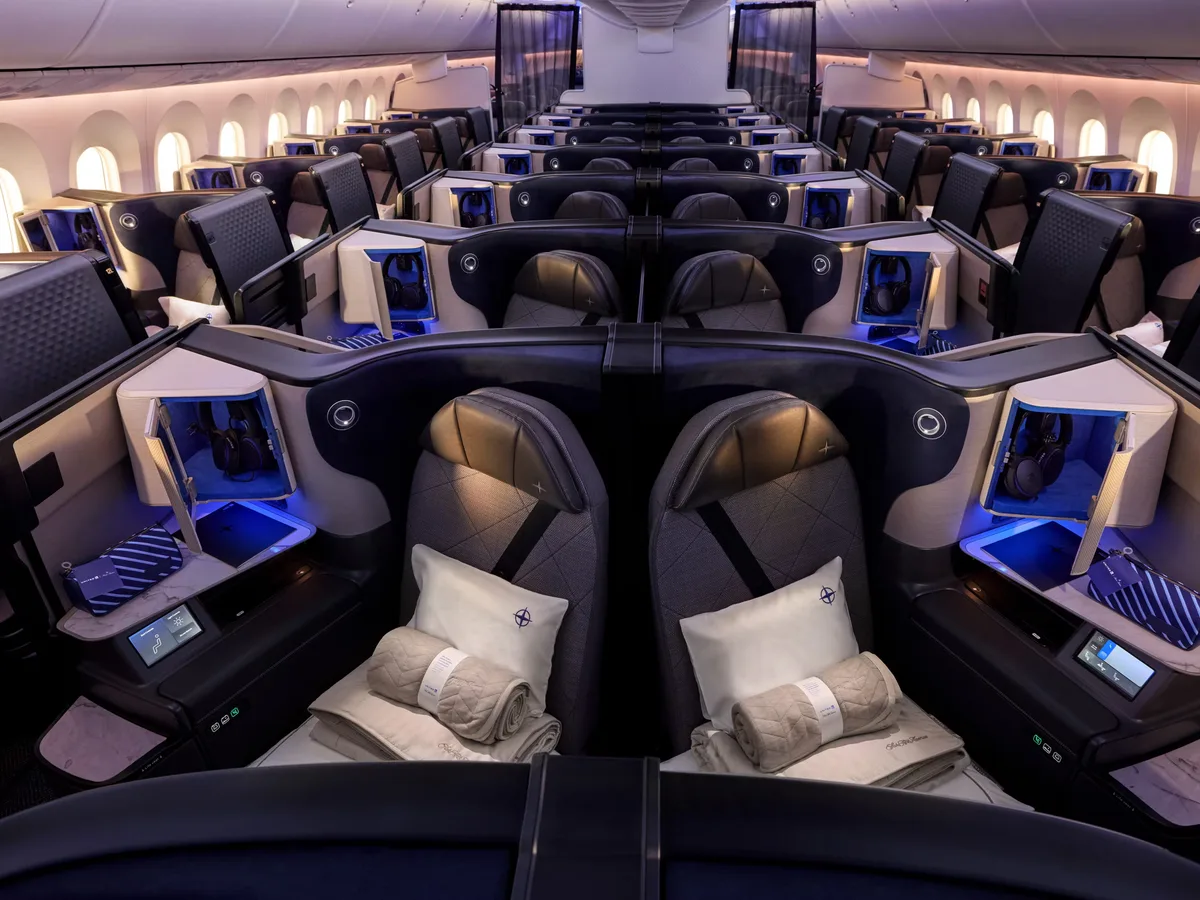
The Polaris suites in a United Airlines Boeing 787.
Courtesy of United Airlines The rise in premium travel is causing frustrations for airlines and manufacturers.
Fancy new business-class seats need to go through rigorous certification testing.
Airplanes have been stuck at factories or flown with empty business class cabins.
More travelers are shelling out for the best airplane seats amid a boom in premium travel , driving airlines to develop increasingly complex business-class seats — some of which are proving to be a headache for carriers and manufacturers alike.
Since COVID-19, airlines have been packing their planes with fancy new cabins as they try to attract more deep-pocketed customers.
In April, United Airlines rolled out an airplane with 64 business-class seats.
Delta Air Lines plans to debut its Airbus A350-1000 next year with 53 business-class suites.
But new seat designs must undergo rigorous certification by aviation regulators.
And ongoing approval delays are derailing plans, leaving airplanes stuck at factories awaiting delivery and, in some cases, flying with their highly profitable business-class doors locked open or the seats off-limits to passengers altogether.
Sliding doors are a frequent hurdle for certification.
First introduced by Emirates in 2003 to give first-class passengers extra privacy, they are now essentially de rigueur in business class.
However, regulators must be certain that these doors won't impede passengers during an evacuation.
Business class on an American Airlines Airbus A321XLR.
5News aggregated this summary from the outlet’s public feed. The full article, with all the context, is on www.businessinsider.com — the content belongs to Business Insider.