Army calls for safety fixes after finding systemic failures behind DC midair collision
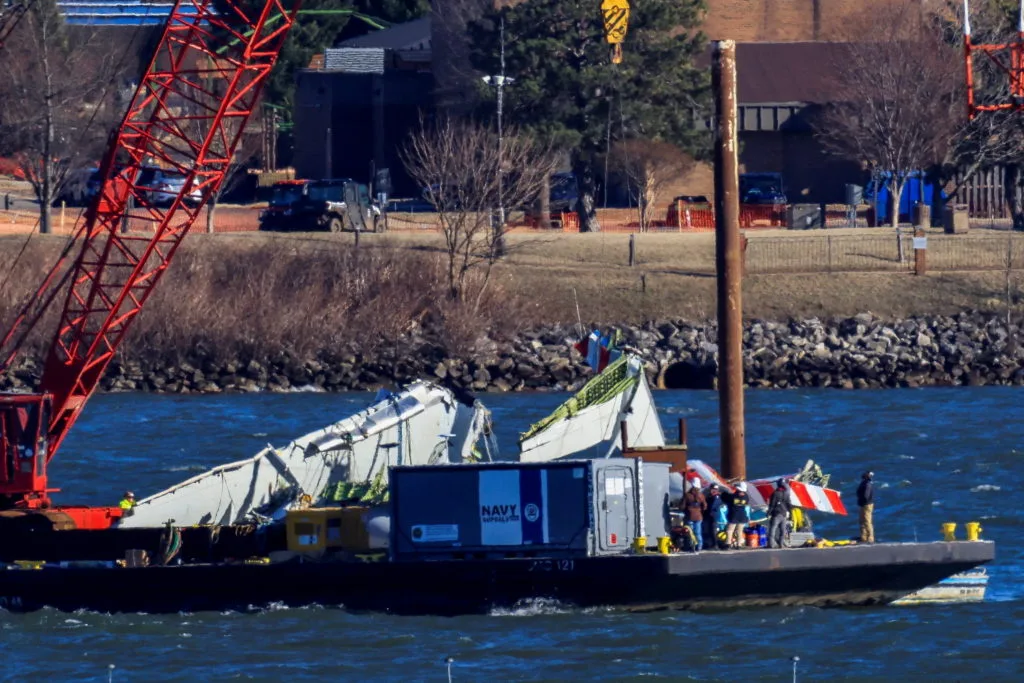
The U.S. Army found systemic safety breakdowns behind last year's midair collision between an American Airlines jet and a Black Hawk helicopter near Washington, D.C., and recommended changes to prevent future tragedies.
WATCH: NTSB investigators say DCA midair collision followed years of ignored warnings
The Army report — completed in May and released publicly Thursday after months of pressure from the victims' families — identified failures involving air traffic control, helicopter routes, training and safety practices. The Associated Press obtained a copy of the report hours before it was released.
The deadliest plane crash on U.S. soil in over two decades happened when the helicopter collided with the descending airliner as it approached the runway, sending both plummeting into the icy Potomac River and killing 67.
The Army report highlighted how the air traffic controller at Ronald Reagan Washington National Airport could have prevented the crash, but it also acknowledged the military's own failings and other contributing factors.
Tim Lilley, a former Army Black Hawk pilot whose son Sam Lilley was the airliner's first officer, said the report leaves important questions unanswered. Parts were redacted, and responsibility for the Army's failures was assigned broadly rather than to individuals.
"The Army owes the families and the American public a full accounting of how these risks were allowed to persist, who was responsible for the decisions that allowed them to persist and what will be done to make sure this never happens again," said Lilley, now a commercial jet captain.
"We recognize the families' need for answers and remain committed to transparency regarding the Army's review," it said.
While the report largely reinforces the National Transportation Safety Board's conclusions, the civilian investigation was broader and emphasized years of missed warnings by the Federal Aviation Administration along with a weak military safety culture.
The Army faulted the air traffic controller for not giving the helicopter crew more precise information about the approaching jet and for not warning the jet's pilot about the helicopter. After the crash, the FAA prohibited controllers from relying on pilots to maintain visual separation in busy airspace.
The report recommended looking beyond Washington to examine military helicopter operations in other major cities for similar risks. An Army official said the review of helicopter flights in other cities, including Los Angeles and the Seattle-Tacoma region, is ongoing. The official spoke on condition of anonymity because they were not authorized to discuss the situation publicly.
The lieutenant general who authored the report cited "breakdowns across all layers of conflict management" but singled out two failed radio transmissions that contributed to the helicopter crew not identifying the jet.
5News aggregated this summary from the outlet’s public feed. The full article, with all the context, is on www.pbs.org — the content belongs to PBS NewsHour.