Why Dubai may be vital to the Trump administration's economic war on Iran
President Trump threatened this week to wield an "unprecedented" level of economic warfare against Iran , and Treasury Secretary Scott Bessent vowed to "collapse" the Islamic Republic regime with the "toughest sanctions in history."
But the effectiveness of a bolstered economic campaign against Iran may rest largely on one close U.S. ally in the Persian Gulf, the United Arab Emirates.
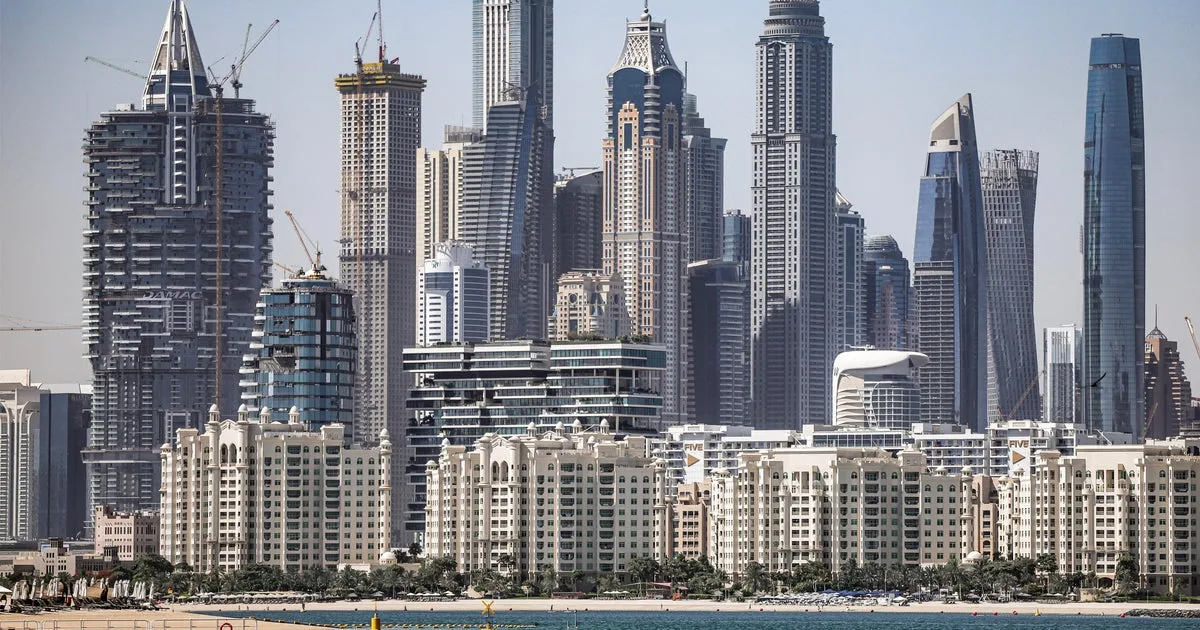
The Emirati city of Dubai, the Middle East's leading financial center, has long had a reputation as a hub for opaque economic activity. For Iran in particular, the city has offered ways to skirt international sanctions and gain access to vital funds from its sale of oil to countries like China.
"About 80% of Iran's foreign currency exchange is done in Dubai. So Dubai has served as a major source for Iran's foreign currency," Miad Maleki, a former U.S. Treasury official, told CBS News on Friday.
"Iran's economy today runs based on this kind of scheme of selling oil to China and then either using the funds that are generated from sales of oil to China to pay for imports from China, but also moving some of those funds outside China to jurisdictions like UAE through exchange houses," he said.
Maleki said he believes "the UAE is going to be very instrumental in cutting off the regime's access to procuring foreign currencies, but also getting access to its reserves — so funds that it has generated from oil sales to China and are sitting in different banks."
He told CBS News that if new U.S. sanctions are really going to increase the pain for Iran's economy, the UAE will be a vital actor in helping to crack down on Iran's shadowy banking transactions.
The U.S. Treasury has in recent weeks targeted a number of shell companies linked to the UAE. The Trump administration has said these shell companies act as a shadow banking system for the Iranian regime.
The targeted companies include Dubai-based HMS Trading FZE, which the Treasury said in a statement earlier this month, "plays a critical role in helping the Iranian regime retrieve revenue from its oil sales overseas, aiding some of Iran's most prominent exporters of petroleum."
In the Aug. 7 statement shared with CBS News, the Treasury also said Iran's Shahr Bank, which is linked to the country's powerful Islamic Revolutionary Guard Corps, had relied heavily on two Dubai-based currency exchange firms to launder money.
The Treasury said U.S. nationals were barred from doing business with all of the Dubai-based companies named in the Aug. 7 statement and that it was imposing secondary sanctions on foreign banks that knowingly do business with the Dubai-based shell companies.
A Trump administration official told CBS News on Friday that "crushing sanctions" and the U.S. naval blockade on Iran had crippled the country's economy and left it "completely broke."
"There are many levers the president can crank harder in the weeks and months ahead," the official said.
The UAE has said it is taking action against Iran.
5News aggregated this summary from the outlet’s public feed. The full article, with all the context, is on www.cbsnews.com — the content belongs to CBS MoneyWatch.