‘Super’ El Niño Could Push Earth’s Temperature 13 Years Ahead of the Current Warming Trend
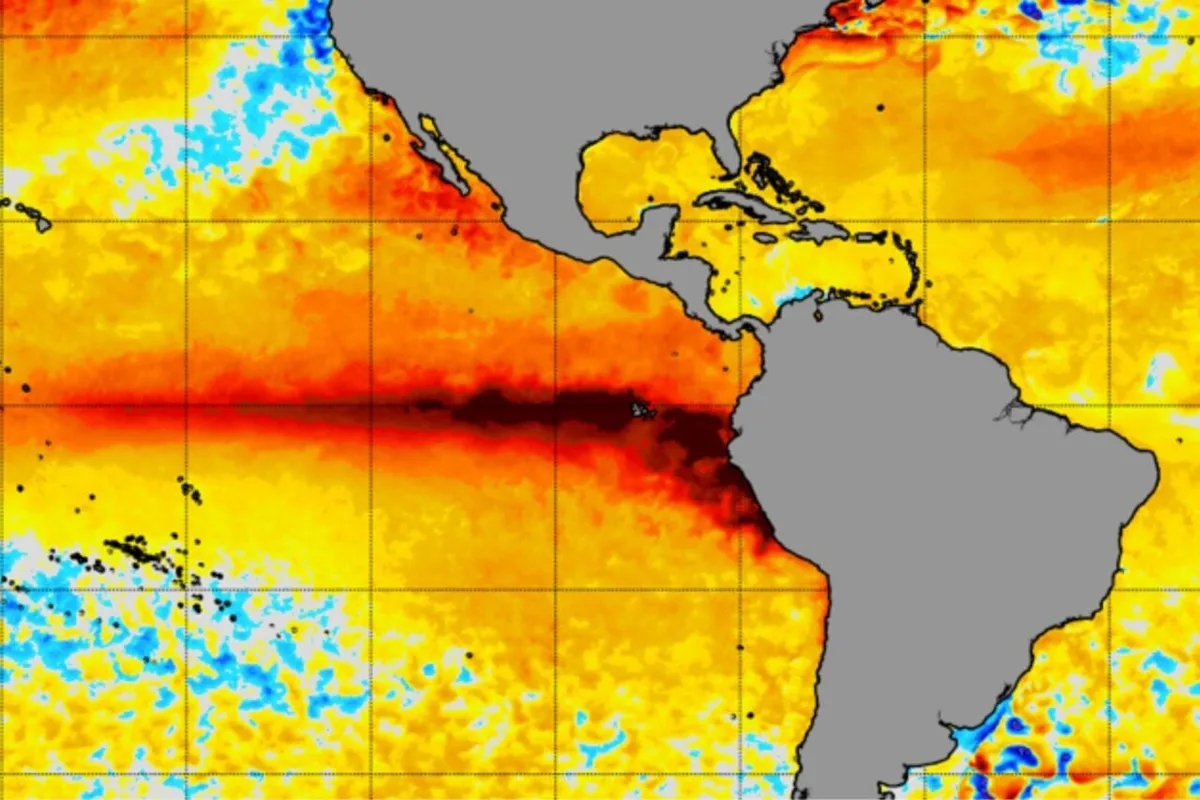
On Thursday, the National Oceanic and Atmospheric Administration updated its El Niño outlook, declaring a 90% chance of a “very strong” event. In fact, leading forecast models are predicting the strongest El Niño on record , and it could offer a preview of our future climate.
A new analysis by Berkeley Earth climate scientist Zeke Hausfather, shared with The Washington Post, found a 95% chance that the combined impact of this “super” El Niño and human-driven warming will make 2027 the hottest year on record. He reportedly estimates that the global temperature could range from 3 degrees Fahrenheit (1.67 degrees Celsius) to 3.33 degrees F (1.85 degrees C) above the preindustrial average next year.
At the upper end of this range, 2027’s global temperature could resemble levels the planet might not otherwise reach until around 2040—temporarily fast-forwarding the current warming trend by about 13 years, according to The Washington Post. At the lower end, we’d see temperatures resembling what’s expected by the mid-2030s.
Even El Niños of ordinary strength can significantly boost Earth’s average temperature. That’s because the sharp rise of sea surface temperatures in the equatorial Pacific Ocean releases vast amounts of heat into the atmosphere. But this is no ordinary El Niño.
“No El Niño in the modern record has run this warm this early in its development: measured against each year’s own climatology, 2026 is now tracking above even the great 1997 and 2015 events at the same point in the year,” Hasufather and his Berkeley Earth colleague, chief scientist Robert Rohde, wrote in a July 2026 temperature update issued Thursday.
When El Niño peaks in December, sea surface temperatures are projected to be roughly 7.2 degrees Fahrenheit (4 degrees Celsius) above average, blowing the previous record out of the water.
“We think it’s now more likely than not that there’s enough warmth generated by an extraordinary El Niño event that we could have record warmth in 2026 and much stronger warmth in 2027,” Rohde said during a press briefing he gave alongside Hausfather on Thursday.
To be clear, the global average temperature observed in 2027 likely won’t persist beyond that year. El Niño will subside and so will its heating effect. Hausfather told The Washington Post he expects 2028 to be cooler but added that “human emissions are adding a permanent El Niño worth of heat to the climate system each decade.”
Even though El Niño’s direct influence over Earth’s climate is temporary, long-term climate records show that these events can have a lasting impact on global temperature rise . That’s because they are occurring against the backdrop of climate change.
Take the strong El Niño of 2023, for example. This event played a key role in making 2024 the hottest year on record. When La Niña took hold in 2025, the global average temperature fell, but it did not return to 2022 levels. In fact, 2025 became the third-warmest year on record, just behind 2023 and 2024.
5News aggregated this summary from the outlet’s public feed. The full article, with all the context, is on gizmodo.com — the content belongs to Gizmodo.