Pentagon Pete’s Soldiers Revolt Over Live Execution
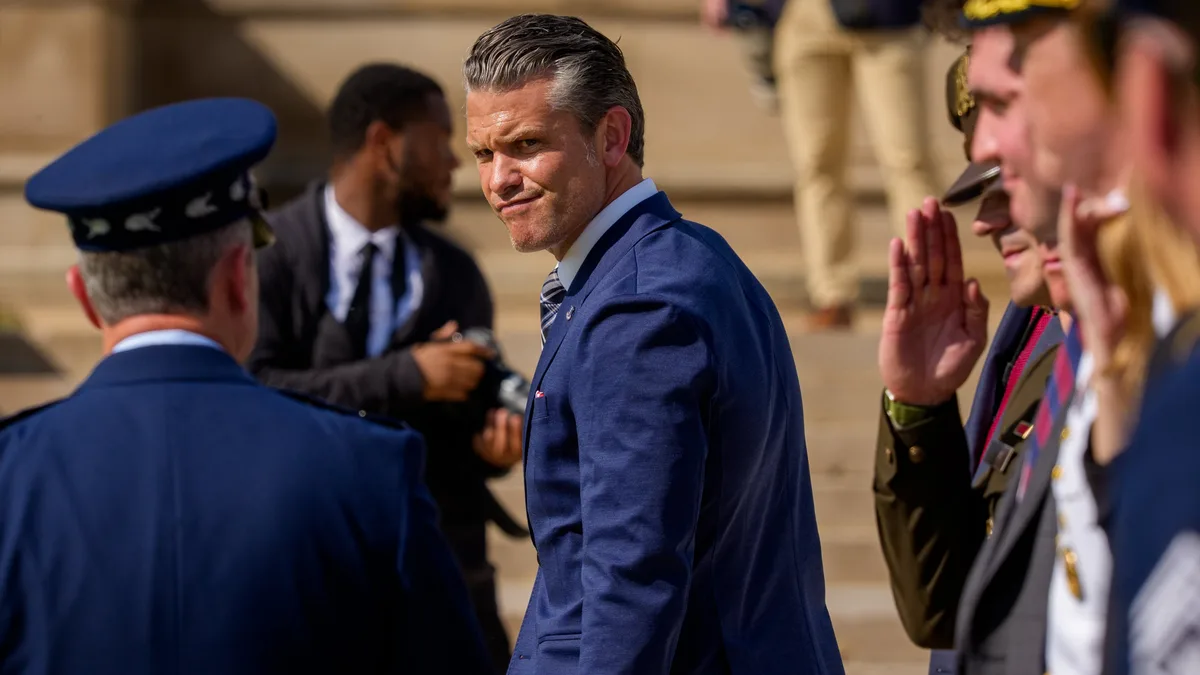
Andrew Harnik / Getty Images At least 60 soldiers want to recuse themselves as potential members of a firing squad after Pete Hegseth ordered that Nidal Hasan’s execution be livestreamed.
The Military Religious Freedom Foundation , a nonprofit that advocates for service members’ constitutional rights, alleged that dozens of active-duty service members have “religious or moral objections” to the planned livestreamed execution of Hasan, who killed 13 U.S. soldiers during an attack at the Fort Hood Army base in Texas in 2009.
Hasan was left partially paralyzed and confined to a wheelchair after being shot by police during his arrest.
The service members objecting to the “grotesque and barbaric” public execution are explicitly at risk of being among the roughly 180 soldiers selected for the firing squad, MRFF founder Mikey Weinstein told WTOP.
“It’s one thing to carry out an order of execution.
It’s quite another to have it streamed, where every second grader, at this stage in 2026, with the ability to get to the internet, can watch it happen,” he said, adding that the vast majority of those objecting are Christians, along with members of other religious groups.
Hegseth made the shock announcement last week that Hasan, 56, a former Army major, would face the first military execution since 1961 on December 3.
The announcement also included an unprecedented decision to livestream the execution, citing Hasan’s role in carrying out the “radical Islamist attack” at Fort Hood.
“And we’ll make sure that people are able to watch it, that it’s public, because people need to understand that there’s serious consequences for these types of things,” Hegseth told Real American News.
The decision to livestream the first military execution in 65 years has sparked outrage across the political spectrum, including among veterans.
Army veteran and nonprofit director Nick Van Zandt, for example, wrote in a LinkedIn post that a public, state-sanctioned execution carried out in his and others’ names would be a “reprehensible spectacle.” “Once the state broadcasts the killing, the line it has crossed can never be undone,” he wrote.
Indeed, the last state-sanctioned killings to be publicized were two hangings in the 1930s in Kentucky and Missouri that drew crowds, the Associated Press reported.
Experts argue that public executions, once perhaps thought to encourage orderliness, are more harmful than beneficial.
Some research suggests that public killings can foster apathy, desensitize witnesses to violence or, conversely, traumatize them, potentially leading to sleep disorders or even post-traumatic stress disorder.
5News aggregated this summary from the outlet’s public feed. The full article, with all the context, is on www.thedailybeast.com — the content belongs to The Daily Beast.