What Annie Dillard Left Off the Page
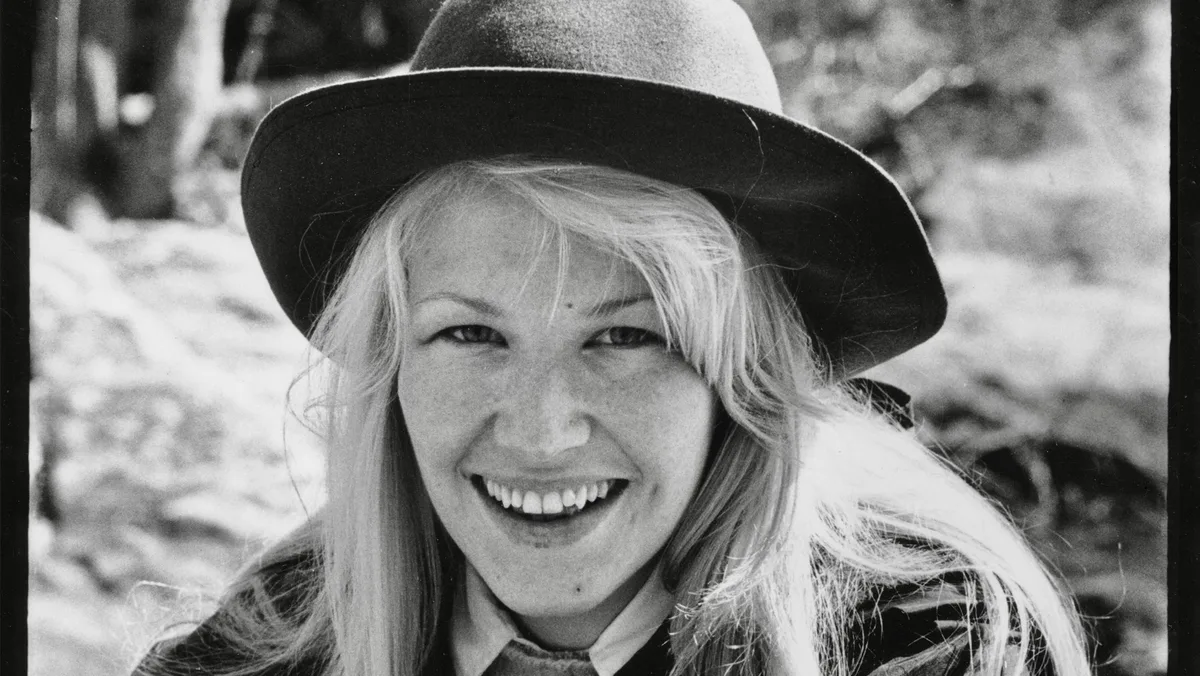
When Annie Dillard decided to write what would become her 1974 nonfiction book, Pilgrim at Tinker Creek , she noted in her journal that she saw in her material the potential for two distinct works: one that was a close observation of the natural world, and another that was more artistic, even spiritual.
In Dillard’s chronicle of a year spent exploring the Roanoke Valley, the narrator veers from chasing steers to asking, “What do we think of the created universe, spanning an unthinkable void with an unthinkable profusion of forms?” I was in college when I tore through the book; I was taken by this female narrator wandering the woods awake to the horror and wonder of the world.
When I learned that Dillard had been living with her first husband during the years Pilgrim describes, I felt betrayed: This wild woman of the forest was, as she wrote in her journal, a “Virginia housewife”? During a phone interview for a 2015 Atlantic article that I wrote about Dillard, I asked her about the decision to leave her husband, friends, and suburban milieu out of the book.
She told me that she hadn’t meant to deceive anyone.
She said she’d “just put in what was interesting.” At the time, I was 24, and about to move to rural Alaska in search of isolation—inspired, in no small part by Pilgrim , to become a writer unencumbered by relationships.
She ended our call by saying, “Give ’em hell out there.
I wish I were young and going to a cabin in Alaska.” In a follow-up email, she gave me advice on winter boots and the three weights of long underwear I’d need.
Yet Dillard herself never attempted—or encouraged—the kind of separateness I was seeking.
In 1984, she published an article for Esquire describing how, in order to write, she’d located the spot in her brain that allowed her to be “wholly alive while wholly alone.” She continued, “A few hours a day of this is quite enough.” The rest of the time, she wanted company.
“I am a social animal,” she wrote.
Dillard, who wed three times, told me she’d been continually married since she was 20.
In her nonfiction writing, though, we rarely meet her husbands, or learn anything about her experience of motherhood (she had one child and four stepchildren). [ Read: The Thoreau of the suburbs ] The point of writing isn’t to convey everything that has ever happened to the writer.
5News aggregated this summary from the outlet’s public feed. The full article, with all the context, is on www.theatlantic.com — the content belongs to The Atlantic.