What happens when private equity owns your childcare?
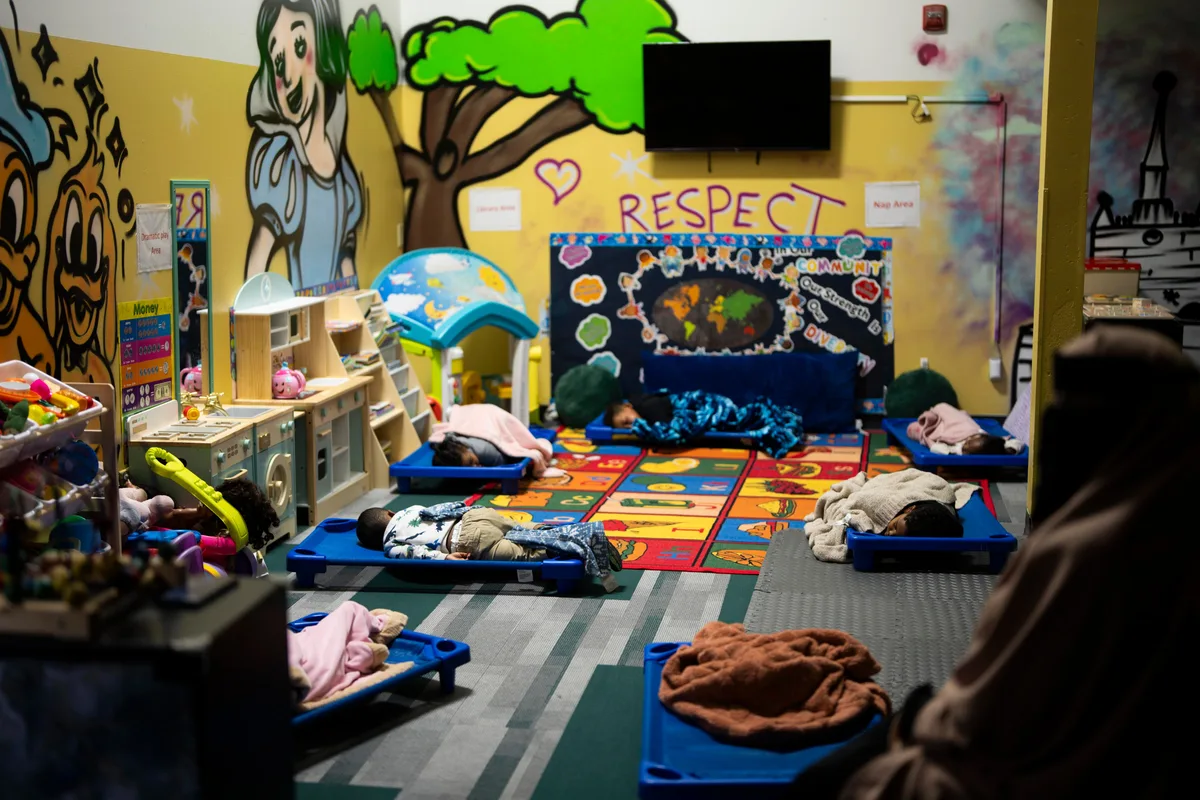
Children sleep during nap time at Minnesota Child Care in Minneapolis, on December 30, 2025. | Renee Jones Schneider/The Minnesota Star Tribune via Getty Images Affordability is the top political problem of the moment, and lawmakers in both parties have increasingly blamed large investors for buying up housing , hospitals , and other staples families can’t do without, while jacking up prices and degrading quality.
Earlier this year, Sen.
Jeff Merkley (D-OR), who has backed bills on both fronts , turned his attention to childcare.
The ranking member of the Senate Budget Committee sent sweeping document requests to KinderCare Learning Companies and Learning Care Group, the two largest private-equity-owned childcare companies in the country, seeking information like board minutes, subsidy totals, staffing ratios, dividend records, and the investment memos the firms wrote when they bought in.
Private equity, Merkley said in announcing the requests , has increasingly prioritized “investor profits over the well-being of the families and communities that depend on these services.” The federal inquiry follows several years of national childcare advocacy groups warning that private equity, an industry known for acquiring businesses for quick-turnaround sales, should be kept far away from kids.
In 2022, Elliot Haspel, a progressive childcare expert, wrote in the New Republic that private-equity owned childcare chains “ultimately answer to investors or shareholders first, parents second.” Citing their record in nursing homes, where acquisitions have been associated with declines in quality , Haspel wrote that there’s “little reason to think that early care and education would be magically exempt from these sideways influences.” In 2024 the Open Markets Institute, the National Women’s Law Center, and Community Change put out a report contending that private equity-owned centers would not only seek to soak up public funding, but stall reforms limiting their reach long enough to capture local market share, until they could argue they’d become too embedded to remove without harming families.
Since then, lawmakers in at least five states — Colorado , Connecticut , Massachusetts , New York , and Pennsylvania — have introduced or passed bills that write ownership structure into childcare policy, cap what large for-profit chains can draw from state grants, or attach strings to public dollars that apply to those providers alone.
The coalition of national groups published model state legislation of its own this past February, built partly on those state experiments.
5News aggregated this summary from the outlet’s public feed. The full article, with all the context, is on www.vox.com — the content belongs to Vox.