Rubio tells allies U.S. shifting from strikes to sanctions on Iran
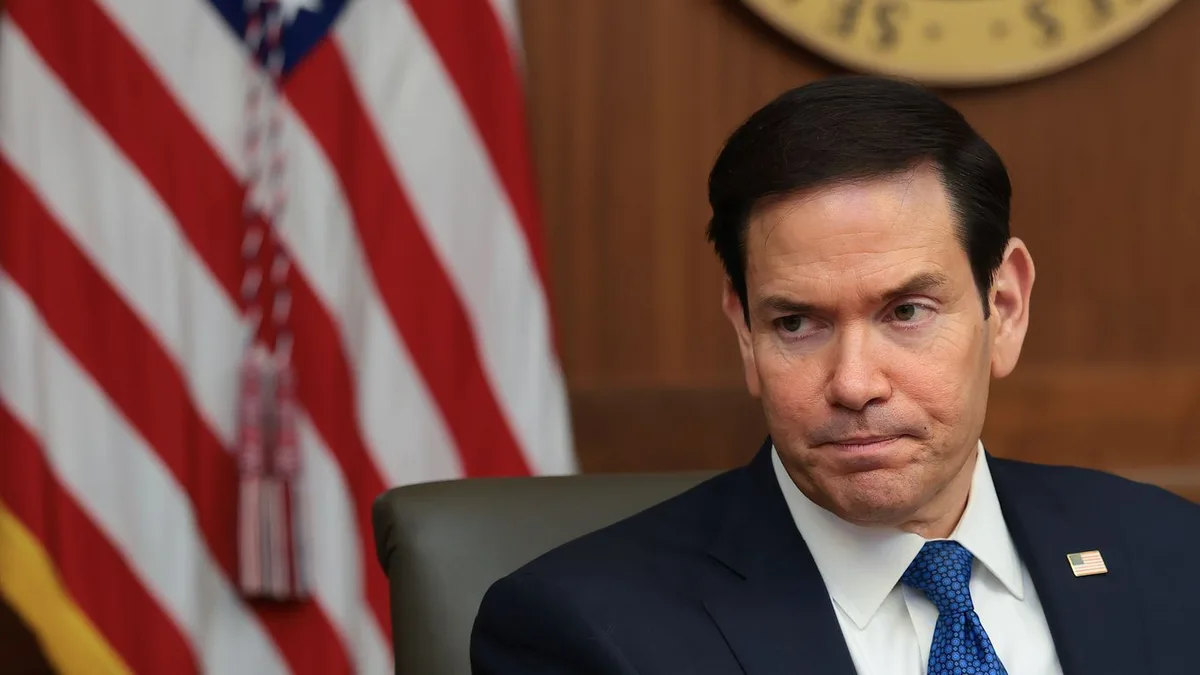
Secretary of State Marco Rubio has told several of his foreign counterparts in recent days that "for the time being" the U.S. is not expected to initiate new strikes against Iran , according to a U.S. official and a second source with knowledge of the matter.
Instead, he's said the focus is on other means of pressure, including the sanctions initiative announced this week.
Why it matters: Rubio's message to foreign ministers from several allied countries comes as the U.S. believes it's suffocating Iran with the naval blockade — while moving ever-increasing amounts of oil out of the Strait of Hormuz.
It's also another sign that President Trump is exasperated with the war and wants it to be over, at least for now.
The U.S. official said that while Rubio made clear that the U.S. isn't planning a return to major combat operations, he didn't rule out strikes if Iran attacks first.
Another U.S. official said the clearing of mines from the Strait of Hormuz by the U.S.
Navy is a watershed moment in the war, largely neutralizing one of Iran's main sources of leverage.
Behind the scenes: The sources said Rubio outlined the Trump administration's current Iran policy in phone calls with several of his counterparts: Avoiding military action against Iran for the time being.
Increasing economic pressure on Iran through the U.S. naval blockade and the new Treasury Department sanctions push.
Transporting as much oil as possible through the strait and into global energy markets.
A second U.S. official said this is expected to be the policy at least until after the midterm elections, when a new military campaign could again be on the table.
State of play: U.S. officials say the clearing of mines from most of the Strait of Hormuz, coupled with the fact that more and more tankers have been moving through the southern lane of the strait in recent weeks, significantly reduces Iran's leverage over global energy markets.
"The Iranians have lost control over the strait.
Now the U.S. controls it," one U.S. official said.
5News aggregated this summary from the outlet’s public feed. The full article, with all the context, is on www.axios.com — the content belongs to Axios.