America’s Best Incubators and Accelerators of 2026
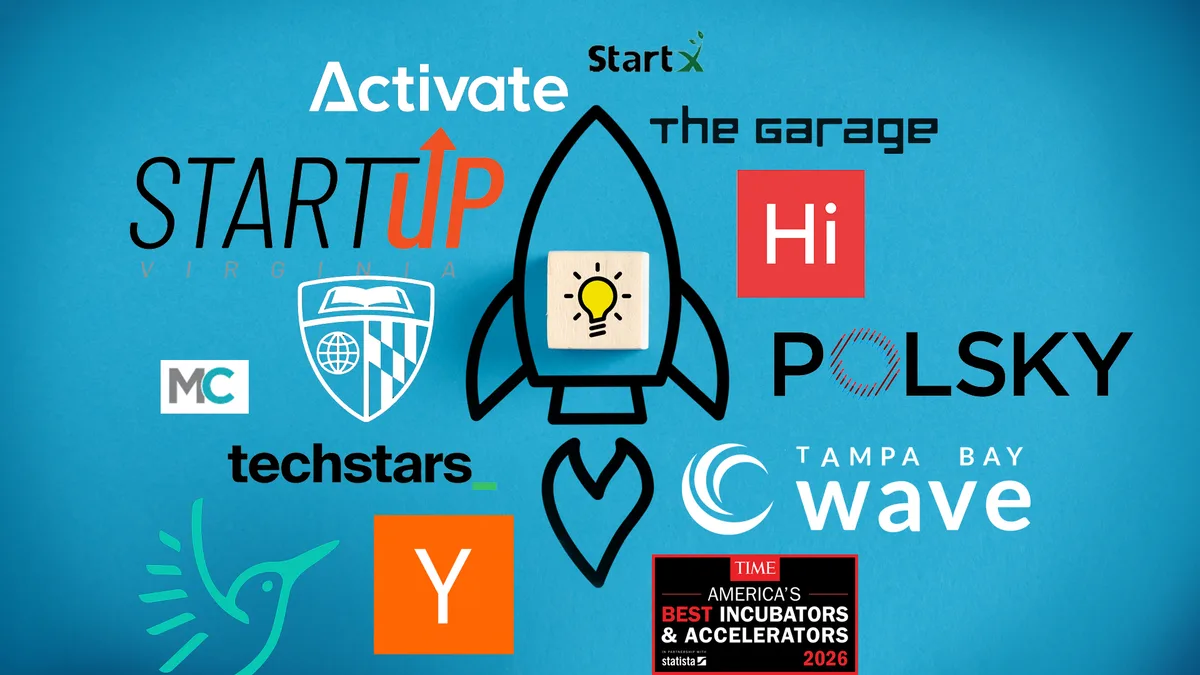
—Cagkansayin—Getty Images The U.S. creates more unicorns —companies valued at more than $1 billion—than any other country in the world.
Most began as startups that were developed through funding and external support.
There are several different development pathways a startup can take, from venture funding to partnerships to joining incubators and accelerators, which formed as a way to provide resources and support to burgeoning companies apart from capital.
“I think part of what's pushed this movement into accelerators for many founders is that U.S. venture capital has moved over time from seed- and early-stage to more growth-oriented investment,” says Valentina Assenova , an assistant professor at University of Pennsylvania’s Wharton School.
“It's a lot more capital that's coming after startups are very scalable.” Accelerators, Assenova says, “reduce uncertainty during some of the riskiest phases of new company formation and development” by offering guidance and support to the founders.
To identify the most outstanding hubs offering incubator and accelerator programs in the United States, TIME partnered with data company Statista on a multi-stage research process combining an open application, structured alumni feedback, track record analysis, and expert recommendations.
The top 80 were ranked as America’s Best Incubators and Accelerators of 2026.
Methodology: How TIME and Statista Determined America’s Best Incubators and Accelerators 2026 Incubators and accelerators are similar in that they usually support companies at an earlier stage than venture capital firms , but have some key distinctions in the roles they play in development.
“We think of incubators as being hatcheries for new companies,” Assenova says.
“They typically are longer term, or they may not have a fixed term, they provide a lot of infrastructure, venture development support, and they often come in at an earlier stage of development for the startup.” Popular places for incubators to be situated are within larger corporations where successful ideas can eventually be spun-out into independent companies, and at universities like The Garage at Northwestern University (no.
5).
Accelerators, on the other hand, can compress years of learning into a super-intensive, fixed-term “boot camp” that allows founders to experiment with different ideas and constructively fail and pivot.
They provide access to trusted business networks that would be otherwise difficult to access.
For example, for startups that emerge outside of Silicon Valley, founders can use an accelerator to connect to their local ecosystem.
5News aggregated this summary from the outlet’s public feed. The full article, with all the context, is on time.com — the content belongs to TIME.