By sky and sea, Ukraine's drone strikes challenge Russia's grip on Crimea
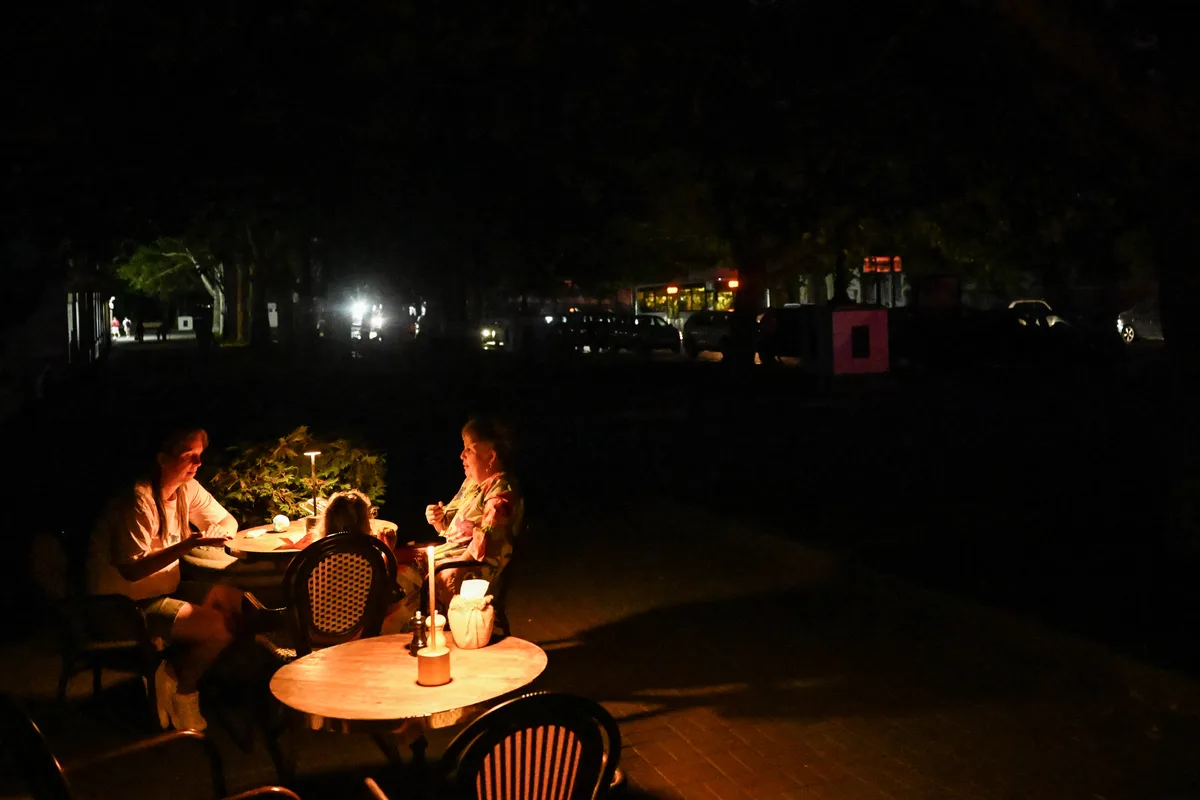
KYIV, Ukraine — The Black Sea peninsula of Crimea is normally packed in the summer with families enjoying beach vacations. But not this year, as Ukraine's relentless drone strikes make life increasingly miserable.
"Transportation is completely at a standstill. No gasoline, no fuel, no power. The stores are closed. The banks are closed. Nothing works at all. There's no water either," a Russian woman said on social media .
Crimea was the first place Russian leader Vladimir Putin seized when he initially invaded Ukraine in 2014. An estimated 1 million Russian troops and civilians have poured into the territory to make it more Russian and less Ukrainian. With the Russian influx, and the departure of many Ukrainians, Crimea's population is now estimated at around 2.5 million.
Ukraine has vowed to get Crimea back and carried out periodic drone strikes in recent years, with limited effect. But the campaign has ramped up dramatically in the past couple months.
Russian military facilities have been hit hard, especially in the northern part of Crimea. For civilians, a critical shortage of basic services keeps getting worse in a place that relies heavily on imports.
"Putin's got a problem here," said Mark Montgomery, a retired U.S. Navy rear admiral who comes to Ukraine regularly to help train the military. He's been keeping a close watch on Crimea.
"You cannot keep that many people in a place with limited water, no fuel, limited foodstuffs. I mean, they're going to have to leave," he said.
Crimea juts out into both the Black Sea and the Sea of Azov, and this location, along with its mild climate, has made it a prize for centuries. Russian Empress Catherine the Great first brought the territory into the Russian Empire in 1783.
For Russia's military, Crimea is a vital warm-water naval port to the south. On the civilian side, tourists come every summer for the beaches and the picturesque views of the sea and the mountains.
Hanna Shelest, the head of security programs at the Ukrainian Prism think tank, said Russians eagerly moved to Crimea a decade ago.
"Some of the Russian military were coming together with their families, buying property and dreaming about staying there."
They often took over homes vacated by Ukrainians who had fled. Russian security forces still maintain tight control over Ukrainians who have remained.
"You are arrested if you speak Ukrainian, if you have a Ukrainian [computer] keyboard, if you have Ukrainian music. Any demonstration of you being Ukrainian, and you are arrested," said Shelest, who's based in the southern Ukrainian port city of Odessa.
Ukraine's recent drone campaign has included strikes that cut electricity, cell phone service and water for extended periods. The daily attacks have also targeted Russian ships and ferries that deliver food, fuel, and other essential supplies from Russia.
5News aggregated this summary from the outlet’s public feed. The full article, with all the context, is on www.npr.org — the content belongs to NPR.