Are mosquitoes, ticks and fleas turning California into a disease hotspot?
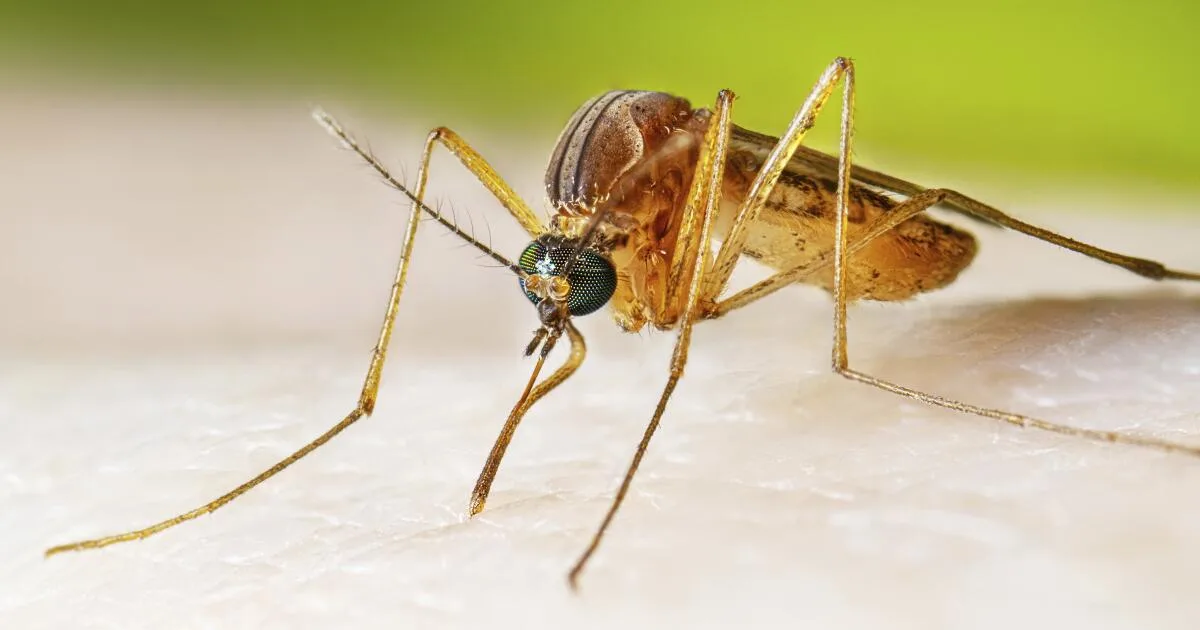
Some days it feels like we’re losing a battle against mosquitoes, ticks, fleas, flies and worms.
Just this month, tularemia , also known as rabbit fever and caused by a bacterium in ticks and deer flies, was detected in people living on Long Island. A park in Marin County was shut down in July after it was found to be teeming with fleas, which can carry plague and typhus. And in April, Rickettsia, a rare but deadly tick-borne bacterium, was found in a person living in Sonoma County.
Lyme disease and Alpha-gal syndrome are expanding their range. Dengue and typhus are increasing. There are still reports of West Nile, Zika and Chikungunya, plus the potential introductions of Chagas and rat lungworm disease . Some of these are contracted overseas, while others are seemingly settling in for the long haul.
Experts say there is no single reason for this surge in disease. Some of it may be hyped news, headline sensationalism. When everyone is writing about an outbreak of a disease, no matter how isolated, it can feel more pervasive and widespread than it actually is.
Increased monitoring and more advanced disease tracking can also amplify the sense that something new is afoot, even if it was always there.
But in some cases, there really does appear to be an increase — and California is front and center.
You have to ask, “what are we doing to the planet and does that mean we will encounter more diseases?” said Janet Foley, a disease ecologist at the UC Davis School of Veterinary Medicine. “The answer is: yes.”
This year, conditions including a record-smashing March heat wave led to a surge in California’s native Culex mosquitoes, the transmitters of West Nile virus. Most infections are asymptomatic, but about one in 100 involve neuroinvasive disease: meningitis, encephalitis or paralysis. There’s no specific treatment.
Matt Willis is a former Marin County public health officer who used to work at the Centers for Disease Control and Prevention as an epidemiologist and now helps model the health impacts of climate change. In a July 23 Substack post, he wrote that early signs point to a potentially severe season for West Nile virus in California. L.A. County’s positive mosquito samples were 10 times higher this year than last and nationally, human cases were at a 20-year high for that point in the season. The following week, he wrote that increased activity “has me even more concerned.”
As of mid-August, 373 West Nile virus-positive dead birds have been reported statewide , compared to 76 at the same point in 2025. The CDC confirmed 181 human cases nationwide — 129 of them neuroinvasive.
“As temperature rises globally, and as more northern latitudes experience hotter temperatures on average, and more extreme temperatures, some of those pathogens and/or insects that are more prevalent in those parts of the world migrate northward,” Willis said. “That is happening.”
Another mosquito-borne disease of increasing concern in California is dengue.
5News aggregated this summary from the outlet’s public feed. The full article, with all the context, is on www.latimes.com — the content belongs to Los Angeles Times.