What happens after a town de-Flocks
Cities across the US are ditching the controversial license plate-reading cameras, but some are now turning to new surveillance tools.
Cities across the US are ditching the controversial license plate-reading cameras, but some are now turning to new surveillance tools.
From Florida to Washington state , local governments across the country are canceling their contracts with Flock, the company behind the controversial AI-enabled license plate readers, in response to public outcry. But ending the contracts doesn’t necessarily mean the cameras will come down immediately — or that the information they’ve gathered will be deleted anytime soon.
Even as state and local governments decide to rein in their surveillance capabilities, uncertainty remains about what Flock can and will do with data that has already been collected. Each jurisdiction’s contract is different, but many of them let Flock retain data long after it’s been collected. “Let’s say they terminate,” said Saira Hussain, a senior staff attorney at the Electronic Frontier Foundation who has reviewed dozens of municipal Flock contracts. “What happens to the data, and how long is it able to be searched? That question appears to be unresolved.”
The backlash against Flock was slow to mount, but now it’s everywhere, and it’s bipartisan . Founded in 2017, Flock pitched its cameras — which are sold not only to local governments but to private businesses and citizens — as an unobtrusive tool to enhance public safety. Early in the company’s history, some cities even offered grants for homeowners associations that wanted to install Flock cameras in their neighborhoods. Flock’s footprint has grown quickly. The company has installed more than 120,000 cameras across the US.
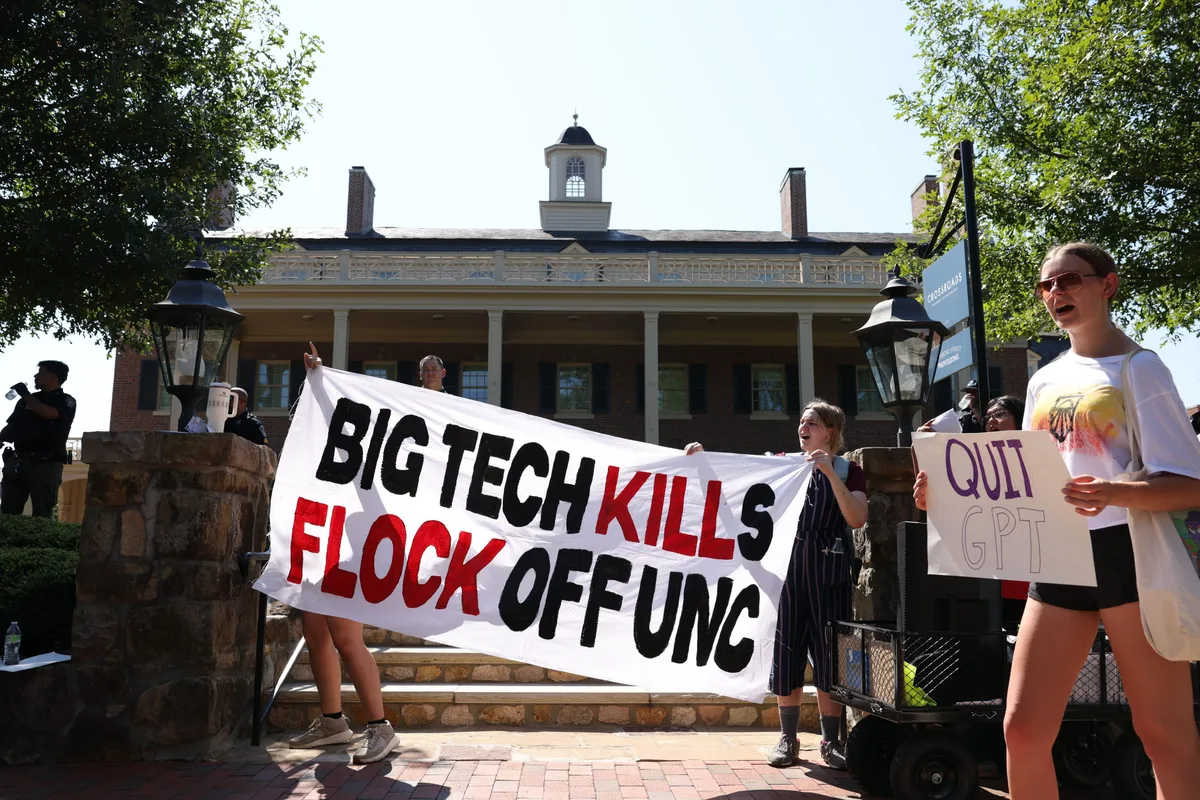
This rapid expansion, along with alarming reports of misuses of Flock’s surveillance network, has fueled a new wave of opposition, making Flock a kind of shorthand for privacy invasion. In recent months, activists in big cities and small towns have urged local governments to end their contracts, citing concerns about privacy, harassment, and mass surveillance. Local leaders have said the public pressure — coupled with Flock’s data-sharing and retention policies, and what the company can do with the information its cameras collect — spurred them to end the contracts.
Lawmakers in Sheboygan, Wisconsin, unanimously voted to end the city’s Flock contract after learning that Flock reportedly tried to sell anonymized data collected in Sheboygan back to the city’s public works department. Elsewhere in the state, the mayor of Stevens Point not only ended its contract with Flock but also covered up the 10 cameras scattered throughout the city. “We really have no way of auditing where the Flock data goes once it’s collected,” Mayor Mike Wiza said on a local radio show.
5News aggregated this summary from the outlet’s public feed. The full article, with all the context, is on www.theverge.com — the content belongs to The Verge.