Trump Loses the Other Strait
As recently as last week, the Iran war appeared to be turning in America’s favor.
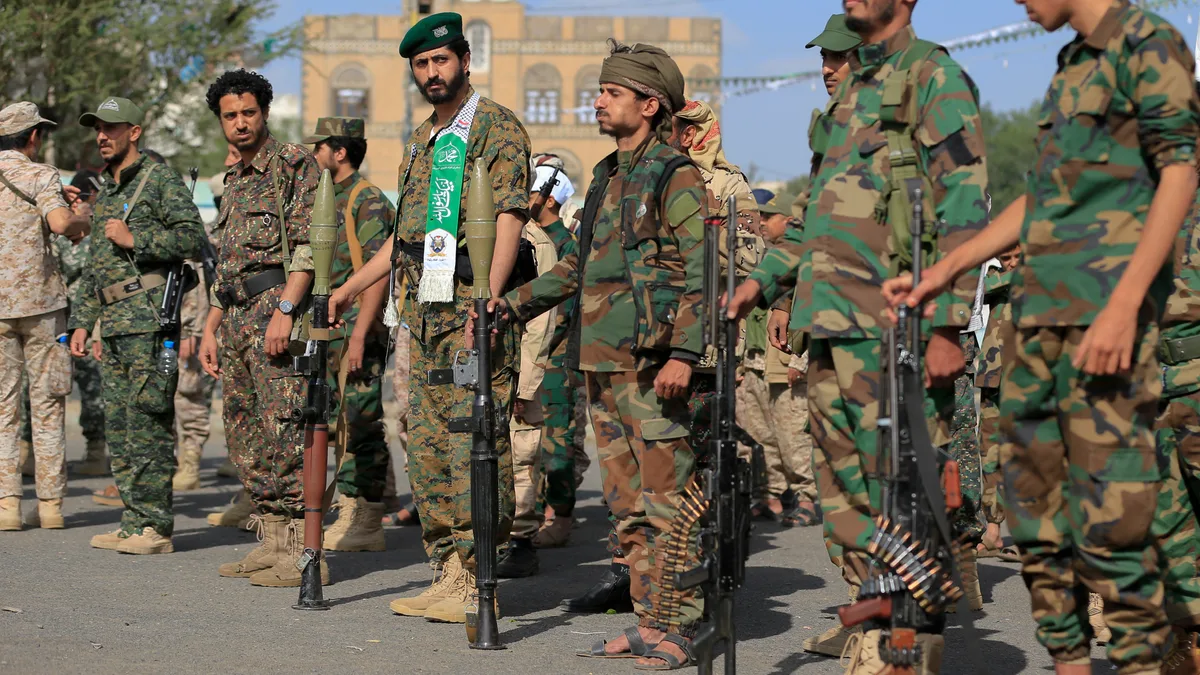
The Houthis—the Yemen-based militia that is Iran’s most formidable remaining ally in the Middle East—were under pressure from their local rivals, and the Saudi air force was pounding them with air strikes.
The president of Yemen’s internationally recognized government issued a triumphant statement declaring that the Houthis’ miscalculations “will open the door to their complete collapse.” The next step was easy to imagine: With their Houthi partners wounded, Iran’s leaders would be forced to back down and agree to Donald Trump’s terms.
Yesterday morning, those delusions drifted away like smoke as Houthi forces broke through their enemies’ defenses and seized the towns and islands around the Bab al-Mandab Strait, one of the most important maritime choke points in the world.
That loss leaves Trump, who had been hoping to win back control of the Strait of Hormuz from Iran, with a bitter surprise.
His enemies now control both of the two important straits in the Middle East, through which a combined total of about a third of the world’s oil shipments pass every day. [ Read: An ‘America First’ deal with the Houthis ] It also underscores a stubborn fact: For all the setbacks suffered by Iran’s “Axis of Resistance” over the past year or two, its forces retain an ideological fervor and an esprit de corps that is sorely lacking on the other side.
The Gulf states’ failure to work together against the Houthis has been catastrophic, and it echoes Trump’s own failure to devise a plausible or coordinated strategy against Iran.
Although the Houthis already had the ability to threaten shipping in the Red Sea, the capture of the Bab al-Mandab “means you can literally sit on the coast and fire at passing ships,” April Longley Alley, a Yemen expert at the Washington Institute on Near East Policy and the former political adviser to the United Nations special envoy for Yemen, told me.
“It makes it easier and cheaper, and it solidifies, from a military and political point of view, that they have a stranglehold on the strait.” The United States might not be able to do much about this, even if the Pentagon launches a new round of air strikes on the Houthis. (The Saudi leader, Crown Prince Mohammad bin Salman, called Trump twice yesterday urging him to strike the Houthis, Axios reported .) Bombs and missiles would achieve little without a ground force to take advantage of them, and America’s Yemeni allies are now battered and divided.
The Trump administration waged a seven-week war against the group last year, and although it succeeded in killing some Houthi commanders, it did not dislodge the group or alter its ability to wage war, as Trump had promised.
5News aggregated this summary from the outlet’s public feed. The full article, with all the context, is on www.theatlantic.com — the content belongs to The Atlantic.