Jamie Dimon runs JPMorgan’s 300,000 employees—but says it beats rivals by fighting in Navy SEAL-sized teams
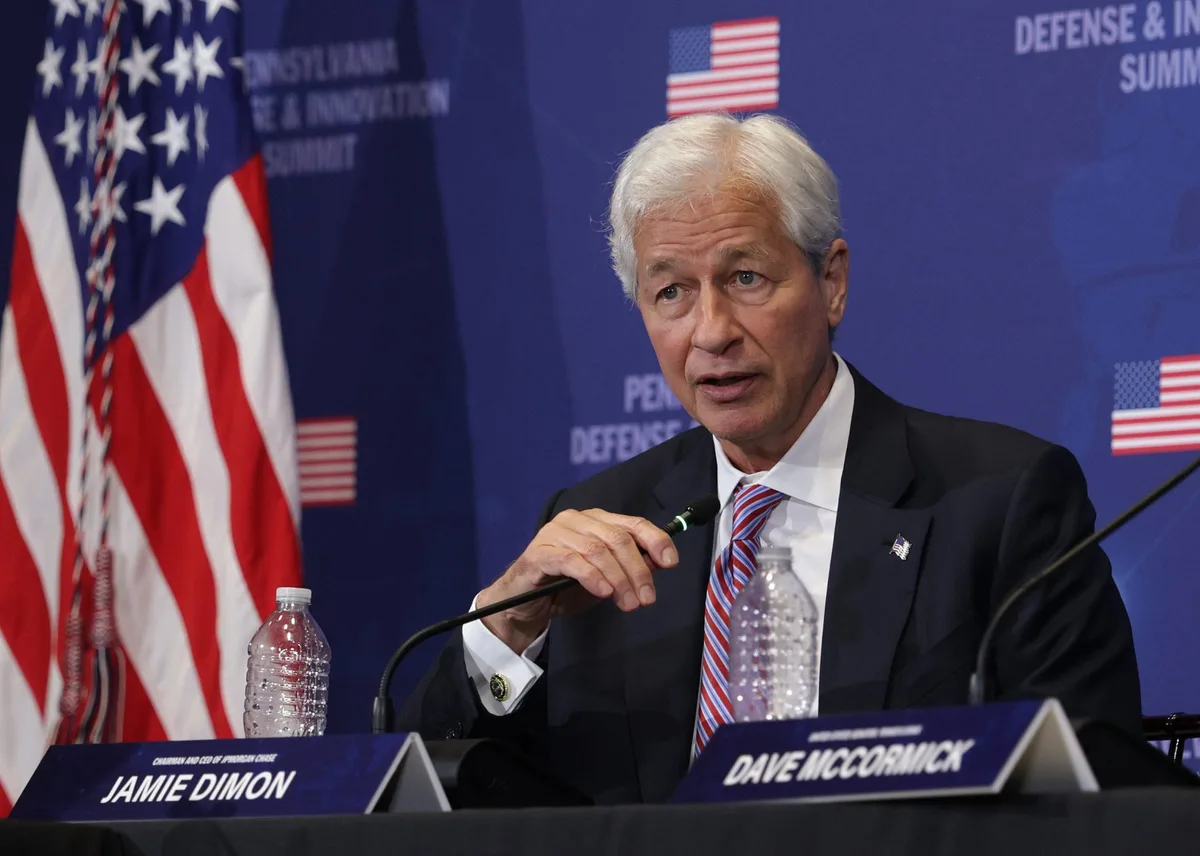
Jamie Dimon believes that to win big, you often have to think small—or at least in small teams.
In his annual shareholder letter this year, the longtime JPMorgan Chase CEO said the company’s “real competitive battles” are fought on a more granular scale.
Despite JPMorgan having more than 300,000 employees worldwide , he claimed the best way to fix a problem is to assign it to a small but capable team fully dedicated to the task, including in several areas like AI, marketing, and others.
“The teams needed to tackle these challenges should be small and authorized with the decision-making ability to move and act like Navy SEALs or the Army’s Delta Force,” wrote Dimon.
Otherwise, a larger group trying to solve a problem won’t give it the priority it needs to be resolved quickly.
When a task is only 1% of a person’s job, you don’t get the same results as when everyone is 100% focused on the same objective, he explained.
“Very often when a management team wants to accomplish something new, like create a digital account opening process that cuts across virtually every area, everyone on the team says, ‘We’ll get it done,’ meaning they will add it to the long list of tasks already on their plate,” Dimon added.
Science mostly backs up this theory.
More than 100 years ago, French agricultural engineer Max Ringelmann discovered that an individual pulled a rope with more force alone than they did in a group, which he theorized was partly because people expect their teammates to pick up the slack.
In 1979, another study by Bibb Latané, Kipling Williams, and Stephen Harkins of Ohio State University on “social loafing” found that individual effort dropped sharply as the group cooperating on a task grew.
The researchers argued this psychological tendency comes about because people assume their teammates aren’t trying hard; they set lower personal goals when help is available; and they feel less individual accountability when their contribution isn’t evaluated or rewarded separately.
The researchers concluded that at least one of the keys to preventing social loafing is restoring individual responsibility within a group.
Business leaders have tried to tackle the issue of social loafing for years.
In the early days of Amazon , founder Jeff Bezos instituted a “ two pizzas ” rule that claimed any team that can’t be fed by two pizzas was too big.
5News aggregated this summary from the outlet’s public feed. The full article, with all the context, is on fortune.com — the content belongs to Fortune.