A Wildly Popular Movie Meets the Film World’s Most Revered Label
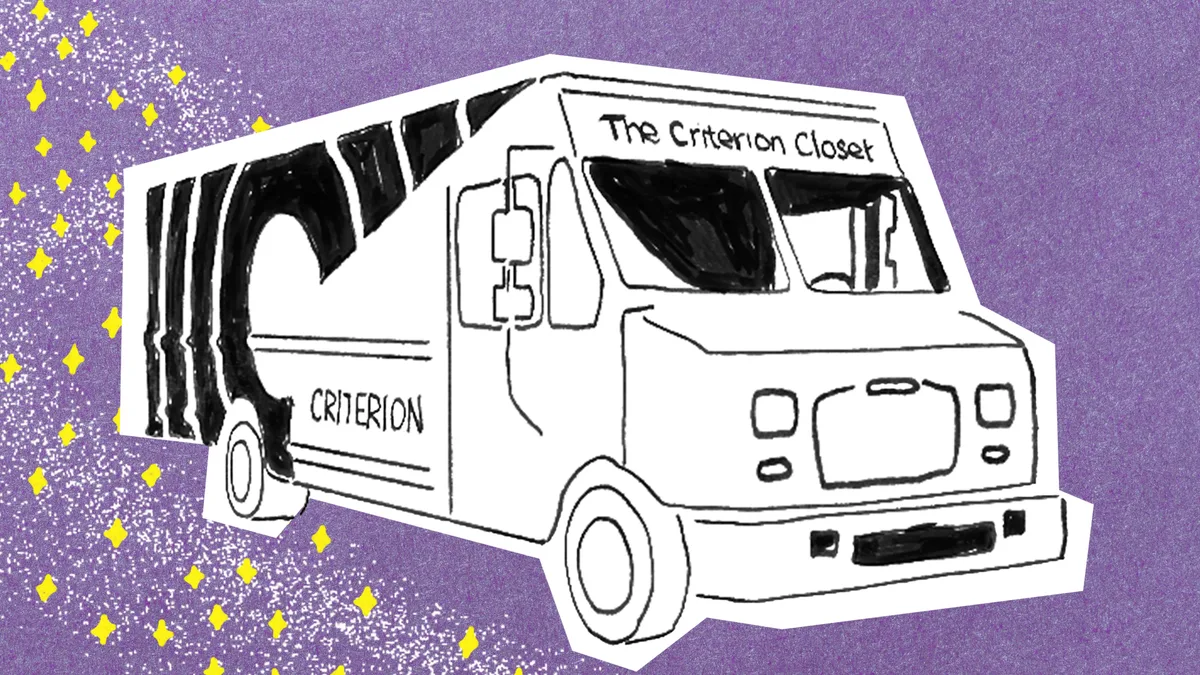
Over the past year, KPop Demon Hunters seems to have completely overtaken culture.
Since premiering on Netflix in June 2025, the animated film has been watched nearly 650 million times and, according to Nielsen, accounted for some 20.5 billion viewing minutes last year.
The soundtrack topped Billboard charts that fall; Spirit Halloween instantly sold out of licensed costumes.
But even the most ardent fans likely did not anticipate the mega-hit’s next big merch drop: a disc release from the Criterion Collection, home to some of cinema’s most distinguished titles.
By some metrics, KPop Demon Hunters may be the most popular movie ever to be added to the collection. (Other new entries include David Lynch’s Wild at Heart and a Ukrainian folk romance from 1965.) It’s almost certainly the first Criterion inclusion to have its own flavor of McFlurry.
KPop Demon Hunters is an unlikely candidate for what’s come to be called “the Criterion treatment”: a painstaking transfer to disc, along with a making-of documentary and other special features, and a number printed on the box’s spine.
Film buffs see this process as akin to an anointing; the trademark C , tucked into the upper-left corner of a plastic clamshell, signals a movie’s importance.
Introducing a new title to the library can be fraught: James Kendrick, a professor of film and digital media at Baylor University, told me, “They’re always sort of risking diluting the power of that sign.” [ Read: The supply closet that film geeks love ] Online, some of the label’s longtime devotees greeted the addition of KPop Demon Hunters with an eye roll, calling the move “substantially off-brand,” and a “cash grab.” The movie is so familiar to the general public that its release seems to go against the grain of Criterion’s reputation, which was built on bringing landmark works of film history to the masses.
The company adds some 30 to 60 movies to its catalog annually, most of them lost gems of world cinema, festival-circuit darlings, or old Hollywood hits.
In past decades, only one or two very new releases might have made the cut; canonization is usually a retrospective project of sifting through the past to see what art stands the test of time.
Now the process seems to be speeding up: This year’s roster includes six movies from 2025 so far, many of them distributed by streaming companies.
Criterion has good reason to widen the net: Netflix, Apple, and Amazon make and distribute a significant share of films these days.
A title that seems ubiquitous today could vanish tomorrow, evaporating from viewing platforms or even from personal digital libraries without warning.
“We’ve lived kind of free and easy for the last couple decades, assuming these corporations would do that work for us,” Amanda D.
5News aggregated this summary from the outlet’s public feed. The full article, with all the context, is on www.theatlantic.com — the content belongs to The Atlantic.