Crocodiles Evolved Backwards From Warm-Blooded Species to Cold-Blooded Killers
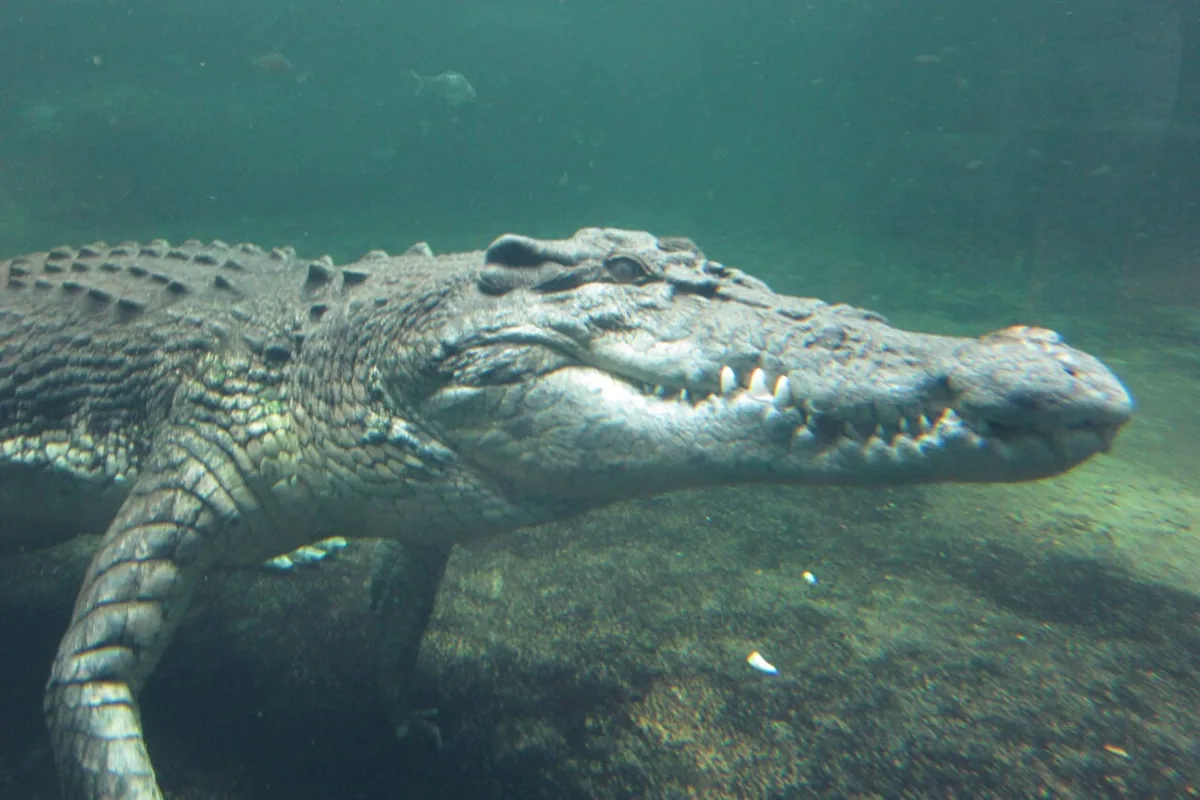
Despite an incredible number of visible differences, modern-day crocodiles and birds share a common ancestor dating back to the Early Triassic. Paleontologists call them archosaurs : a hardy clade of reptiles that toughed it out through the sulfurous, inhospitable years of the Great Dying that followed the Permian–Triassic extinction event roughly 250 million years ago.
Scientists had long assumed that the critical juncture marking archosaurs’ evolutionary split on their separate journeys toward birds and crocs was the moment that birds’ avian-like ancestors first became warm-blooded—but it turns out they were wrong. Crocodiles’ ancient forebears also evolved through a phase of warm-blooded species before reversing tack back into aquatic, cold-blooded killers. A new analysis of fossilized bones from 81 archosaur species, spanning the earliest known relatives along both lineages, has found that the crocodile’s ancient ancestors were likely warm-blooded until as recently as 66 million years ago, when the Chicxulub asteroid killed off most dinosaurs .
“Scientists have assumed that warm-blooded animals evolved from cold-blooded ones, not the reverse,” as Roger Seymour, an emeritus professor of physiology with Adelaide University in Australia, explained in an essay for The Conversation.
“As warm-blooded creatures ourselves, we have had a habit of thinking warm-blooded animals are physiologically superior to cold-blooded ones,” Seymour, the new study’s first author, noted.
Reverting back to a cold-blooded physiology had real benefits for crocodiles, Seymour and his colleagues argue . The process slowed these creatures’ metabolism, allowing them to hide in water longer to ambush prey and “remain submerged while drowning prey.”
“Our first clue that the crocodile lineage was originally warm-blooded was that living crocodiles have four-chambered hearts,” Seymour said of prior findings that led to this new study. “The only other groups with such hearts are warm-blooded birds and mammals, and there is a functional connection with warm-bloodedness.”
As an organic innovation of evolution, the four-chambered heart accomplishes several things that make the high metabolism of a warm-blooded animal possible. For starters, these additional segregated chambers help separate the low-pressure blood flow needed to prevent fluid entering into the lungs from the higher pressures needed to pump blood throughout the rest of the body, meeting those species’ higher energy needs.
“Birds don’t fatigue and fall out of the sky,” Seymour noted. “They have high metabolic rates, producing energy quickly enough to warm and stabilise their body temperatures and to undertake sustainable, strenuous exercise of flight.”
Crocodiles, of course, are comparatively more lethargic; they’re wait-and-see predators whose kills come in bursts of surprising anaerobic activity, thrashing and crushing their prey.
5News aggregated this summary from the outlet’s public feed. The full article, with all the context, is on gizmodo.com — the content belongs to Gizmodo.