Mark Carney's defiance of Trump has Canada cheering
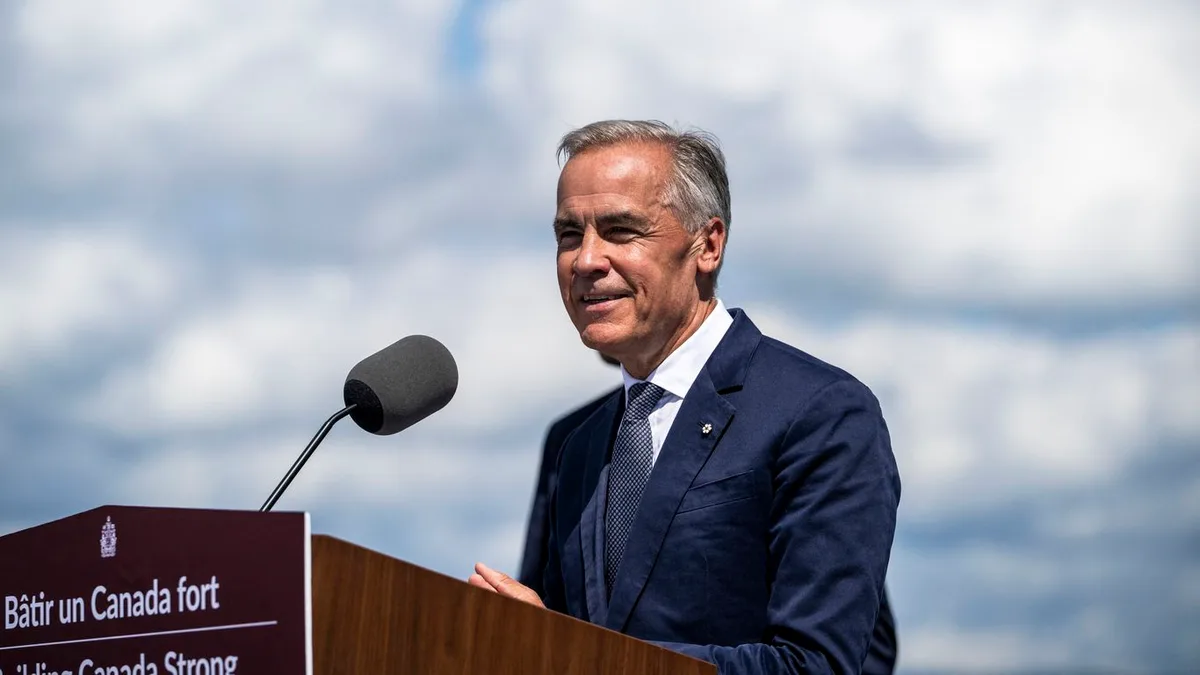
Canadian Prime Minister Mark Carney has turned his decision to hold firm against President Trump's tariff threats into a rallying point for Canadians as their trade clash escalates.
Why it matters: The mild-mannered former Bank of Canada and Bank of England governor is holding firm against Trump despite the threat of further economic pain for Canadians.
Context: Carney campaigned on standing up to Trump but has generally dealt with the unpredictable U.S. president with the measured temperament of his central banking days.
That combination of restraint and resolve has made Carney Canada's "man for the moment," Andrea Lawlor, an associate professor of political science at McMaster University in Ontario, tells Axios.
Driving the news: Carney walked away from trade talks with the Trump administration Friday and vowed to match new 50% U.S. tariffs "dollar for dollar," winning broad support at home.
Corpay chief market strategist Karl Schamotta said Monday that Carney appears to be betting that November's midterms will blunt Trump's tariff drive, "opening the way to a mutually beneficial deal." State of play: Lawlor notes Carney has enjoyed a "very extended political honeymoon" since his long-governing Liberal Party was re-elected last year .
Carney was already popular before his latest clash with Trump.
His approval rating rose 3 points to 60% last week, while a poll conducted during the same period showed most Canadians wanted a tougher approach to U.S. trade talks, days before the talks collapsed.
He has also won broad support from provincial premiers across party lines, including Ontario conservative Doug Ford , who has aggressively pushed back against Trump's tariff threats, and Manitoba social democrat Wab Kinew, who said he's "100%" behind Carney.
Threat level: Carney is under pressure to deliver on his promise that Canadians "are already giving ourselves more than they can take away." He'll have to show how Canada can "give more to ourselves," Lawlor says, including through major projects that create jobs for people facing less stable employment prospects.
The risk for Carney is that economic pain could test that support.
Canada's unemployment rate is already 6.4%, and Lawlor says it could rise if the trade fight drives more steel and auto manufacturing out of industrial hubs such as southwestern Ontario.
Screenshot: Ontario Premier Doug Ford/X Between the lines: It's not all about Carney.
Trump's continued threats over tariffs and to make Canada the " 51st state " have generated a powerful anti-Trump response among Canadians.
5News aggregated this summary from the outlet’s public feed. The full article, with all the context, is on www.axios.com — the content belongs to Axios.