Hollywood Legend Gives Career-Best Turn in Perfect Crime Movie
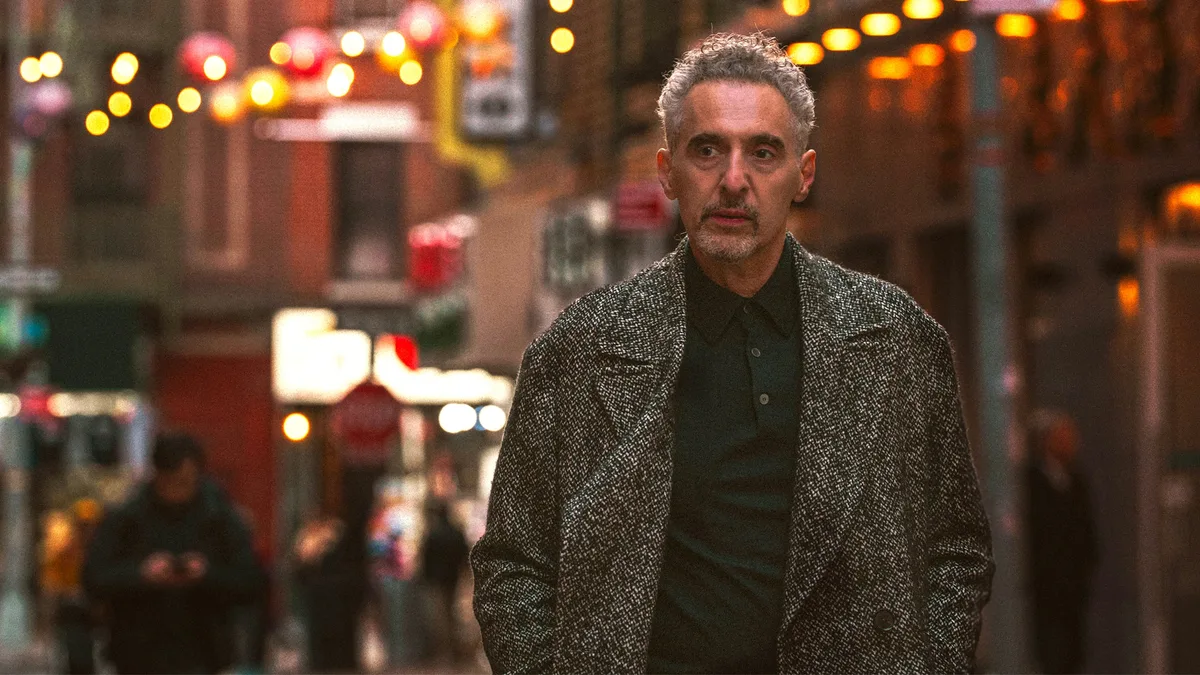
Courtesy of TIFF For more than four decades, John Turturro, 69, has been so consistently and distinctively superb—in projects as varied as Do the Right Thing , Barton Fink , The Big Lebowski , Quiz Show , The Night Of and Severance —that his greatness is often taken for granted.
Even so, it would be impossible to ignore his brilliance in The Only Living Pickpocket in New York , a throwback noir which puts him front and center as an inveterate thief caught in a dangerous predicament of his own making.
At once shrewd and shifty, resilient and resigned, hard-headed and regretful, Turturro delivers a performance as terrific as any in his career.
Fortunately, Noah Segan’s film (premiering Sept.
16 at the Toronto International Film Festival ahead of its Oct.
16 theatrical release) matches him step for sleight-of-hand step, capturing both the essential spirit of its chosen genre and the metropolis on which it lavishes its affection.
Harry Lehman (Turturro) spends his waking hours traversing New York’s sidewalks and subways searching for marks from whom he can pilfer wallets, jewelry, and other valuables.
Of particular interest to Harry (and the film) are old watches—a fitting focus considering that he’s a precise vintage instrument who’s at once outdated and on the clock.
As he reads a newspaper at a diner counter, Harry instinctively draws a pepper shaker closer by using his fingers to pull the napkin on which it sits, and that small but dexterous maneuver, spied in The Only Living Pickpocket in New York ’s opening minutes, tells us all we need to know about his sly skillfulness.
Robbing well-off strangers is the way Harry provides for himself and his wife Rosie (Karina Arroyave), who’s suffering from an undefined ailment that’s left her immobile and unresponsive.
Carrying her up the stairs of their Bronx apartment (thanks to a broken elevator) and tending to her medical needs before reading to her before sleep, Harry is a vision of solitary altruism who serves, without fanfare, as breadwinner and caregiver.
It’s a life at once full of love and sadness, and the sight of him putting on a ‘70s disco LP and dancing for his spouse—his fluid moves indicating that, once upon a time, he and Rosie could cut a rug—is as quietly joyous as it is melancholy.
One evening, after putting Rosie to bed and asking his neighbor to keep an eye on her, Harry hits the streets.
First stopping at a bodega where he buys a Yoo-hoo and offhandedly complains about the rising cost of everything, he spots a gorgeous 1969 car pull into a parking lot.
5News aggregated this summary from the outlet’s public feed. The full article, with all the context, is on www.thedailybeast.com — the content belongs to The Daily Beast.