Trump to transform spaceflight from spectacle to status quo targeting 3 launches per day
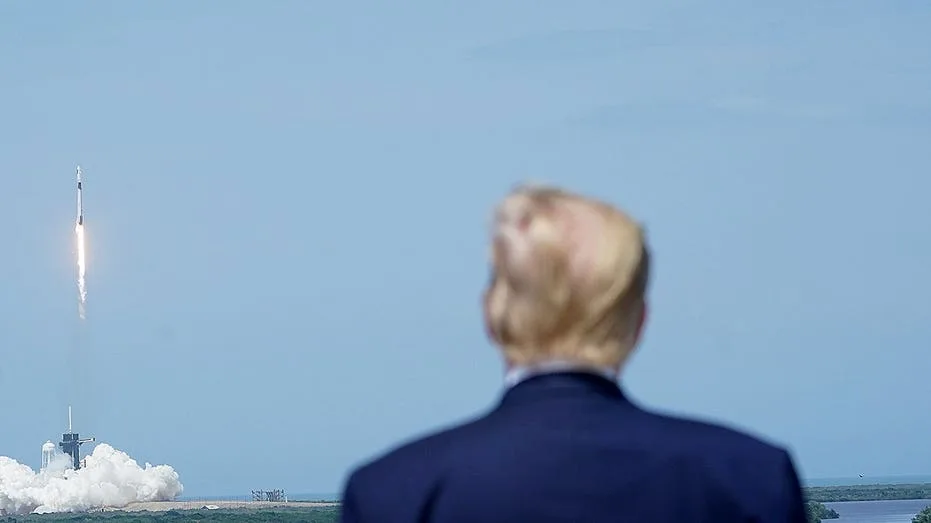
The Trump administration’s new space policy aims to ramp up U.S. space traffic to nearly three launches or reentries a day by 2030.
The effort would put the U.S. on a much faster pace for deploying satellites that support GPS, weather forecasts, internet access and military communications as Washington races to stay ahead of China in space.
A White House policy released Thursday directs federal agencies to expand U.S. launch and reentry infrastructure to support more than 1,000 rocket launches and spacecraft returns each year by 2030.
The plan would expand launchpads, military ranges, airspace corridors and regulatory systems, with the government explicitly leaning on commercial companies to help carry the load.
RUNWAY-TO-SPACE CHALLENGE BRINGS SPACEFLIGHT CLOSER In fiscal year 2024, the FAA licensed 148 commercial launches and reentries, a record at the time.
The push reflects how space has become part of the country’s everyday economic infrastructure.
As more businesses, households and government agencies rely on satellite internet, navigation and real-time data, the ability to quickly launch and replace satellites will increasingly affect the reliability of those services.
The policy comes as China undertakes its own rapid space buildup, expanding launch sites and building large satellite constellations for internet, communications and surveillance.
The Pentagon also warns that China is developing missiles, jammers and other tools to disrupt U.S. satellites in a conflict.
China launched 67 intelligence, surveillance and reconnaissance-capable satellites in 2024 alone, bringing its total to more than 500, according to a Pentagon report.
TRUMP SWINGS FOR MOON WITH NUCLEAR REACTOR PLANS AS CHINA, RUSSIA TEAM UP IN SPACE RACE In a conflict with China, analysts warn that some of the first attacks could target satellites hundreds of miles above Earth.
Chinese missiles could target satellites in low-Earth orbit, while jammers, lasers and cyberattacks could disrupt the GPS signals, imagery and secure communications that U.S. forces rely on to find targets and coordinate operations across the Pacific.
The Pentagon has warned that Beijing is developing those capabilities to restrict U.S. access to space in a conflict.
The ability to quickly launch replacement satellites could help the United States restore those networks if a space attack disrupts operations on the ground, at sea or in the air.
5News aggregated this summary from the outlet’s public feed. The full article, with all the context, is on www.foxnews.com — the content belongs to Fox News Politics.