NASAs Roman telescope is cruising. Heres a look at the next 100 days.
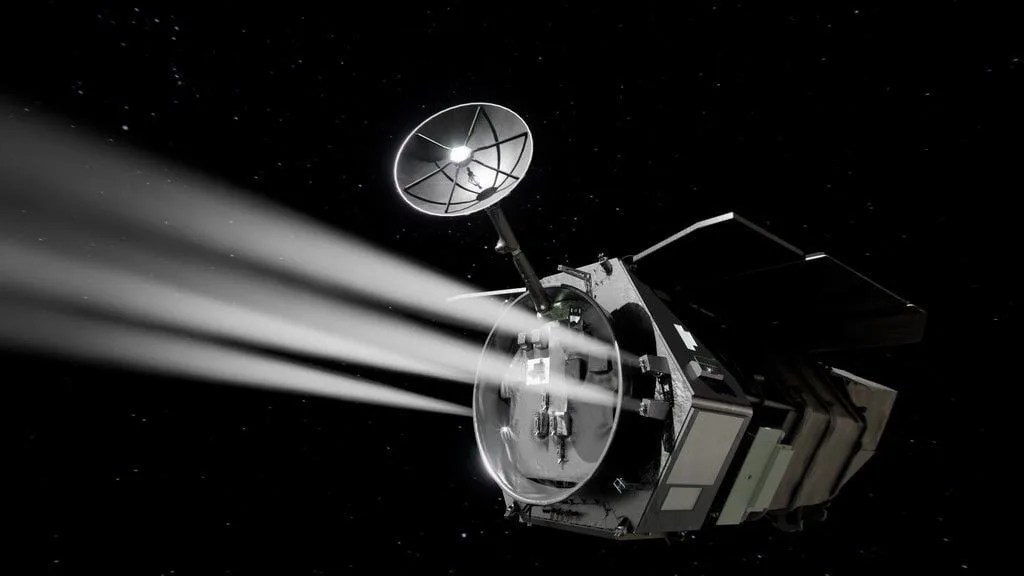
NASA 's new Nancy Grace Roman Space Telescope is headed to its frigid space outpost, where it is expected to gather unprecedented data on some of the universe's biggest mysteries.
Over the next few months, mission controllers will guide it out into deep space, deploy its hardware, test every system, and tune its vision before it begins major infrared observations of the cosmos.
Following a successful launch on Sunday, Aug.
30, Roman is now flying to a point about 1 million miles from Earth, similar to where the James Webb Space Telescope operates.
It will spend roughly three months checking out its systems and instruments before NASA releases its first images in early 2027.
LAST CHANCE: Guess what Apple will release in September in our Big Guessing Game: Apple edition.
Enter now for a chance to win an Apple Watch ! SEE ALSO: NASA's Roman telescope is built to find what Hubble and Webb miss First hours after launch Right after Roman separated from its SpaceX Falcon Heavy rocket, several maneuvers happened quickly: The spacecraft turned so its solar panels faced the sun to give it power.
Mission teams on the ground switched on and checked basic systems, like power and communications.
Near the end of the first day, Roman fired its engines to fine-tune its trajectory toward its final destination in space.
That location is called the second sun‑Earth Lagrange point , or L2.
It's a spot in space where the gravity of the sun and Earth, plus Roman's motion, allows the telescope to maintain a steady position as it orbits the sun .
Want more science and tech news delivered straight to your inbox? Sign up for Mashable's Light Speed newsletter or get Mashable push alerts today.
100‑day trip to deep space Roman's cruise to get to L2 takes about 100 days.
During that time, controllers do more than just wait for the spacecraft's arrival: They unfold side panels and a sunshield, which help protect the telescope from heat and light.
5News aggregated this summary from the outlet’s public feed. The full article, with all the context, is on mashable.com — the content belongs to Mashable.