Remember the Earthquake That Hit New York in 2024? Scientists Finally Found the Source
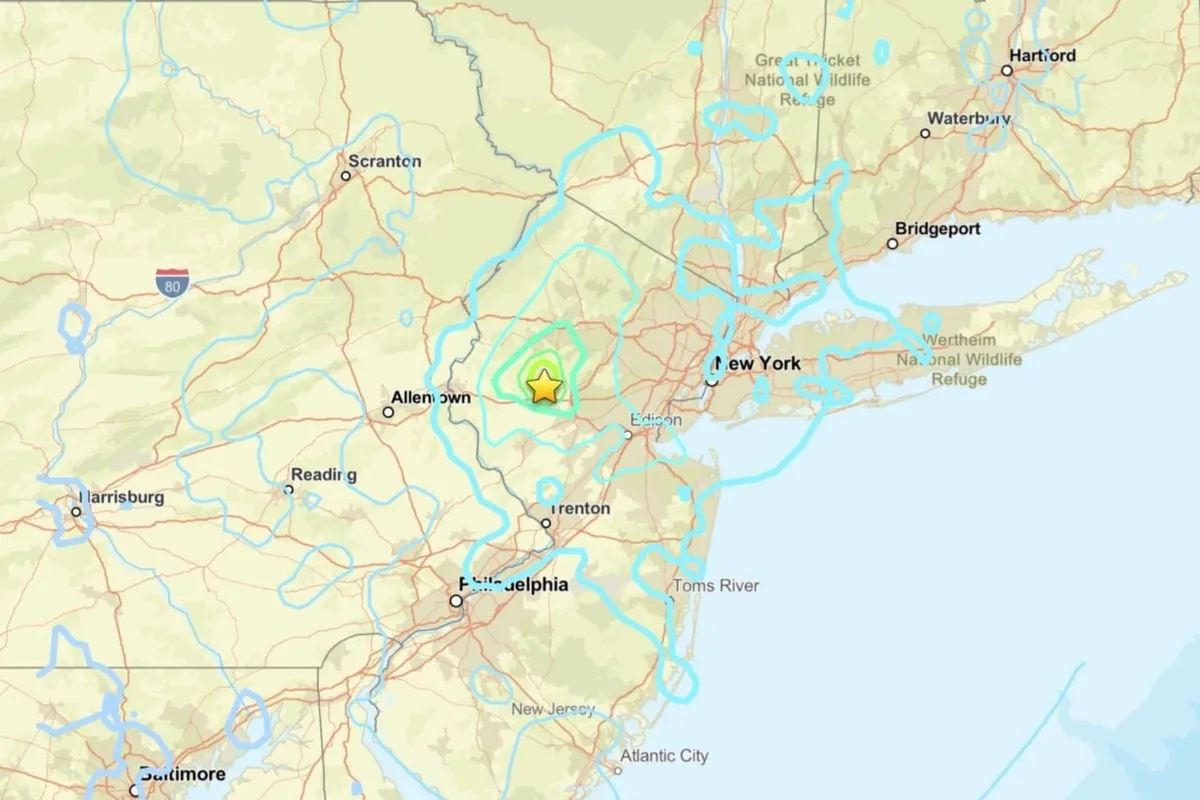
On April 5, 2024, a magnitude 4.8 earthquake struck Tewksbury, New Jersey. The shaking took an estimated 42 million people from Virginia to Maine by surprise—the East Coast certainly isn’t known for its seismic activity. Now, researchers have finally figured out where this bizarre quake came from, and its origin wasn’t what they expected.
At first, the Ramapo Fault—the largest in the region—seemed like the obvious suspect. The earthquake’s epicenter was located nearby, but scientists ultimately determined that this fault was not active at the time. In a study published earlier this month in the journal JGR Solid Earth, researchers took a closer look. Their findings suggest this quake originated on a previously unmapped fault zone in the New Jersey Highlands, now named the “Mountainville Fault.”
“This study shows that some of the region’s greatest earthquake hazards may come from faults that are difficult to recognize at the surface,” lead author Folarin Kolawole, a structural geologist at Columbia University’s Lamont-Doherty Earth Observatory, said in a statement. “Identifying and understanding these subtle fault systems is important for improving seismic hazard assessments in densely populated regions.”
Unlike the West Coast, which is where most earthquakes in the U.S. occur, the East Coast does not lie on a tectonic plate boundary. In this region, quakes occur within the North American plate, typically manifesting as thrust faulting along north-south trending faults.
A fault is a fracture that separates two blocks of rock in a plate. When these blocks move against each other, the build-up and sudden release of stress can cause an earthquake.
Previous research by scientists at Columbia University suggested the 2024 Tewksbury quake was unusual. The tremblor appeared to have occurred along a north-northeast trending fault and resulted from a combination of a thrust mechanism (when one block moves up and over the other) and a strike-slip mechanism (when the blocks move horizontally past each other).
5News aggregated this summary from the outlet’s public feed. The full article, with all the context, is on gizmodo.com — the content belongs to Gizmodo.