A New Way of Seeing Alien Worlds
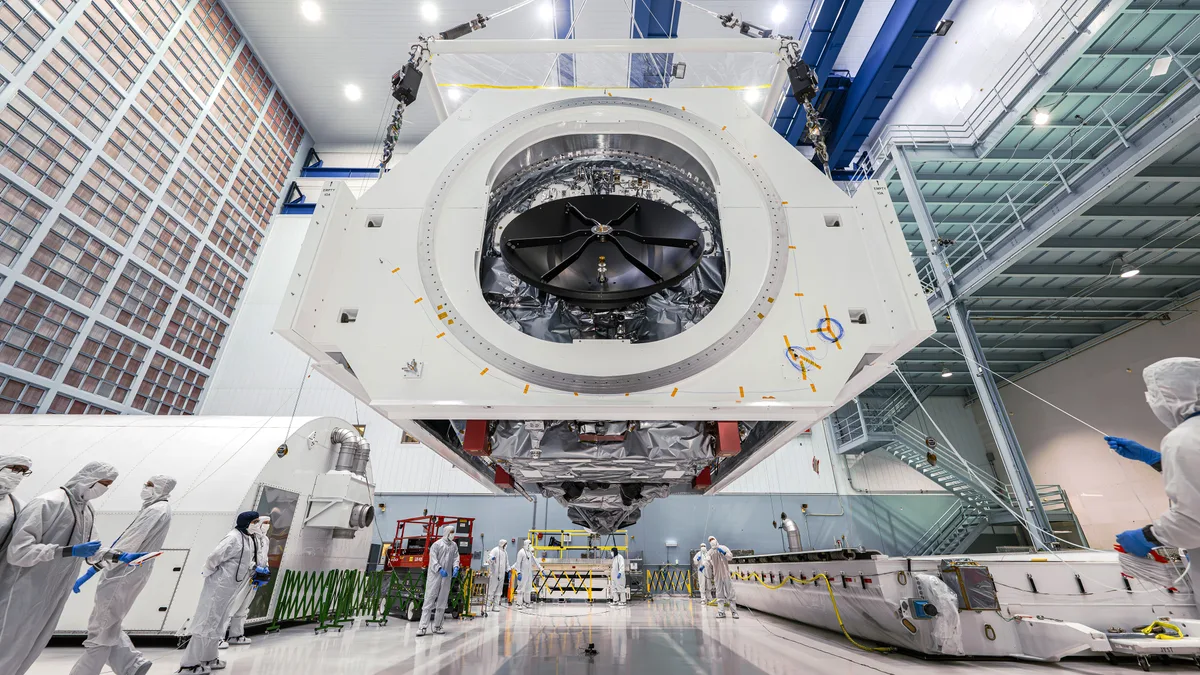
Tomorrow morning, if all goes to plan, NASA’s Nancy Grace Roman Space Telescope, its latest and greatest orbital observatory, will lift off from its launchpad and add a little rocket-booster light to the Florida sunshine.
A lot is riding on this mission.
If the Roman is successful, it could give humanity a new way to see the planets around other stars and a fresh understanding of the largest-scale objects that we know to exist.
But if it fails, NASA’s science program, which is already fending off ruinous budget cuts , will need to seriously rethink its future.
The Artemis mission to the moon was a big win for human spaceflight, and now the science side of the house badly needs one.
NASA’s engineers have spent more than a decade readying the Roman for this moment.
Before the telescope arrived in Florida, it spent more than a year in NASA’s largest clean room at the Goddard Space Flight Center in Greenbelt, Maryland.
To get near it, you had to be mummified alive.
When I visited in December, NASA staffers led me to a sterile, fluorescent-lit locker room.
They tossed me a white jumpsuit and two sets of booties with tight-fitting straps.
They told me to put on a beard net and hair net, and triple-wrapped the gap between my jumpsuit sleeves and gloves with blue tape.
The astronomers didn’t want my skin exposed in the clean room.
Dry flakes of it could drift off and settle onto the telescope’s ultrasmooth primary mirror.
“You’re going to be the dirtiest thing in here,” one of them told me, as we walked through a little chamber where more than 30 nozzles blasted us with air.
5News aggregated this summary from the outlet’s public feed. The full article, with all the context, is on www.theatlantic.com — the content belongs to The Atlantic.