The Jews Who Voted for Hitler
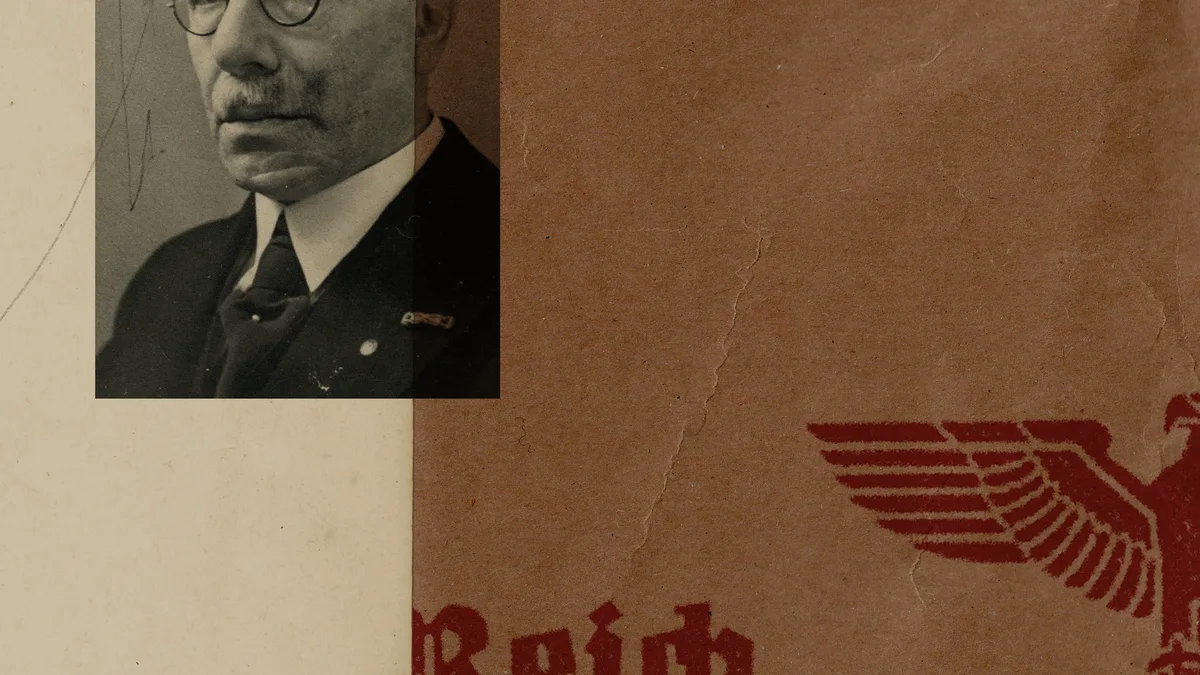
On the evening of February 5, 1930, the art and theater critic Paul Fechter took the podium before the League of Nationalist German Jews, in Berlin, to discuss purported Jewish control of the press and the arts in the country.
“When Dr.
Max Naumann invited me to give a lecture in your circle, I rather impulsively said yes,” Fechter began.
“When he then told me the topic he wanted me to address, my immediate reaction was: Good grief ! One could not have found a better topic for making oneself thoroughly unpopular and for antagonizing everyone in the room.” For too long, Fechter said, people had been too “shy, fearful, cautious” to speak openly about the Jews.
Fechter, an editor at the conservative newspaper Deutsche Allgemeine Zeitung , was pulling no punches.
The popular Jewish humorist Kurt Tucholsky, Fechter said, had insulted the German people with his recent book, Deutschland, Deutschland über alles , an acid satire about the army, the police, the civil service, the national anthem, even Sekt , a popular sparkling wine.
“A large portion of the literary and art worlds are in Jewish hands,” Fechter continued.
“The theaters, the major publishing houses, the major art dealers are all at least partially under Jewish control.” Jewish art dealers, Fechter said, filled their galleries with works by “Manet and Monet and Renoir and Gauguin and Picasso and Cezanne”—French Impressionists and Modernists, in other words, rather than traditional German painters.
The Antigermanismus among Jews, Fechter declared, was “far more robust” than the Antisemitismus among right-wing German nationalists.
Naumann, the founder of the league, published the Fechter tirade in his monthly publication , The Nationalist German Jew , circulated to his group’s 7,000 members, mostly middle-class professionals in more than 20 chapters around the country.
Naumann himself was a Berlin-based Jewish attorney who was decidedly antidemocratic, belligerently nationalistic, and unapologetically critical of other Jews.
He blamed Ostjuden —the “Eastern Jews” fleeing pogroms in Russia, Romania, Austria, Hungary, Poland, and elsewhere—for flooding the country with unwanted immigrants.
He felt pity but no solidarity.
“It is the same pity we feel when there is talk of the Turks massacring Armenians or of lynch mobs targeting black people in America,” Naumann wrote—an abstract pity without emotional connection.
5News aggregated this summary from the outlet’s public feed. The full article, with all the context, is on www.theatlantic.com — the content belongs to The Atlantic.