Monday, August 31, 2026 SourcesAbout🌓
🇺🇸 US ▾
BREAKING
Russia is 'going backwards' in equipment and deploying post WWII-era tanks, according to Western officials Podcast: One country musician is calling for other artists to oppose assault rifles Bidets save you money and reduce waste — we tested the best options out there 50+ products to make your life easier and our planet cleaner Mother's Day is around the corner. Here are 50+ thoughtful gifts she'll love A head-to-toe guide of how men should dress this spring, and where they should shop 42 of the most useful travel products you can buy on Amazon The 7 best high-yield savings accounts of April 2023 Taxes are due tomorrow. Here's how to file for an extension Composting is an easy way to reduce food waste. Here's how to do it Russia is 'going backwards' in equipment and deploying post WWII-era tanks, according to Western officials Podcast: One country musician is calling for other artists to oppose assault rifles Bidets save you money and reduce waste — we tested the best options out there 50+ products to make your life easier and our planet cleaner Mother's Day is around the corner. Here are 50+ thoughtful gifts she'll love A head-to-toe guide of how men should dress this spring, and where they should shop 42 of the most useful travel products you can buy on Amazon The 7 best high-yield savings accounts of April 2023 Taxes are due tomorrow. Here's how to file for an extension Composting is an easy way to reduce food waste. Here's how to do it
Technology

The Nancy Grace Roman Space Telescope launches to study dark matter and dark energy
The Verge ·
The Nancy Grace Roman Space Telescope launches to study dark matter and dark energy

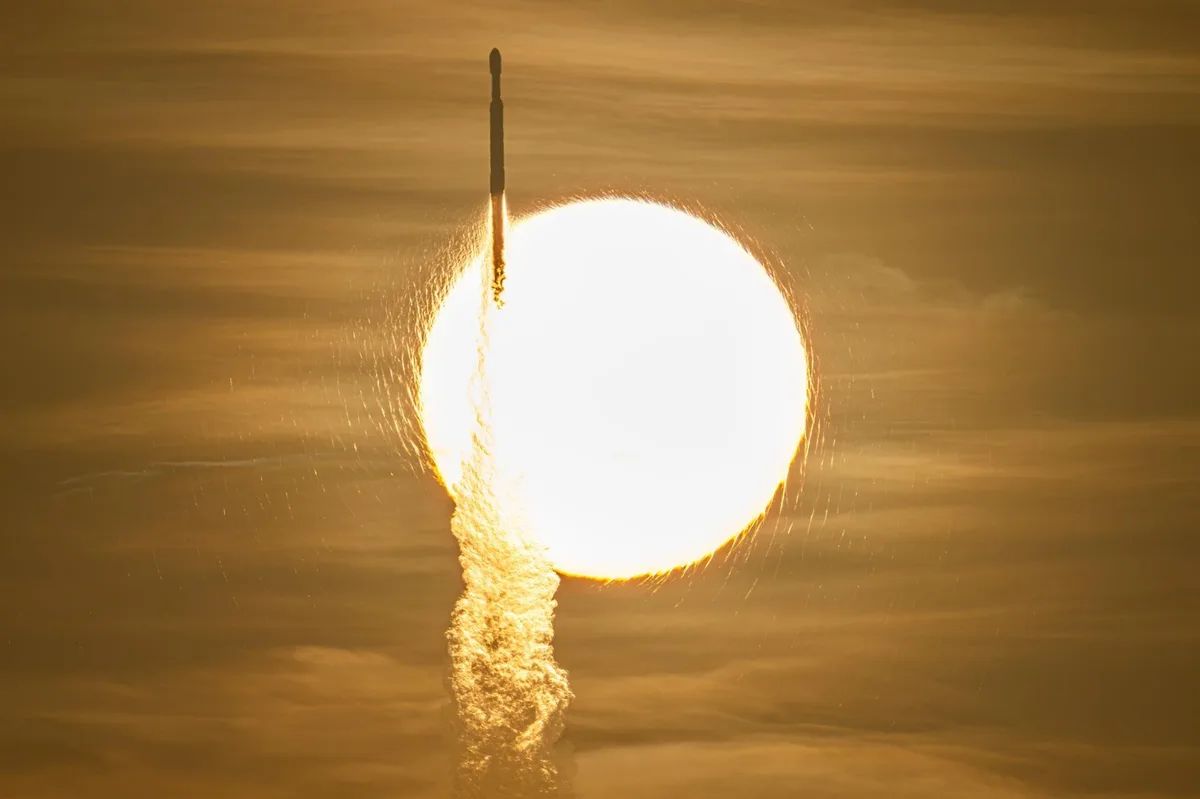
NASA’s Nancy Grace Roman Telescope blasts off. | Photo: NASA / John Kraus After funding struggles and a name change, the Nancy Grace Roman Space Telescope has been successfully launched .

It will now make a three-month, one-million-mile journey to its orbit at the second Sun-Earth Lagrange point (L2) beyond the Moon.

From this vantage point, Roman will conduct an unprecedented survey of the universe .

Its field of view is 100 times larger than Hubble's and, according to NASA, it can survey the sky 1,000 times faster using its 300-megapixel infrared camera.

Roman also has a Coronagraph system that can block and mask glare from stars, allowing it to directly image exoplanets , even smaller, older, and colder planets … Read the full story at The Verge.

Read the full article on The Verge ›

5News aggregated this summary from the outlet’s public feed. The full article, with all the context, is on www.theverge.com — the content belongs to The Verge.

This story in other outlets

More from The Verge

See all ›

More in Technology

See all ›