‘Possible Love’ Just Might Be the Best Film of the Year
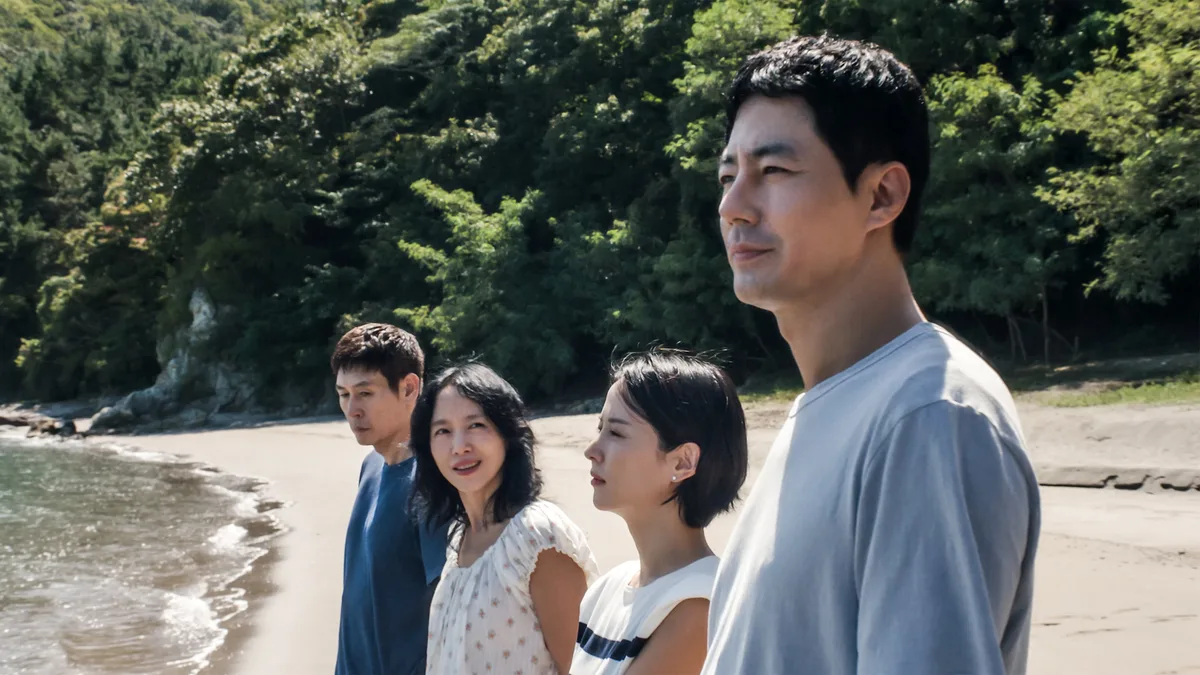
Netflix At its heart, cinema is a vehicle for empathy.
Yet to what extent can one truly relate to another person’s plight in the face of stark class, wealth, and power imbalances? That’s one of the challenging questions posed by Possible Love , the first film from South Korean auteur Lee Chang-dong since 2018’s Burning , and a drama whose agile touch serves a masterfully complex tale of two dissimilar couples brought together by suffering, desire, and a non-fiction film project.
Winner of the Silver Lion Grand Jury Prize at the Venice Film Festival, and screening at the Toronto International Film Festival before debuting on Netflix on Nov.
6, it’s as richly drawn and intricately crafted as any feature this year, and a surefire contender for best of 2026 honors.
“Thou shalt not covet,” reads the opening title card of Possible Love , but various forms of envy course throughout its story.
Lee has always been a writer/director of tremendous psychological and emotional insight, exploring interior lives complicated by misfortune, suffering, and fear, and in his latest, the character who’s in the most pain is Ho-seok (Sul Kyung-gu), a welder who, two years after being laid off from his factory job due to predatory foreign investment, is a shell of his former self.
His wife, Mi-ok (Jeon Do-yeon), wants him to attend the therapy sessions offered to people in his situation.
However, given that he can barely bring himself to join his wife and 10-year-old son Cheol (Jung Seop) at a funeral—because it will entail interacting with others—he’s hardly ready to open up to a stranger about his misery.
Ho-seok’s anguish directly impacts his spouse, who admits to others that she’s lost so much weight that her wedding ring keeps sliding off—a casual bit of foreshadowing that’s emphasized by her temporarily losing the ring beneath the car of Sang-woo (Zo In-sung).
As it turns out, Sang-woo is the wealthy, handsome, and confident husband of Ye-ji (Cho Yeo-jeong), a documentarian intent on making a movie about the plight of local laborers.
She immediately decides that Ho-seok would be a great focus, but she swiftly learns that he’s not ready for an interview.
Mi-ok, on the other hand, is more than willing to participate, and in short order she’s recounting to Ye-ji’s camera all sorts of details about their lives while inviting her inside their modest home.
Ho-seok is adrift because his identity (as with so many of his countrymen) is inextricably bound up with his profession, and the loss of the latter means that he no longer knows himself or his purpose.
Calling his colleagues “brothers” suggests that work gave him another kind of family.
5News aggregated this summary from the outlet’s public feed. The full article, with all the context, is on www.thedailybeast.com — the content belongs to The Daily Beast.