What Makes Tennis One of the Greatest Games
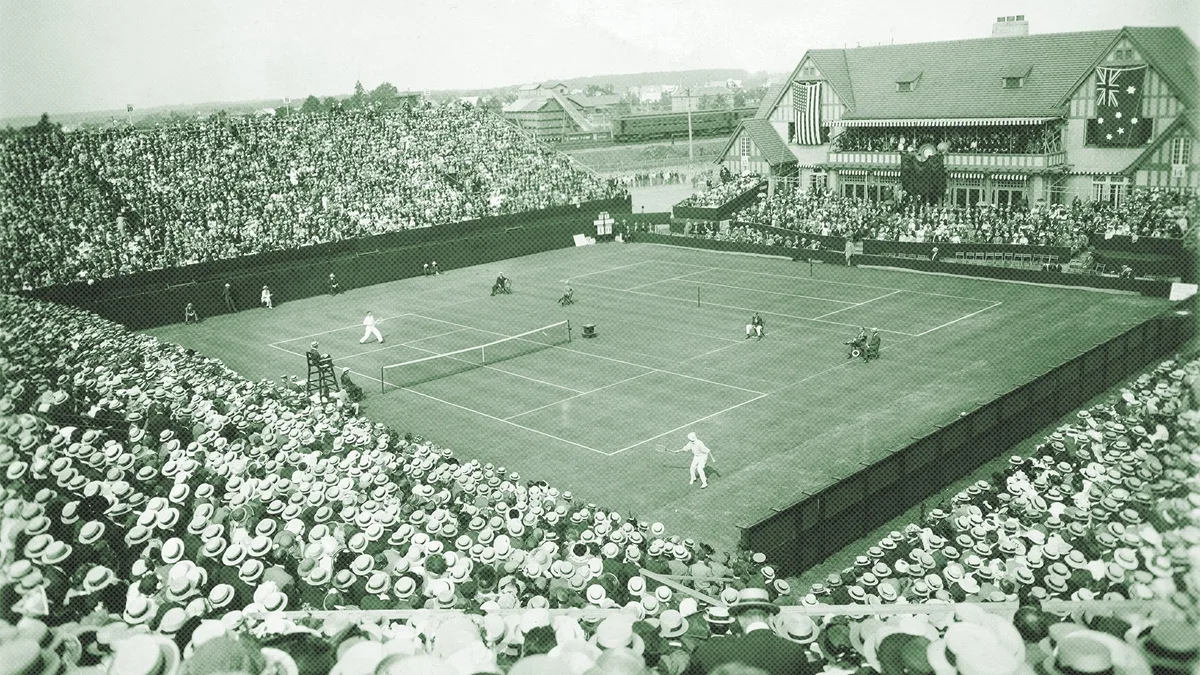
This is an edition of Time-Travel Thursdays, a journey through The Atlantic ’s archives to contextualize the present.
Sign up here.
The American tennis player Ben Shelton blasted a 146-mile-an-hour ace past the Spaniard Carlos Alcaraz at 3:33 a.m. yesterday.
It was the final shot of a U.S.
Open quarterfinal match that had begun 4 hours and 28 minutes before, during which the two men contested five sets, two tiebreakers, and many points so long and improbable that they made the television announcers giggle with delight.
When it was done, Shelton and Alcaraz embraced warmly at the net, as if in mutual appreciation for having shared something so grand.
The contest, which Shelton afterward described as a “war,” was an emphatic affirmation of a claim made by Arthur Stanwood Pier in The Atlantic 123 years ago : that tennis “is entitled to the place of supremacy among games.” If the case for this assertion is clear today, it was perhaps less obvious in 1903, when the question of which sport should hold such a title was no small matter among men—particularly elite white men—who spent a good deal of time discussing the import of athletics and manliness.
Tennis, no matter how much Pier insisted, usually did not rate a mention at all.
Far from being only amusements or diversions then, sports were considered serious undertakings that had the job of making men men and rescuing the nation from softness and degeneracy.
These contests, the thinking went, offered a way—short of participating in actual warfare—to develop martial virtues, cultivate strength, and channel aggression.
The value of a sport, Pier noted in his essay, was not measured so much “by the physical exercise it necessitates, as by the satisfaction and outlet it gives to the spirit of combat that troubles us.” By this measure, football—dangerous and deliberately martial in character—seemed to have been the most valuable game.
Already firmly established at the turn of the century as a popular spectacle and staple of American collegiate life, the sport appeared to offer an ideal arena for masculinity, with its inherent risks and demand for coordinated action.
“Every manly man must have a certain amount of courage, physical and mental,” the famed University of Michigan coach Fielding H.
Yost wrote in 1905, “and no football player can long be without it.” The sport’s most sanguine supporters embraced the game’s violence as a precondition to cultivating manly men, even at the cost of serious injury or death.
5News aggregated this summary from the outlet’s public feed. The full article, with all the context, is on www.theatlantic.com — the content belongs to The Atlantic.