Kevin Warsh finally threw Wall Street some crumbs on what he’s thinking: ‘There is one signal nobody can miss: 65 months of elevated inflation’
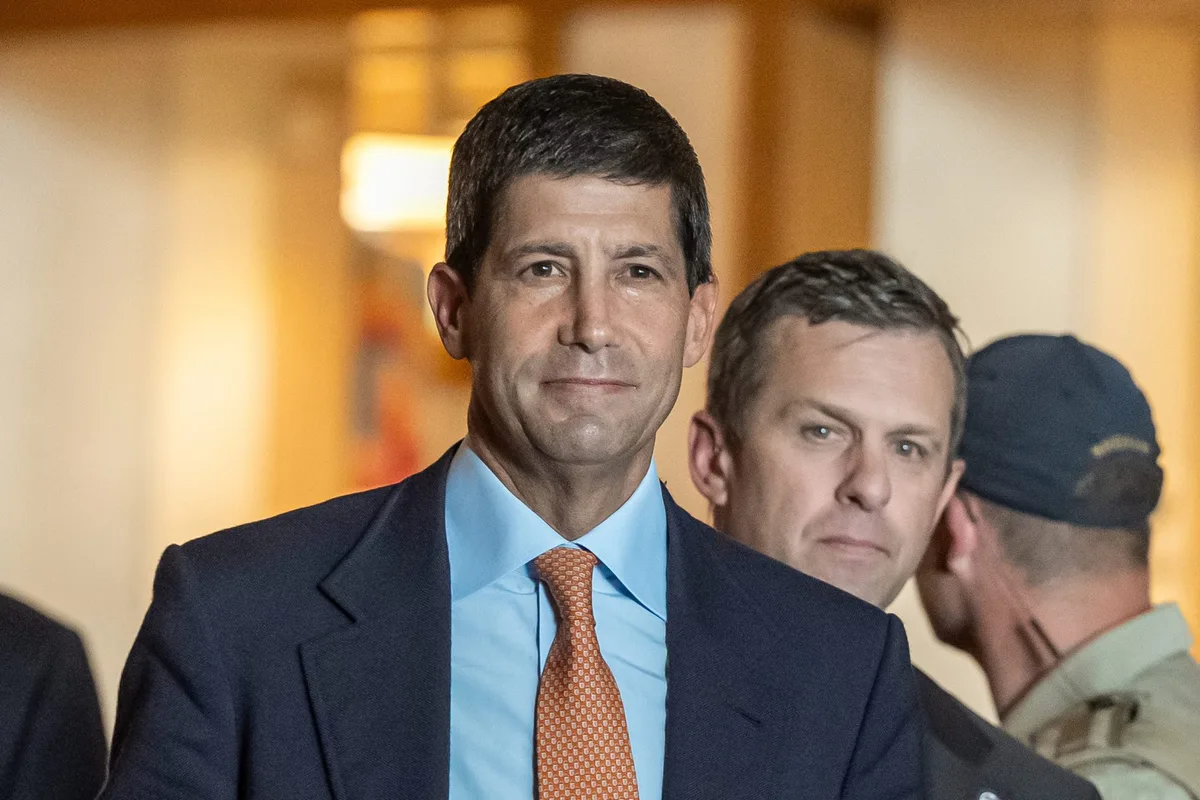
Wall Street hadn’t heard a peep out of Federal Reserve chairman Kevin Warsh for a month, until he walked on stage for his keynote speech at Jackson Hole today.
Warsh’s speech at the Fed’s annual gathering came with added scrutiny this year : Not only was it Warsh’s first as chairman, but he has also caused analysts some discomfort with his pullback from giving now-familiar forward guidance (in which the central bank indicated the general direction of travel for the base interest rate).
On forward guidance, Warsh stuck to his guns , saying: “You might know about my longtime discomfort with early pronouncements of future policy decisions … Forward guidance as a regular practice was adopted by my colleagues—and me—during the global financial crisis.
It was essential at the time, and we introduced it with much fanfare.” “But as with other legacies of crises past, I believe the practice has outstayed its welcome.
In normal times, the role of forward guidance should be limited and circumscribed; otherwise, it risks creating ambiguity in the name of clarity.
Oversharing policy deliberations and overcommitting to future decisions can lead markets, businesses, and households astray, and I believe when policymakers make quasi-commitments on interest rates throughout the cycle, we inhibit our own freedom to make the right calls when it’s time to decide.” His tone was firm: “We should not indulge a regime in which market participants are looking primarily to the Fed for their next trade.” And while Warsh has repeated his commitment to the Fed’s dual mandate of inflation at 2% and maximum employment, neither he nor his central bank staffers are living under a rock: Bond yields tracked higher following Warsh’s July press conference, as markets digested a Fed on hold and the suggestion that markets may be doing some of the legwork for financial tightening that they had come to expect from the Fed.
But more alarmingly—for some corners of the street— were the questions hanging over the established frameworks the Fed uses to make decisions about the base rate.
Analysts questioned if these frameworks might be subject to change, searching for answers on how policymakers were thinking, even if they didn’t know what action it might prompt.
Here, Warsh shared insights.
While his outlook on the economy wasn’t necessarily rosy, it nevertheless described the balance of priorities within the Fed.
Price stability is front of mind, he suggested, in the balance of risks in the Fed’s mandate.
He said: “But on the price-stability side of our mandate, the numbers are more concerning.
The Fed’s preferred measure of inflation, the 12-month change in the PCE price index, stands at 3.7%, while the six-month change is 4.1%.
5News aggregated this summary from the outlet’s public feed. The full article, with all the context, is on fortune.com — the content belongs to Fortune.