122 Companies Are Quietly Sucking the West Dry, Study Finds
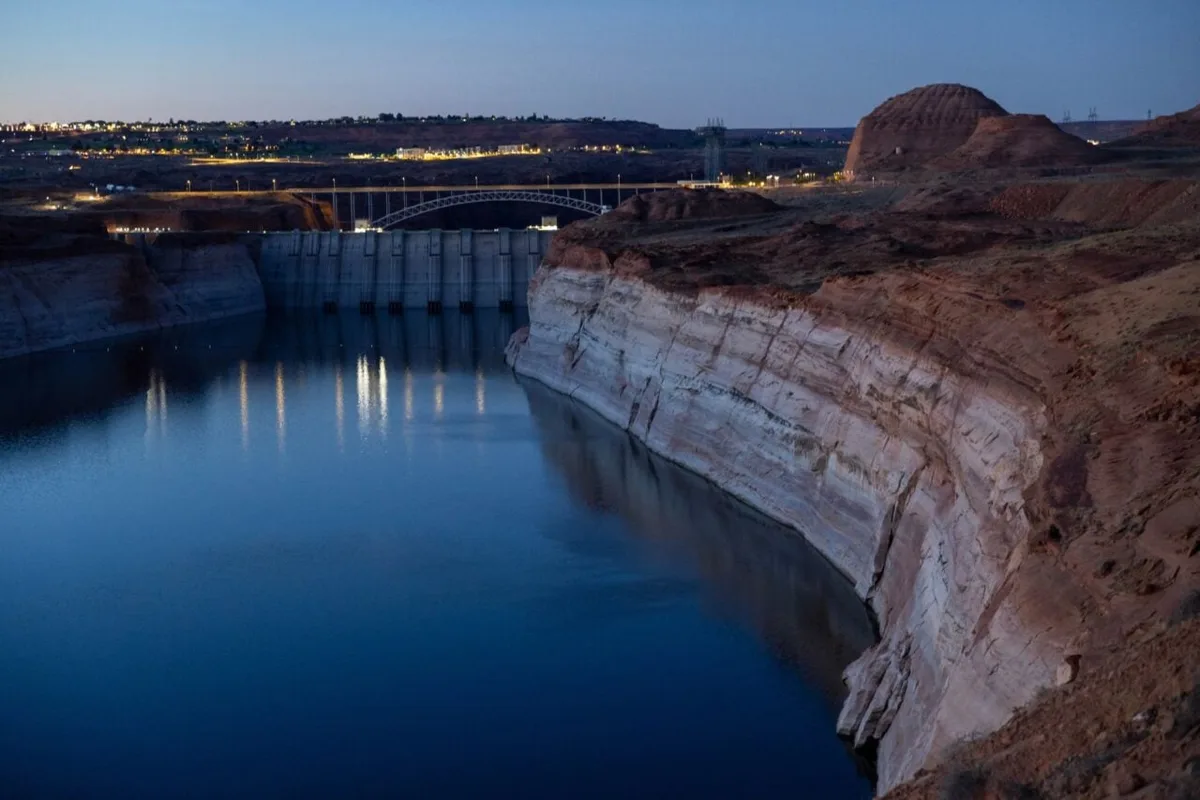
After more than a quarter-century of drought in the Colorado River Basin, water levels in America’s largest reservoirs recently plummeted to historic lows . As this crisis reaches a boiling point, new research shows that just 122 companies are responsible for about half of the West’s climate change-driven water losses over the past decade.
Between 2014 and 2024, global warming reduced the American West’s snowpack by more than a third, choked the region’s warm-season streamflow by roughly 13%, and increased irrigation demand by 4.3%, according to a study published today in Nature’s Communications Earth & Environment journal. The authors traced about half (40% to 64%) of these impacts to emissions from 122 “carbon majors” since 1950.
“Due to their outsize contributions of carbon to the atmosphere and their decades-long deception concerning climate change, fossil fuel companies should face accountability for their climate harms,” several of the authors associated with the Union of Concerned Scientists wrote in a statement.
The carbon majors are the world’s largest producers of fossil fuels and cement, including publicly traded and state-owned companies. Collectively, they are responsible for the vast majority of historical industrial greenhouse gas emissions. In their statement, the authors from the Union of Concerned Scientists list BP, Chevron, ExxonMobil, and Shell as examples.
In this first-of-its-kind study, the researchers used observational data and climate modeling to quantify how emissions from 122 carbon majors since 1950 have contributed to water cycle disruptions across the western United States. They found that the impact these companies have had on the West’s April snowpack alone has drained more than 9 trillion gallons of water from the region over the past decade. That’s roughly equivalent to the maximum capacity of Lake Mead, the largest reservoir in the United States.
Both Lake Mead and Lake Powell, the nation’s second-largest reservoir, are currently at their lowest points since they were filled in the 1900s. These unprecedented conditions stem largely from a historic snow drought that deprived the Colorado River Basin of meltwater this past spring. More than 70% of the river’s natural flow depends on snowmelt, but in March, Colorado’s snowpack sat at just 40% of normal levels.
The researchers also found that emissions from carbon majors have reduced warm-season streamflow by nearly 4 trillion gallons annually, which is roughly equivalent to the combined volume of California’s four largest reservoirs. Interestingly, they also attributed an increase in annual October-to-March streamflow to the carbon majors, but this only offsets about half of the annual warm-season reduction.
Climate change reduces water availability in the West by altering precipitation patterns, but it also increases demand. Rising temperatures are creating a thirstier atmosphere that draws more water out of soils, forcing the region’s multibillion-dollar agricultural industry to pull more water for irrigation.
In the past decade, carbon-major emissions have driven a 2.4% increase in irrigation demand across the West, according to the study.
5News aggregated this summary from the outlet’s public feed. The full article, with all the context, is on gizmodo.com — the content belongs to Gizmodo.