China, the EU, and Singapore are pushing back against the White House’s new ‘Great Transshipment Scam’ report
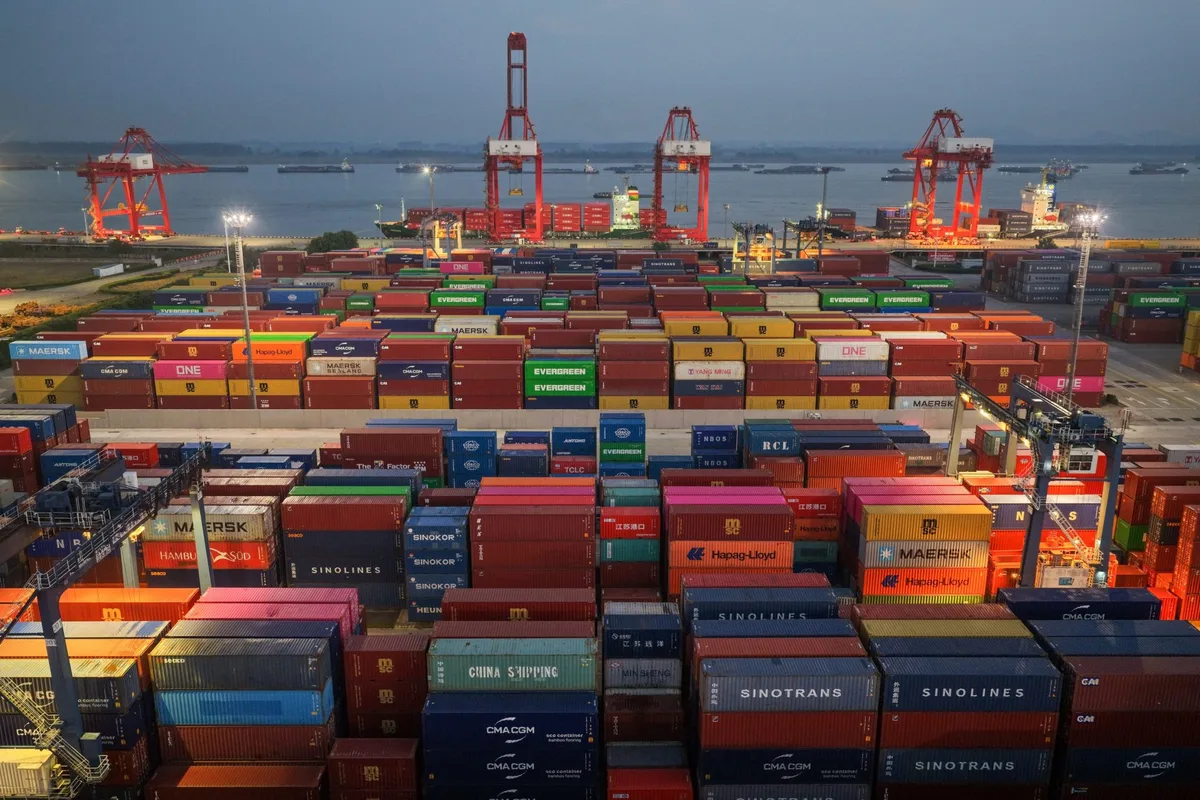
Beijing is pushing back against U.S. accusations that several other economies, including several in Southeast Asia, are part of a “ shadow transshipment network ” that funnels Chinese-made goods to the U.S. while obscuring their country of origin.
On Thursday, the White House’s Office of Trade and Manufacturing Policy released a report titled “The Great Transshipment Scam,” which claimed that rerouting Chinese-made goods through a network of 40 different jurisdictions cost the U.S. as much as $303 billion.
A Chinese embassy spokesperson in Washington D.C. said the country “firmly opposes” the over-stretching of national security justifications to suppress Chinese enterprises , and warned that it would take the steps necessary to safeguard its own interests.
Other governments named in the report, including the European Union and the Southeast Asian nation of Singapore, are also pushing back.
Arianna Podesta, the spokesperson of the European Commission, said that while the EU continues to engage with the U.S. on both tariff and non-tariff issues , its rules framework and regulatory autonomy are not “up for negotiation”.
On Aug.
15, Singapore’s Ministry of Trade and Industry (MTI) also reiterated that it “takes trade compliance seriously”.
In response to queries from The Straits Times , MTI emphasised Singapore’s commitment to upholding its reputation as a trusted international business hub, adding that it “does not condone businesses using their association with Singapore and using fraudulent and dishonest means to circumvent or violate the laws and regulations of other countries”.
What is transshipment? According to the Center for Strategic and International Studies (CSIS), a Washington-based think tank, transshipment is the movement of items from country A to country C, with an intermediate stop in country B .
This changes a good’s country of origin, which may have implications on how it is treated once it reaches its final destination.
Customs officials are generally only concerned with transshipment if there was little-to-no value added in the intermediate stop, essentially slapping a new label on a finished good.
The White House’s report complains that this illegal transshipment could involve “relabeling, repackaging, re-invoicing, minor processing, false country-of-origin claims, or other actions intended to secure tariff treatment that would not apply if the goods’ true economic origin were declared.” However, since the first Trump administration slapped tariffs on Chinese imports in 2018, many companies now route their supply chains through third countries like Vietnam and Mexico, using them for final assembly of goods made with Chinese components.
5News aggregated this summary from the outlet’s public feed. The full article, with all the context, is on fortune.com — the content belongs to Fortune.