The Fault in Our Stars Made Him a Favorite for Teens. His First Book in Nearly a Decade Will Do the Same for Adults.
Sign up for the Slatest to get the most insightful analysis, criticism, and advice out there, delivered to your inbox daily.
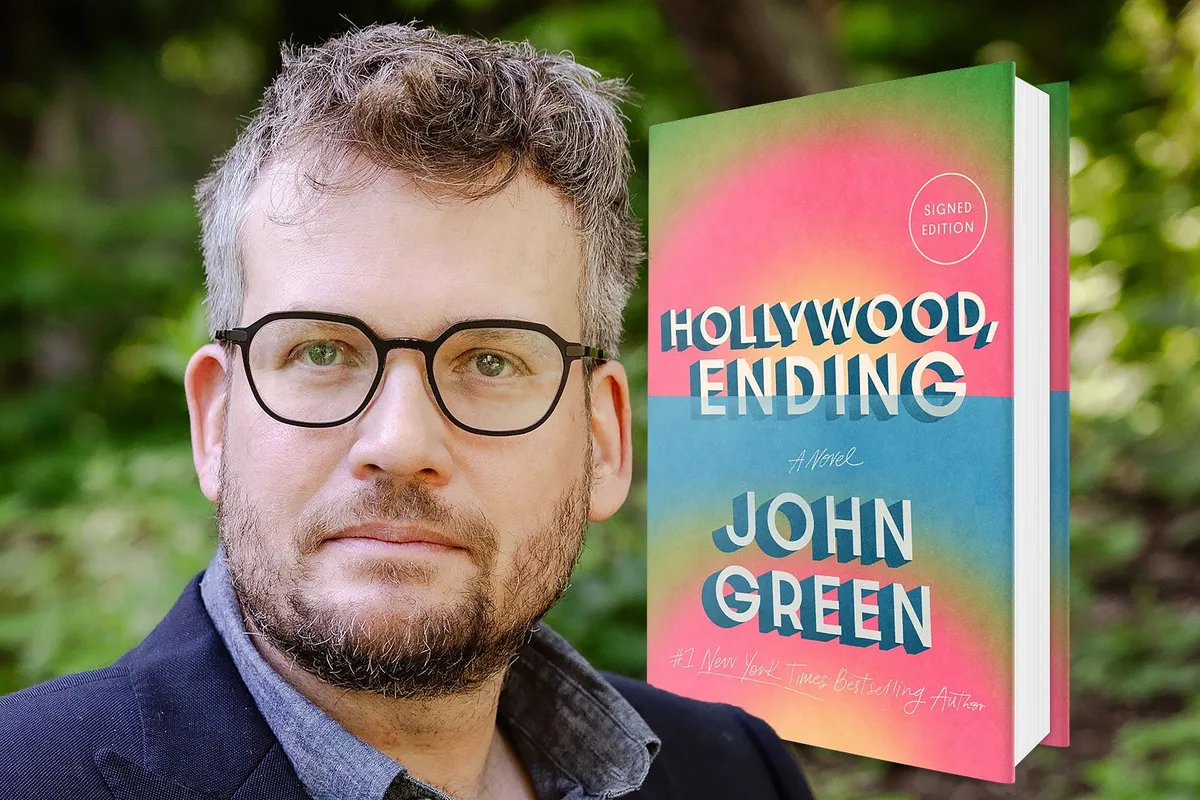
Hollywood, Ending , John Green’s first novel in 10 years, and his first adult novel ever, has the remarkable warmth that made his young-adult books ( The Fault in Our Stars being the best-known example) beloved contemporary classics, only this time there’s a bit more swearing and sex. If the term YA has since become shorthand for books that spoon callow pablum and generic romance tropes into readers’ mouths, well, Green never wrote that kind of YA. His characters have faced terminal diagnoses and mental illness, yet his novels retain a deceptively light and easy tone, even as they break your heart. Hollywood, Ending is no different in that respect. It’s enough to make you wonder why anyone ever thought his earlier books were just for kids .
This novel centers on two young people—movie actors in their early 20s and on the verge of stardom—striving to connect with each other in circumstances that militate against them. Or, rather, the people around Juniper Castillo and Kai Laramie would like nothing better than for the pair to become a couple, and that’s part of the problem. If The Fault in Our Stars was about how to love in the face of death, Hollywood, Ending (that comma is doing a lot of work) is about the near impossibility of being genuine in an environment founded on artifice.
Hollywood, Ending is the rare novel about fame that feels solidly situated inside the experience, rather than like speculation from the outside. Green has some knowledge of fame, but not the kind that makes it impossible to take a walk in the park without being recognized, or the kind that requires living in a cocoon designed by the industry to profit from it. Persuasively imagining yourself into someone else’s life is what good novelists—as well as good actors—do, however. Hollywood, Ending is in part a writer’s tribute to the sister art of acting, which Kai describes as “feeling like you aren’t stuck inside your mind, that you actually can leave your consciousness.”
At the beginning of the novel, Juniper is the former child star of a six-season TV series, and Kai is a relative unknown . Their big break comes from playing secondary leads to Matthew Malone, a bona fide movie star with a bunch of superhero movies under his belt, in a small-budget biopic. Matthew plays Andy Warhol at the end of his life, and Juniper and Kai play fictional characters in his orbit who both love and are baffled by him. Andy Warhol Never Gets Old is, as one of the many deliciously hard-boiled industry folk surrounding Juniper and Kai puts it, “a movie with a five-word title about a dead artist,” not a compelling commercial proposition in a country where “Americans paid two hundred million dollars to see Paul Blart: Mall Cop .” But Matthew’s pivot toward seriousness, and transcendent performances by Juniper and Kai, have the potential to make Andy Warhol Never Gets Old a hit.
The two young actors bond instantly, despite their very different temperaments.
5News aggregated this summary from the outlet’s public feed. The full article, with all the context, is on slate.com — the content belongs to Slate.