Millions dropped from SNAP food assistance as funding faces September uncertainty
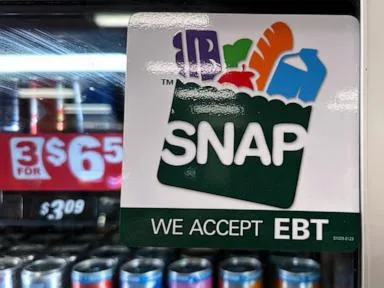
Starting Oct. 1, states will have to cover 75% of program administrative costs.
Supplemental Nutrition Assistance Program (SNAP) funding could face a major shake-up at the end of September unless Congress passes a resolution to delay major changes included in H.R. 1, commonly known as the GOP's One Big Beautiful Bill.
Starting Oct. 1, states will have to pick up 75% of the administrative costs of running the program, with the funding burden of providing benefits to participants set to shift from the federal to state level over the next few years.
State and national food assistance groups are calling on Congress to pass a resolution delaying the implementation of this cost shift, to give states more time to prepare for the bigger bill.
The federal food assistance program faced a funding lapse last fall, and experts are now warning of an uncertain future.
Nationwide, roughly 5 million Americans have lost access to SNAP since the Republican-backed budget bill became law, including more than 1.5 million children , according to the Center on Budget and Policy Priorities .
Much of the decline can be attributed to changes in work requirements and administrative hurdles in applying, coupled with a major cost shift that states will have to bear if they want SNAP to remain fully funded, Dottie Rosenbaum, director of federal SNAP policy at the CBPP, told ABC News.
Under the law, the upper age limit for able-bodied adults without dependents who must meet work requirements was raised from 54 to 64.
Additionally, exemptions were changed for parents and other family members responsible for a dependent, lowering the qualifying age from 18 to 14.
"The declines we're seeing in SNAP participation so far are far deeper and far faster than the Congressional Budget Office predicted at the time the law was enacted, and it's especially alarming that more than one and a half million children have been cut," Rosenbaum said.
"We're hearing increasing reports ... of people struggling to put food on the table, of people facing untenable choices between, you know, paying their rent and buying groceries and other essentials, putting gas in their cars," Rosenbaum added.
The White House did not respond to a request for comment on the impact of the new work requirements. The administration has publicly supported the idea in the past.
"The American dream is not being on [a] food stamp program. ... The American dream is not being on all these programs. That should be a hand up, not a handout," Agriculture Secretary Brooke Rollins said in an interview on Fox Business in January.
Alongside the new work requirements, the budget outlined a major shift in costs from the federal government to the states.
5News aggregated this summary from the outlet’s public feed. The full article, with all the context, is on abcnews.go.com — the content belongs to ABC News.