Centene CEO Sarah London says Medicaid patients are the last to benefit from health care innovation. She wants AI to change that
The latest innovations and breakthroughs in health care don’t get routed to the sickest people, they usually go to the deepest pockets.
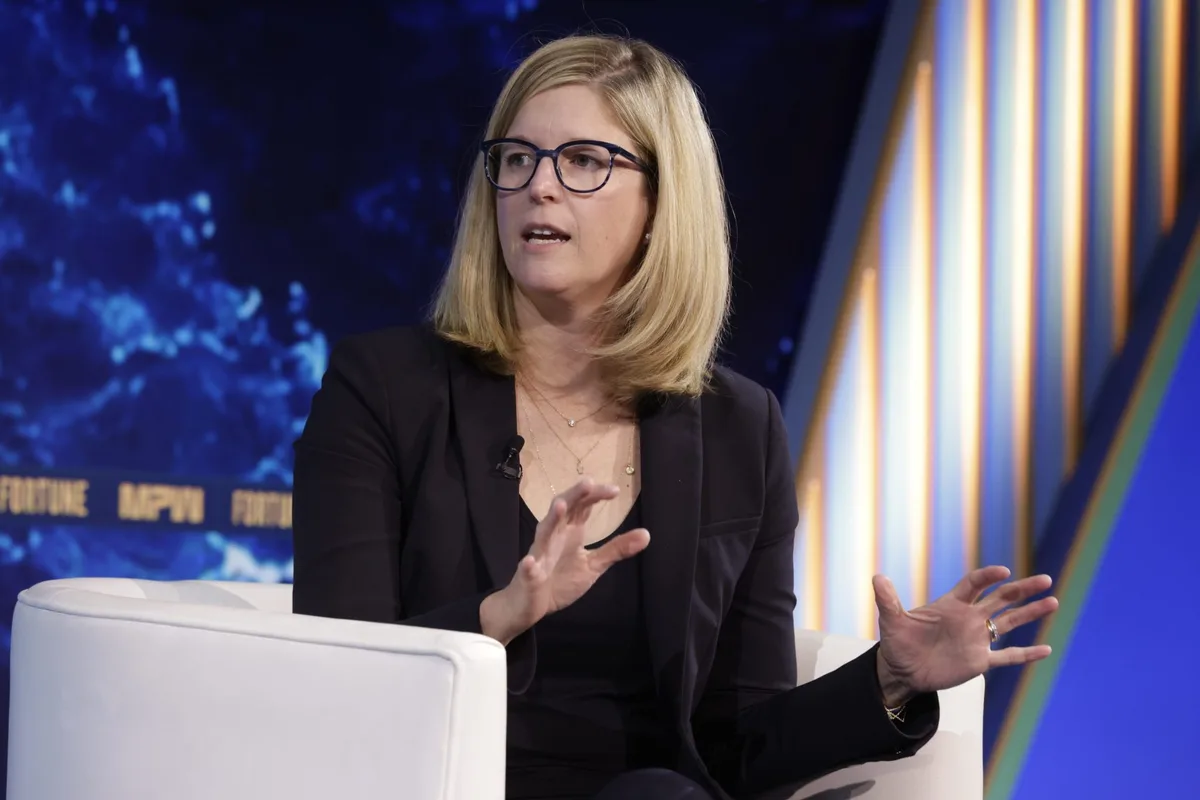
“Most of the venture money in health care goes into where the money is, and the money isn’t in Medicaid,” Centene CEO Sarah London said on Monday at Fortune’s Most Powerful Women Summit.
“That means that underserved communities don’t actually benefit from innovation first.
Sometimes they never do.” Centene, a $33 billion company based in Missouri, is built around those very communities.
The company runs Medicaid plans in 29 states and sells individual marketplace plans and Medicare Advantage.
London, a mainstay of Fortune’s Most Powerful Women and the youngest CEO in the Fortune 500, said Centene’s 26 million members are “among the poorest, sickest members of the communities that we all live in,” she told Fortune senior writer Sheryl Estrada.
London, who took the CEO role four years ago at age 41, said she joined Centene because she believed health care and technology had reached an inflection point, and she wanted to lead a company that was part of getting more care to people who are usually last to get it.
According to London, AI offers a massive opportunity to change the way people seek and get medical care, but not in the way it’s mostly used today.
Estrada asked London where AI could create the most value, and London said, “everywhere.” But as of the current moment, it’s not happening.
“The part that’s really depressing right now is that where AI is being deployed at scale, and where there’s a lot of investment happening right now, is in inflationary use cases,” she said.
That means most of the AI effort is going toward driving more revenue in a fee-for-medical-service system, she said.
However, just automating the paperwork and the way claims are paid, while valuable in its own right, misses out on a chance to “break the way the system works today” by democratizing care, she said.
In rural areas known as medical deserts because they have so few hospitals that are difficult to reach, AI could enable community health workers to potentially be as capable as the first round of triage in an emergency room for non-acute problems, London said.
“That puts community care back in the community,” she said.
5News aggregated this summary from the outlet’s public feed. The full article, with all the context, is on fortune.com — the content belongs to Fortune.