New power axis in the making? Three military heavyweights lock arms, complicating Abraham Accords strategy
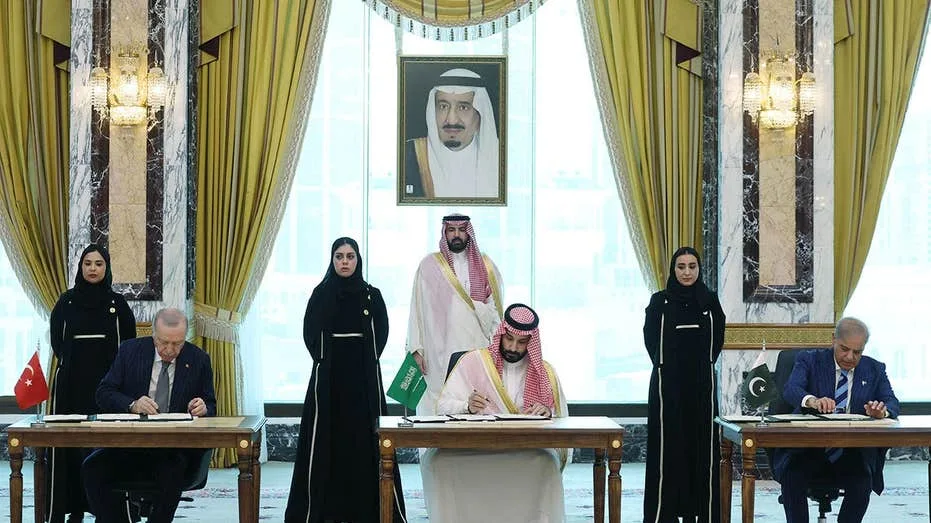
A new defense pact linking Saudi Arabia , Turkey and Pakistan is fueling debate over whether the three countries are laying the groundwork for a competing regional bloc — potentially challenging the U.S.-backed architecture built around Israel and the Abraham Accords — or simply creating a new model of burden-sharing among American partners.
The three countries, all with longstanding security ties to the United States, enter the pact with different interests — but together they could begin shifting the region’s balance of power.
Saudi Arabia signed a Strategic Defense Agreement with the United States in November 2025 and was designated a major non-NATO ally, but Riyadh did not secure the treaty-level, Article 5-style U.S. defense guarantee it had long sought, making the new pact a potential hedge against uncertainty over Washington’s future security commitments.
Pakistan, a nuclear-armed state, gains greater energy security, Saudi investment and regional influence, while offering significant military capabilities — although whether its nuclear deterrent extends to its partners remains unconfirmed.
Turkey, already a NATO member, gains a larger market for its growing defense industry and additional strategic weight as tensions with Israel rise.
WHO IS TURKEY'S RECEP TAYYIP ERDOĞAN? HOW NATO'S MOST UNPREDICTABLE LEADER KEEPS REINVENTING HIMSELF Taken together, the arrangement gives three U.S. partners greater ability to build deterrence on their own — potentially easing Washington’s security burden while also giving them more independence from it.
Saudi Crown Prince Mohammed bin Salman , Turkish President Recep Tayyip Erdoğan and Pakistani Prime Minister Shehbaz Sharif signed the Mecca Joint Defence Agreement on Aug.
7.
A joint statement said the pact was intended to "strengthen collective deterrence against any act of aggression" and stipulated that an armed attack against one country would be regarded as an attack against all three.
Turkish Foreign Minister Hakan Fidan went further the following day, telling Turkey’s state-run Anadolu news agency that the agreement was "technically the same" as NATO ’s Article 5 mutual-defense provision, which treats an attack on one member as an attack on all.
Fidan said, however, that the countries would consult on the degree and form of assistance provided following an attack, with operational details still to be determined by a new ministerial committee.
The alliance will also establish a general secretariat based in Saudi Arabia, Reuters reported Aug.
8.
Fidan said President Recep Tayyip Erdoğan wants the alliance to eventually expand beyond its three founding members and identified Egypt as a potential participant.
5News aggregated this summary from the outlet’s public feed. The full article, with all the context, is on www.foxnews.com — the content belongs to Fox News World.