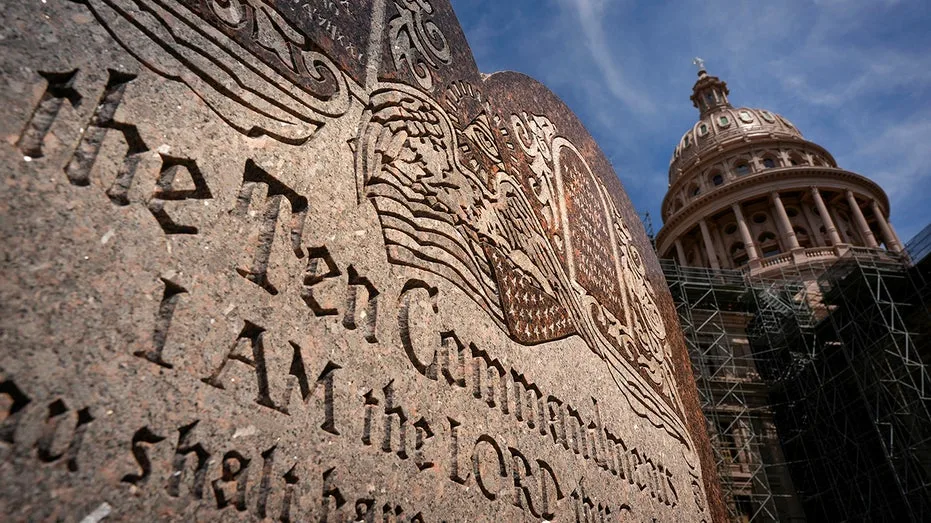
Ten Commandments belong in Texas schools and the Supreme Court can protect them
The U.S.
Supreme Court has been asked to decide if the Ten Commandments can be posted in Texas public schools.
In the coming months, the justices will decide whether or not to review a decision by the U.S.
Court of Appeals for the Fifth Circuit which found that the posting the Ten Commandments in schools is not only constitutional, but also consistent with America’s historical understanding of religion’s role in public life.
Documents and history are not banned in this country because they are religious or have religious content.
Are students allowed to read the Rev.
Martin Luther King Jr.’s "Letter from Birmingham Jail?" Of course they are.
TEXAS BOARD OF EDUCATION APPROVES REQUIRED READING LIST WITH BIBLE PASSAGES FOR 5 MILLION STUDENTS Banning parts of our religious history and heritage is not an act of compliance with the First Amendment.
It is hostility to religion and a religious cleansing, foreign to our Constitution.
The First Amendment forbids the government from establishing an official state religion — something akin to the Church of England, where the state controlled doctrine, compelled worship and punished dissenters.
The Fifth Circuit’s ruling made clear that such "establishments" historically involved acts of coercion such as mandatory church attendance or legal penalties for noncompliance.
Displaying a religious text on a classroom wall bears no resemblance to such practices.
SUPREME COURT SHOWDOWN LOOMS OVER ST MICHAEL STATUE BLOCKED FROM PUBLIC SAFETY BUILDING The Ten Commandments are a foundational moral, literary and historical text.
Their influence on Western legal traditions is widely acknowledged, even by critics.
5News aggregated this summary from the outlet’s public feed. The full article, with all the context, is on www.foxnews.com — the content belongs to Fox News.