The Hatred That Broke American Politics
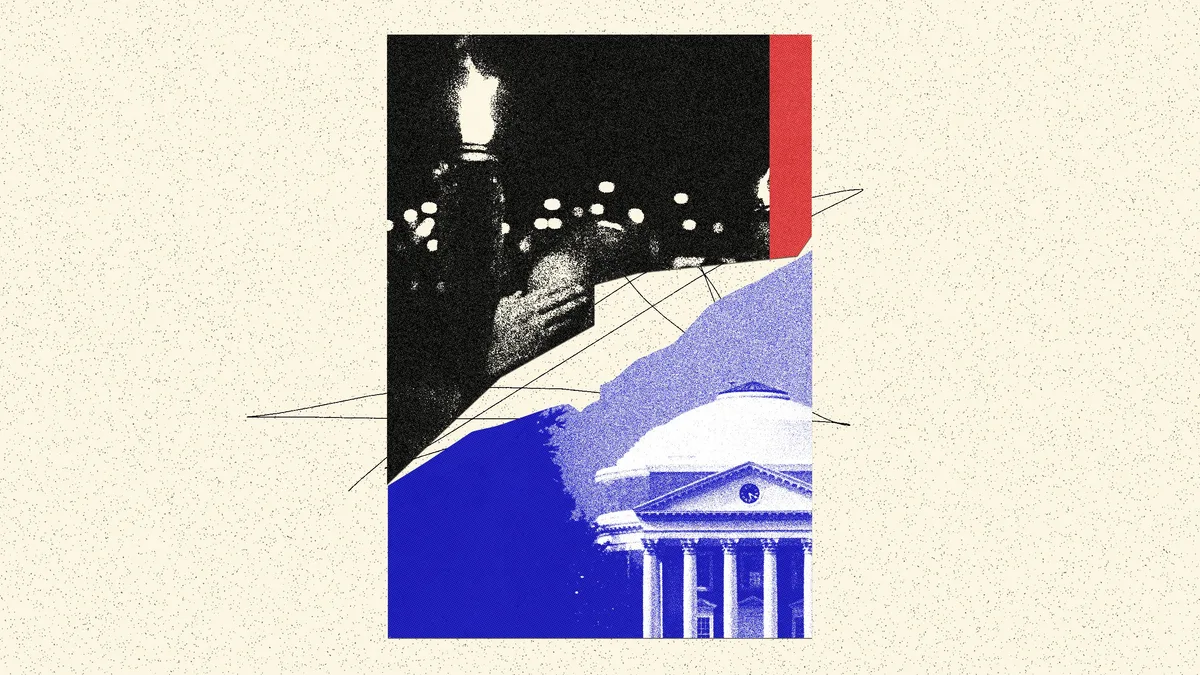
“If you want to defend the South and Western civilization from the Jew and his dark-skinned allies, be at Charlottesville on 12 August.” Nine years ago, that message spread across the internet.
The call was answered by several hundred white supremacists, who marched through the University of Virginia.
The rage-filled men carried torches, chanting, “Jews will not replace us.” They swarmed around the historic rotunda, arriving at a statue of the school’s founder, Thomas Jefferson.
There they met a tiny band of student counterprotesters who responded with their own chant: “Black lives matter.” That evening turned violent, the first act in a deadly weekend.
Most Americans remember the torches, the rage, the death.
But those clashing chants also revealed a gap between the targets of hatred and the words available to name it.
Race is the wound America sees.
Anti-Semitism is the one it doesn’t.
Jews have frequently been imagined as a colorless minority whose great persecution took place elsewhere, or as a group whose Christian-adjacent faith flourished with the religious freedom they found in the United States.
But their in-betweenness has always been part of the danger: Jews have never fit neatly into America’s frameworks of identity, and that failure to fit has marked them as suspect, out of place, or impossible to categorize.
Depending on the audience, Jews are dismissed as beneficiaries of white privilege or treated as not quite white at all—too assimilated and not assimilated enough, too powerful and too marginal.
That ambiguity has placed them, again and again, at the center of America’s battles over free speech and equal protection.
When hatred does not fit existing categories, we tend either to ignore it or to overcorrect—both responses that distort the boundaries of free expression.
Our failure to reckon with the anti-Semitism of Charlottesville—on the right and the left—was not merely a missed opportunity.
5News aggregated this summary from the outlet’s public feed. The full article, with all the context, is on www.theatlantic.com — the content belongs to The Atlantic.