Singapore has overhauled its baby bonus scheme. Will it work to boost birth rates this time?
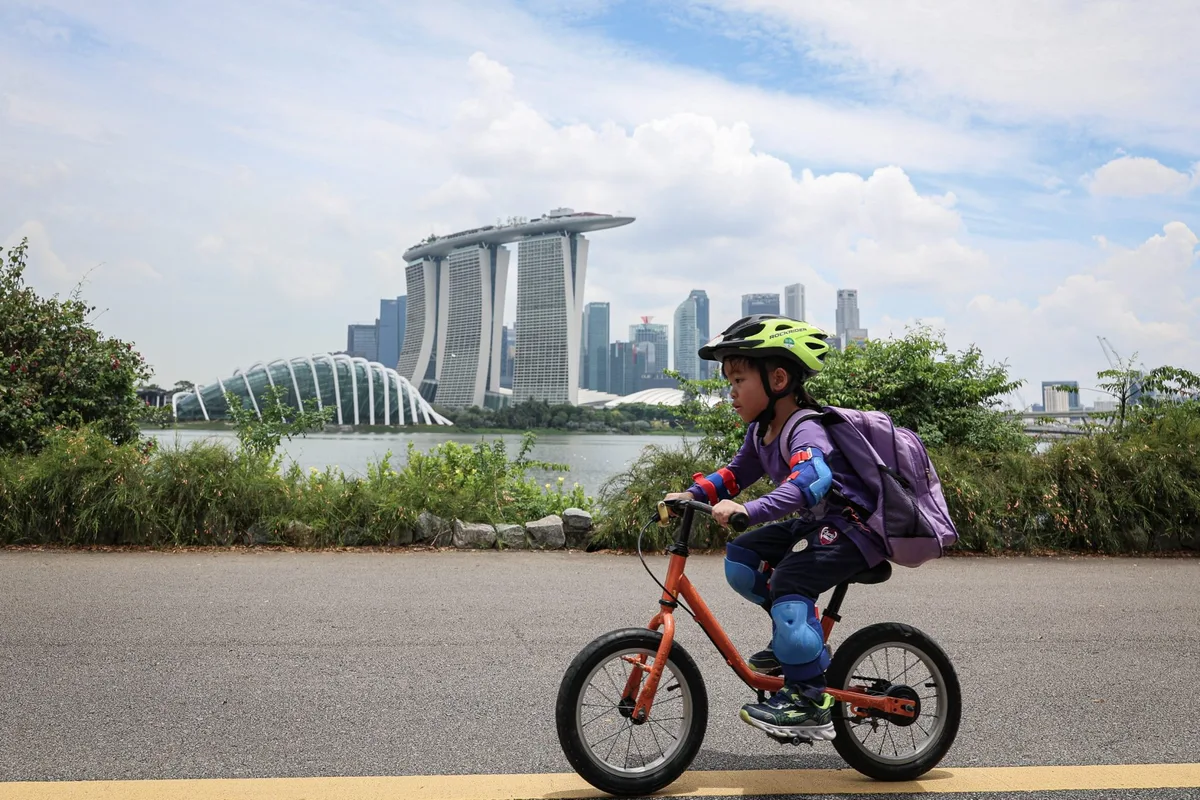
Singapore is overhauling its landmark baby bonus scheme, first introduced in 2001, as the city’s fertility rate and number of births fall to record lows.
In 2025, births in the Southeast Asian country fell below 30,000 for the first time in its post-independence history, while the fertility rate dropped to just 0.87 per woman, a record low.
That’s a dangerous prospect for any country, but especially for Singapore, crammed into a space smaller than New York City.
“The country does not have the natural resources to finance the costs of supporting an aged society, including both care and medical expenditures,” Tan Poh Lin, a senior research fellow at the National University of Singapore’s Institute for Policy Studies explains.
Immigration, in his view, won’t be enough to solve the problem: “Boosting the fertility rate is crucial to slow down the rate of change and allow society to adjust economically and well as institutionally.” At the country’s National Day Rally on Aug.
23, Prime Minister Lawrence Wong unveiled the “SG Child Support Package,” boasting measures like expanded childcare leave, strong financial support for parents, more affordable caregiving options, and extra chances to get subsidized housing.
In total, the support is equal to almost 70,000 Singapore dollars ($55,000) by the time a child is 17.
Demographic experts are cautiously optimistic about the new scheme, which appears to offer more sustained and holistic support for families.
“Singapore’s family policies had become increasingly complicated, with benefits varying by birth order and across different schemes ,” says Bussarawan Teerawichitchainan, a social demographer and sociologist from the National University of Singapore (NUS).
With the new package, “support is attached more clearly to each child and is provided over a longer period of childhood rather than being concentrated primarily around birth.” But previous policies to give parents more money, both in Singapore and elsewhere in Asia, haven’t been able to reverse falling birth rates.
“Singapore has progressively expanded financial support for marriage and parenthood over many years, yet fertility has continued to decline,” Teerawichitchainan admits.
“Concerns voiced by parents increasingly involve not just money but time, work-family pressures, childcare, housing and other demands associated with raising children.” Economic impact of low birth rates Persistently low birth rates could threaten a country’s ability to sustain its economy .
“Smaller younger cohorts enter the workforce while the older population continues to grow…over time, that places greater pressure on labor supply and the tax base,” says Chua Yeow Hwee, an economist at Singapore’s Nanyang Technological University (NTU).
5News aggregated this summary from the outlet’s public feed. The full article, with all the context, is on fortune.com — the content belongs to Fortune.