The strange lesson the Ford Pinto can teach us about the new iPhone
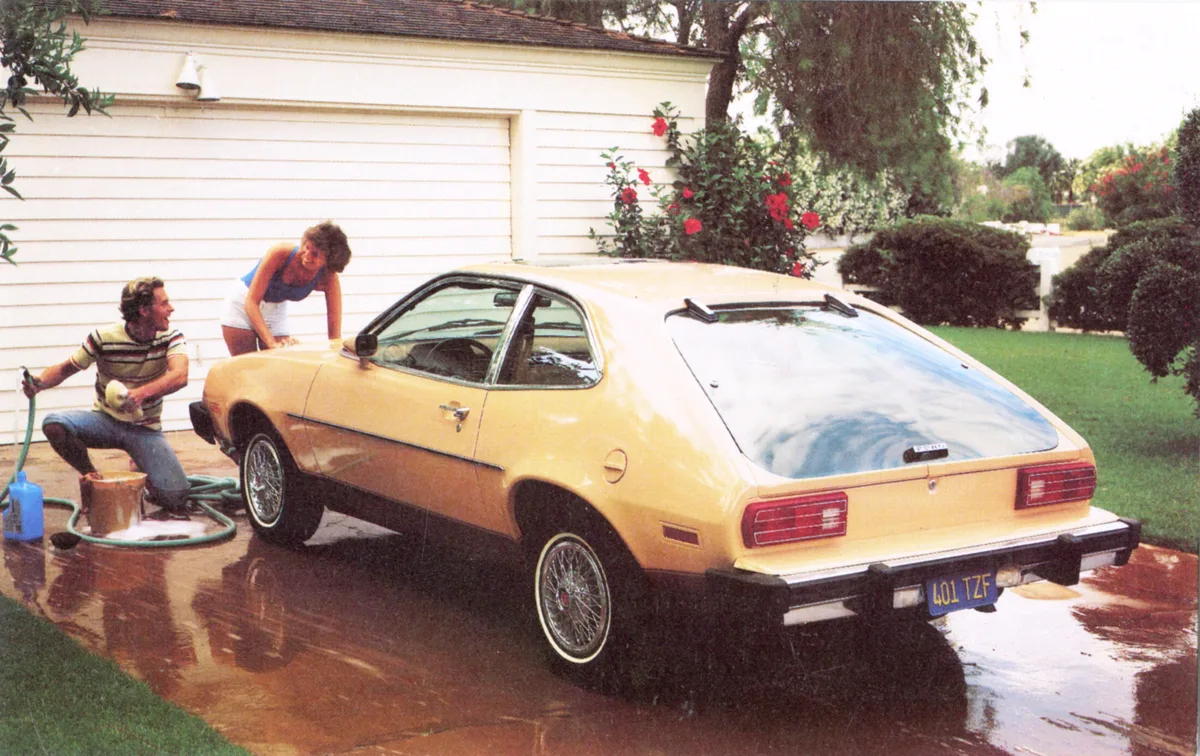
A couple washes a sunshine yellow Ford Pinto Runabout in a 1974 Ford ad. | Getty Images There’s a funny game I’ve been playing with my three-year-old iPhone lately.
The objective is to drain my battery as often as possible to degrade its health enough that Apple Care covers the replacement.
A new battery would make my phone feel brand new — or at least new enough to avoid buying the latest iPhone, which isn’t really any better than my old-timer.
I can’t play this game forever.
In a few years, I expect Apple to stop supporting my model, as it has with countless other geriatric devices, in a tradition that’s become derisively and even conspiratorially known as planned obsolescence.
At that point, the new iPhone will probably cost hundreds of dollars more than mine did a few years ago, thanks in part to a global memory shortage that’s driving up the cost of gadgets and arguably making them worse .
Apple raised the prices of iPhones by $100 this year, and not just the latest models either.
Last year’s models got a price hike , too.
As with so many other consumer goods right now, we’re spending more to get less.
“It just doesn’t feel that revolutionary anymore,” said Lee Vinsel , a professor at Virginia Tech and the co-author of The Innovation Delusion: How Our Obsession With the New Has Disrupted the Work That Matters Most .
“When a technology settles down and you’re being asked to pay more for it and it doesn’t feel like you’re getting that much more, it’s frustrating.” This isn’t the first time in recent history that American consumers have been faced with the degradation of an expensive item they’ve come to rely on.
In the 1970s, the American automotive industry went through what’s become known as the Malaise Era.
During a decade-long period, from about 1973 to 1983, a cascade of external factors, including rising oil prices and new safety and emissions regulations, upended Detroit’s deeply ingrained tradition of building big, beautiful, and very inefficient cars.
What American consumers got instead were models like the Ford Pinto that cost more and underperformed.
5News aggregated this summary from the outlet’s public feed. The full article, with all the context, is on www.vox.com — the content belongs to Vox.